Free Feng Shui Articles & Guides
Read practical Feng Shui, home-layout, Chinese zodiac, and cultural-reference guides for modern living. Traditional ideas are explained with clear, real-world limits.
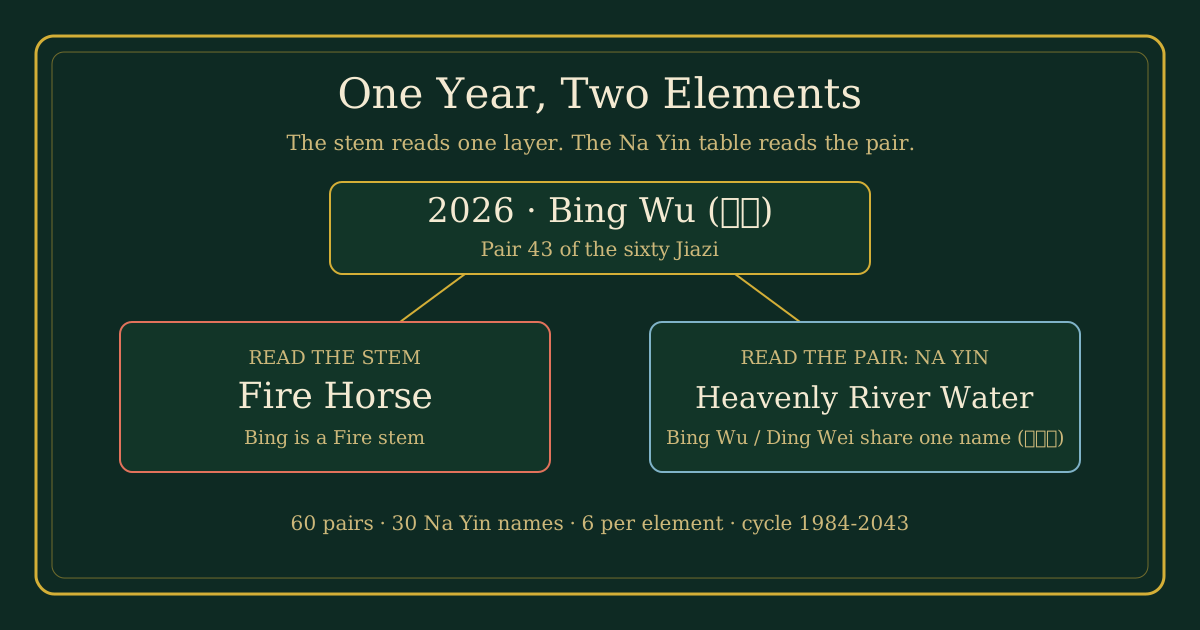
Na Yin Elements: The Second Element in Every Zodiac Year
Ask a zodiac chart for the element of 1990 and it says Metal, because the year stem Geng is a Metal stem. Ask the older Na Yin table and 1990 says Earth by the Roadside. Both answers come from the same stem-branch pair, Geng Wu, read at two different layers. Na Yin (纳音, received tone) assigns one named element image to each consecutive pair of the sixty Jiazi, thirty names in all, six for each of the five elements: Gold in the Sea, Fire in the Furnace, Wood of the Great Forest, and so on. This guide explains why a year carries two elements, prints the full thirty-name table with the current cycle years 1984 to 2043, shows how to look up any birth year in three steps, and sets out what tradition uses the layer for, with the boundary cases and the limits stated plainly.
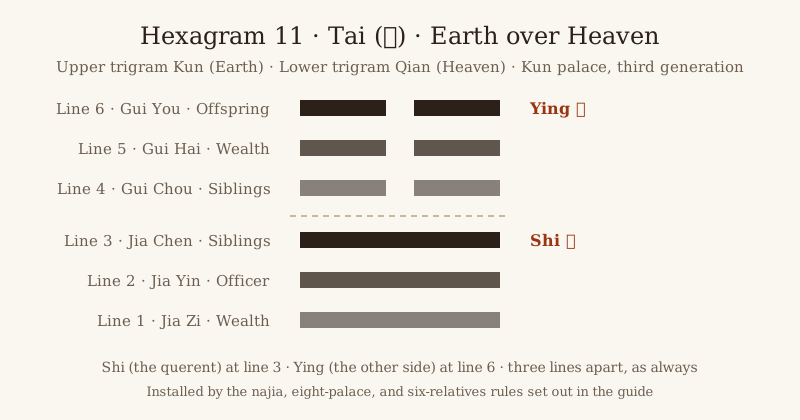
Liu Yao (Six Lines): How a Cast Hexagram Becomes a Working Chart
Cast a hexagram with three coins and two readers can take it in opposite directions. One opens the Book of Changes and reads the Judgment and the line texts. The other ignores the texts and builds a chart: a stem and branch from the calendar on every line, a palace the hexagram belongs to, a line that stands for the querent and a line that stands for the other side, five family roles dealt out by element arithmetic, and six spirits set by the stem of the day. That second method is Liu Yao (六爻, Six Lines), also called Wen Wang Gua and the Najia method. This guide installs a chart step by step, prints the najia table for all eight trigrams, the eight-palace sequence that fixes the Shi and Ying lines, the six-relatives rules, and the six-spirits starting table, then carries one teaching cast, hexagram 11, Earth over Heaven, through the full installation line by line.
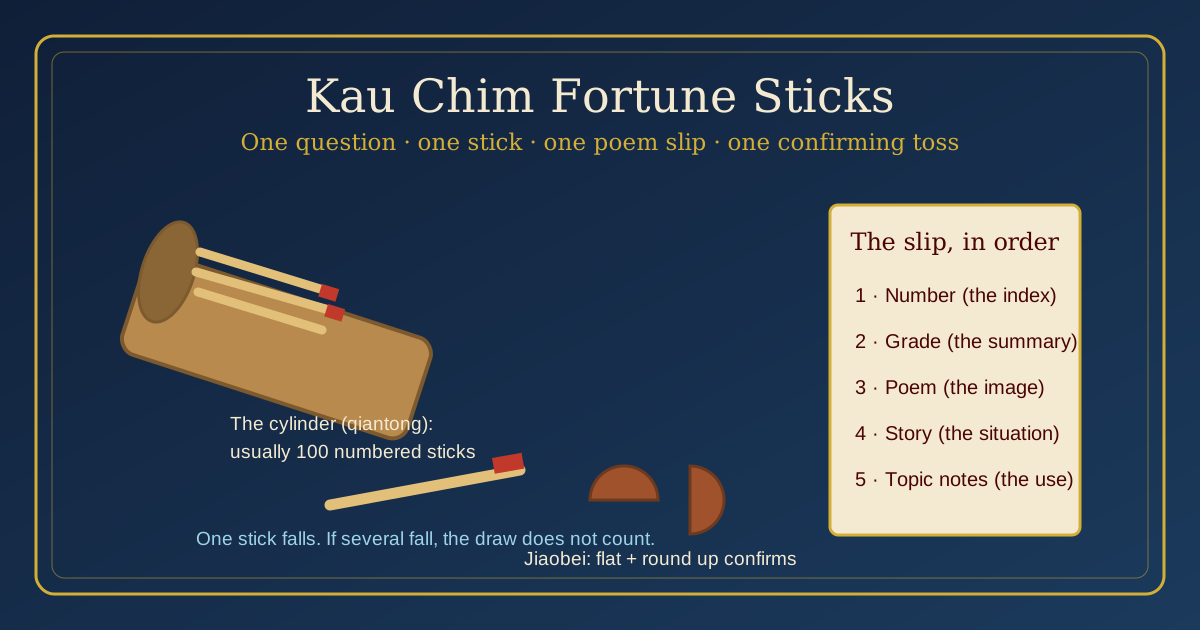
Kau Chim Fortune Sticks Guide
Kau chim is the temple practice of shaking a bamboo cylinder until one numbered stick falls out, then reading the poem slip that matches the number. This guide sets out the names and the kit, the draw step by step, the jiaobei block toss that confirms or rejects a stick, the five layers inside a printed answer (number, poem, grade, story, and topic notes), why the same stick number means different things at different temples, and where a stick reading stops being useful, with a record worksheet and a labelled hypothetical draw worked through in order.
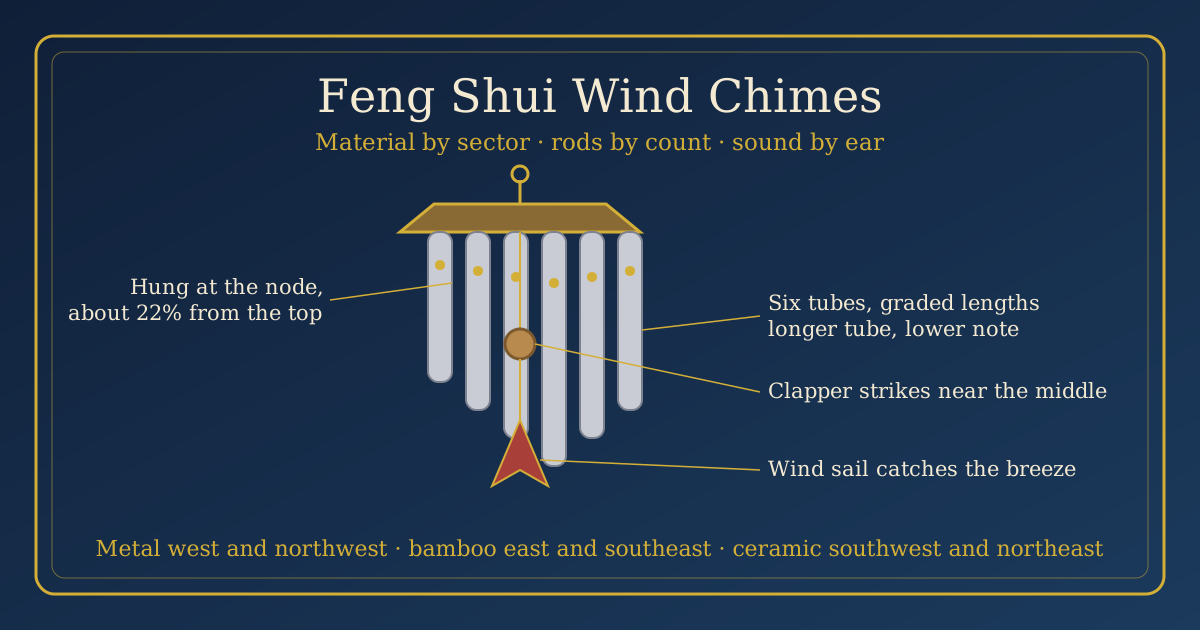
Feng Shui Wind Chimes: Material, Rod Count, and Where to Hang One
In feng shui tradition a wind chime is the one cure that works by sound: its ringing is read as stirring a quiet corner, announcing the front door, and slowing a straight rush of air and movement through a hall. Tradition chooses the chime by material first (metal for the west and northwest, bamboo or wood for the east and southeast, ceramic for the southwest, northeast, and centre), then by rod count (six hollow metal rods are the classic, five is the disputed count attached to the Five Yellow), and it keeps chimes away from the space over a bed, desk, or dining table. This guide sets out those rules as tradition states them, puts the checkable acoustics beside them (why aluminium rings longest, why good tubes are hung at about 22 percent of their length, why most chimes are tuned to five-note scales), and gives the noise, neighbour, and mounting limits that decide the question in a real home.
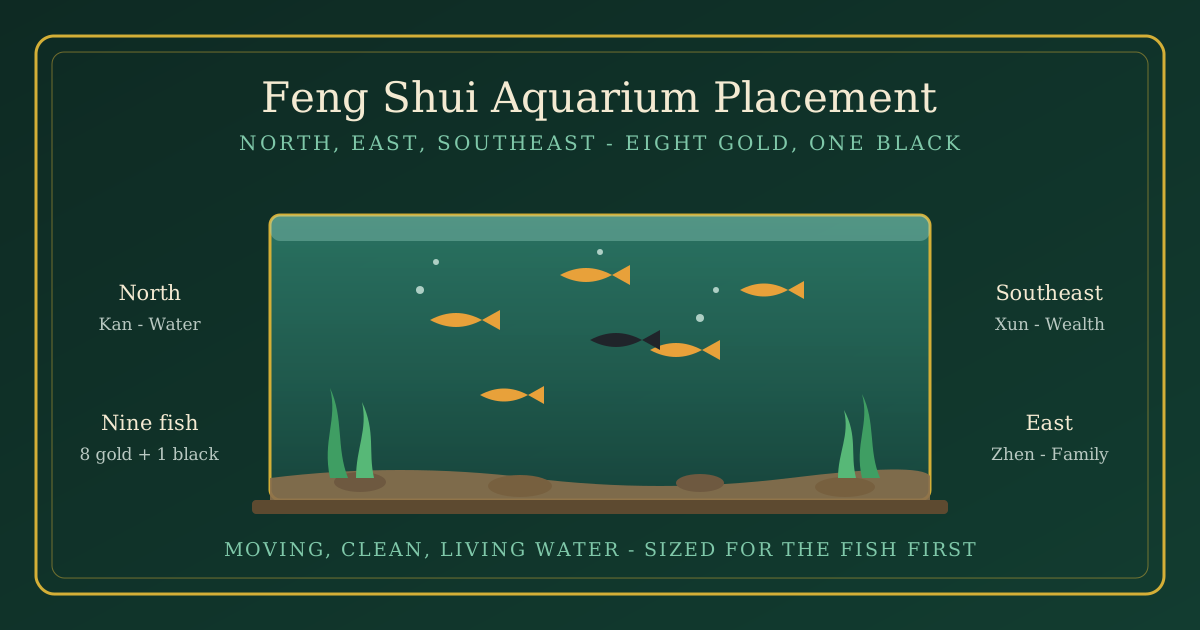
Feng Shui Aquarium Placement: Where to Put a Fish Tank, and How Many Fish Tradition Counts
In feng shui tradition an aquarium is the household water feature with the strongest symbolism: moving, living water, usually stocked with fish whose Chinese name sounds like the word for abundance. Tradition places tanks in the north, east, or southeast of a living room or near the entrance, keeps them out of bedrooms and kitchens, and counts nine fish, eight gold and one black, as the classic stocking. This guide sets out those placement and counting rules as tradition states them, then puts the layer that outranks all of them next to each one: adult fish size, tank volume, floor weight, electrical safety, and the weekly care a real tank needs.
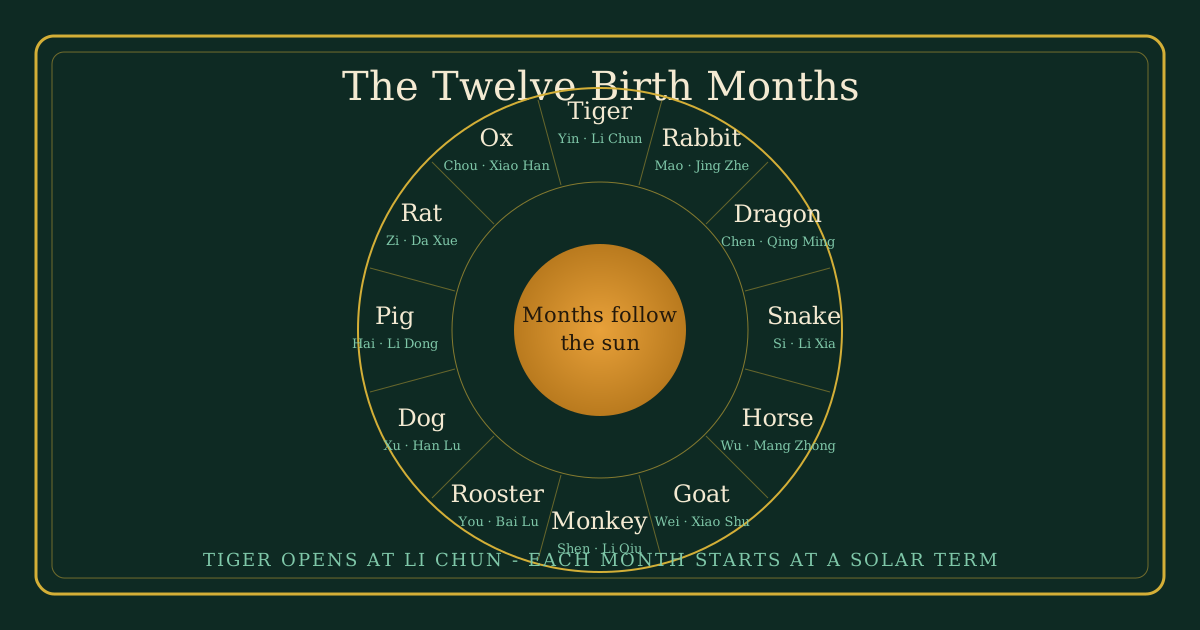
Your Chinese Zodiac Birth Month Animal: The Twelve Solar Months and the Terms That Start Them
Alongside the year animal most people know, traditional chart work assigns an animal to your birth month. The month animal does not follow the lunar calendar or the Gregorian month. It follows the sun: each chart month opens at one of the twelve jie solar terms, starting with the Tiger month at Li Chun around February 4. This guide gives the full twelve-month table with the term, the usual date, and the exact 2026 date for each boundary, a four-step method for finding your own month animal, the stem rule that turns a month branch into the full month pillar, and worked examples for the February and January births where the festival calendar and the chart calendar disagree.
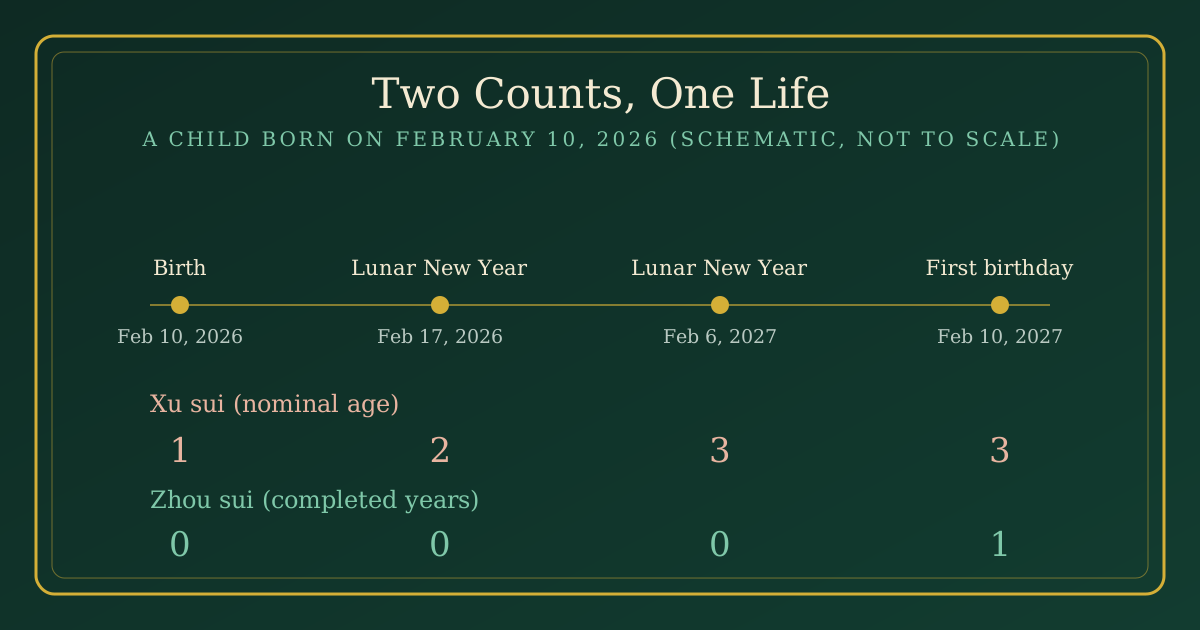
Chinese Age Counting: Xu Sui, Zhou Sui, and the New Year Everyone Ages On
Traditional Chinese age counting, xu sui, starts a baby at one and adds a year for the whole population at Lunar New Year, so a person can be one or two years older in the old count than in completed years, zhou sui. This guide explains where the count came from, gives the working formula, runs dated examples including the fan Tai Sui case that makes horoscope ages differ from passport ages, and sets out which count applies to documents, family talk, and chart reading today.
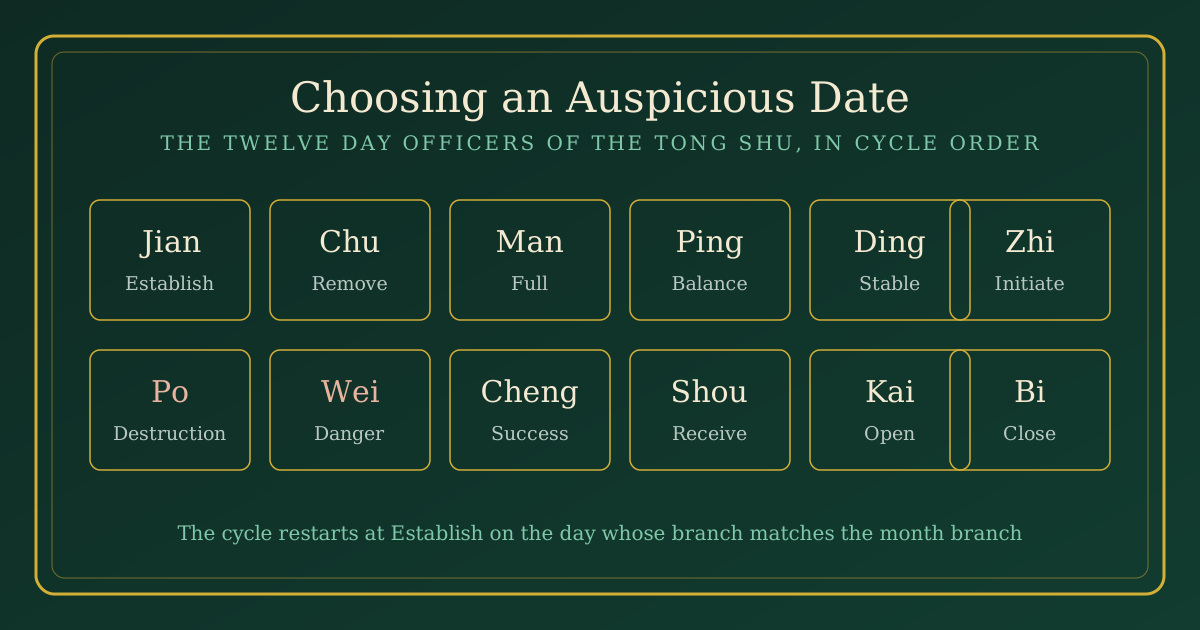
Auspicious Dates: How to Read the Tong Shu and Choose a Date the Traditional Way
An auspicious date in Chinese tradition is not a label a website stamps on a day. It is the output of a layered check that starts in the Tong Shu, the printed almanac: the day officer from the twelve-officer cycle, the suitable and avoid lists printed for that day, the clash filter that removes days opposing your own zodiac sign, and the year-level afflictions on top. This guide explains each layer, gives the full twelve-officer table, reads one real almanac day step by step, and ends with a five-step worksheet for weddings, moving house, renovations, and business openings.
Palm Fate Line Guide
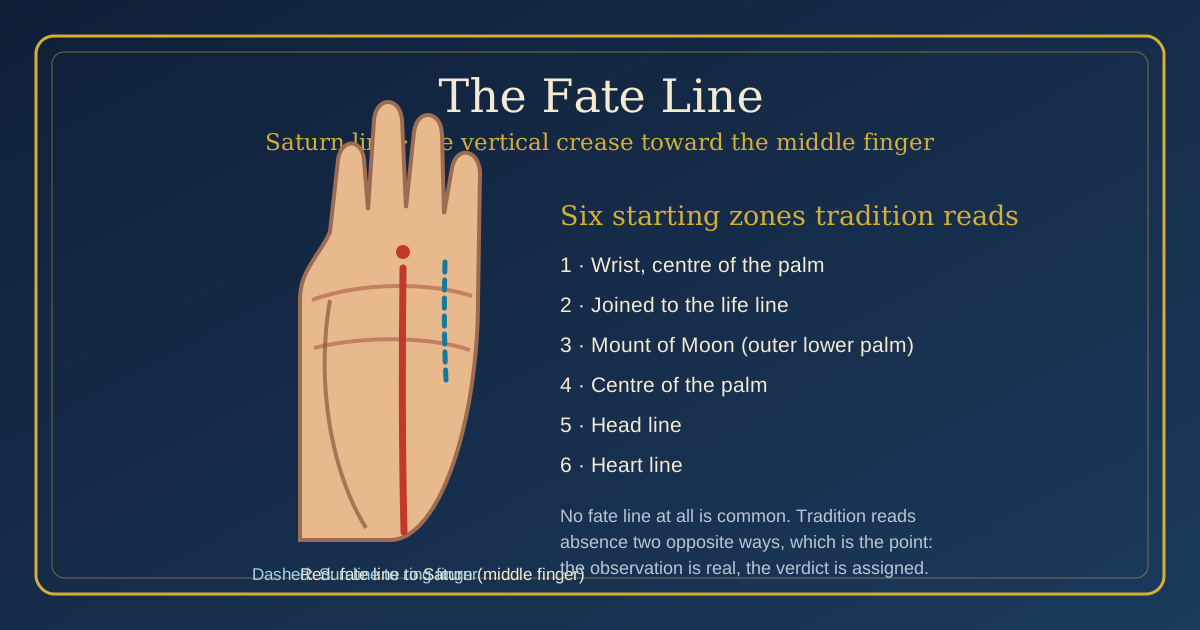
Find the palmistry fate line, the vertical crease that runs up the centre of the palm toward the middle finger. This guide sets out where the line can start and what each starting point means inside the tradition, how breaks, doubles, and a missing fate line are read, why the fate line is so often confused with the Sun line, why timing charts disagree with each other, and where the line stops being useful, with a neutral record worksheet and a labelled hypothetical hand worked through step by step.
Ceiling Beams in Feng Shui: Beams Over the Bed, Desk, and Sofa
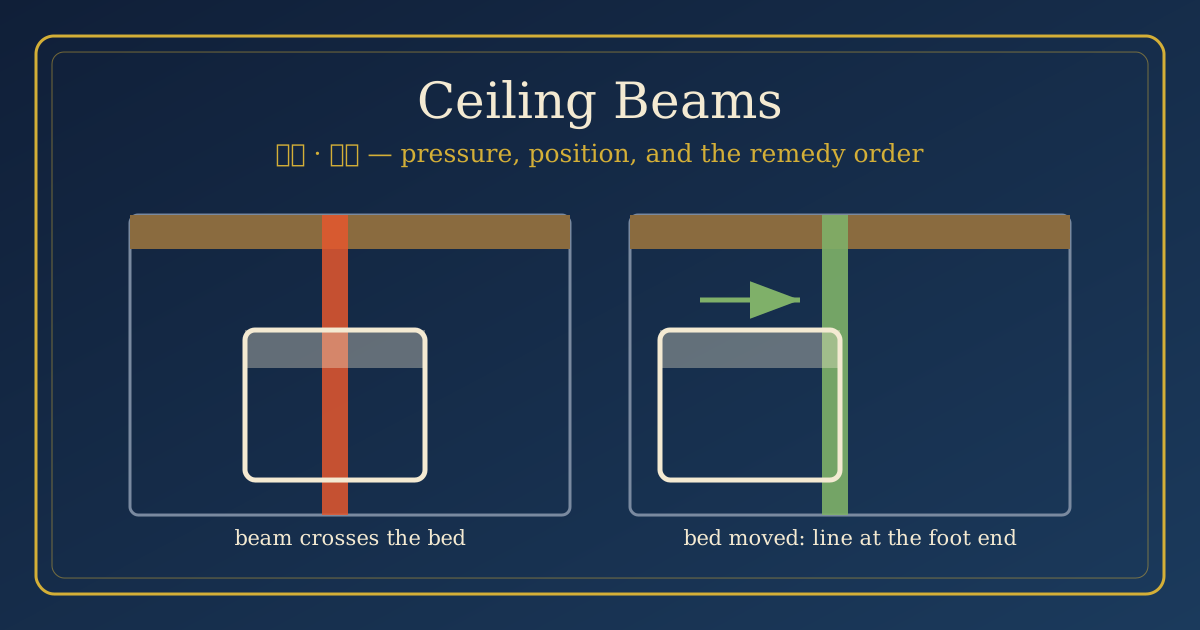
An exposed beam crossing a bed, a desk chair, or a sofa is one of the oldest complaints in feng shui tradition, filed under pressure rather than arrows. This guide explains how tradition reads a beam, why the reading depends on where the beam line crosses the body and how long you stay under it, how to tell a structural beam from a hollow box beam or a duct soffit before touching anything, and the remedy order tradition prefers, from moving the bed to painting, canopies, and false ceilings, with the safety limits stated plainly.
Mian Xiang Face Reading: The Five Officials, Three Zones, and Twelve Palaces
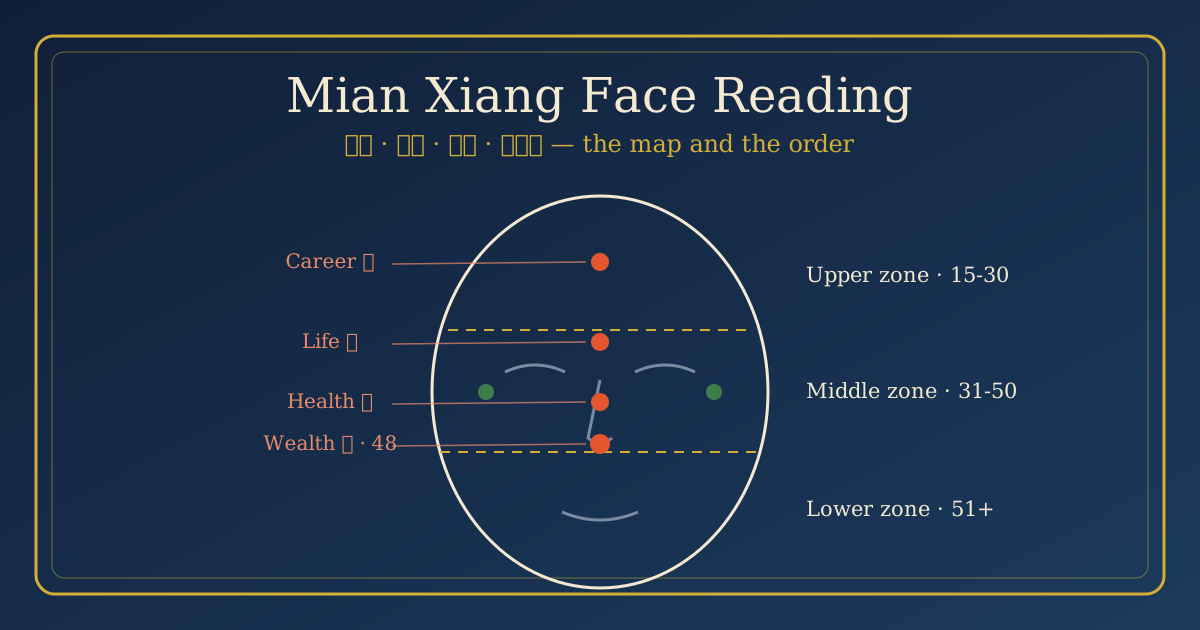
Mian Xiang, the Chinese art of face reading, works through a face in a fixed order: the five mountains and four rivers first, then the three zones, the five officials, the twelve palaces, and the hundred-year map that assigns every year of life to a point on the face. This guide sets out each layer with its positions and age bands as the tradition teaches them, works a complete reading on a labelled example face, and states plainly where the tradition ends and evidence begins.
Chinese Zodiac vs Western Zodiac: Two Systems That Answer Different Questions
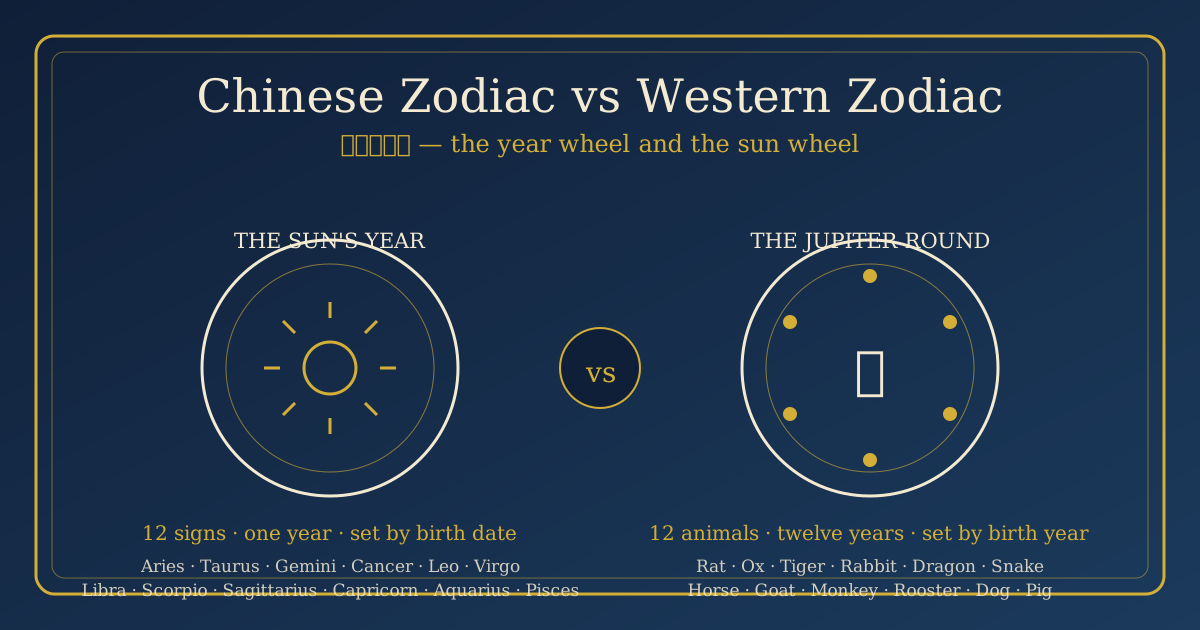
The Western zodiac reads your birth date inside a single year and gives you one of twelve signs of the Sun. The Chinese zodiac reads your birth year inside a twelve-year round and gives you one of twelve animals, plus an element from a sixty-year cycle. This guide sets the two systems side by side: what each one measures, where each came from, why both happen to count to twelve, why their elements share names but not meanings, and how to work out both of your signs correctly, with two birthdays read in full.
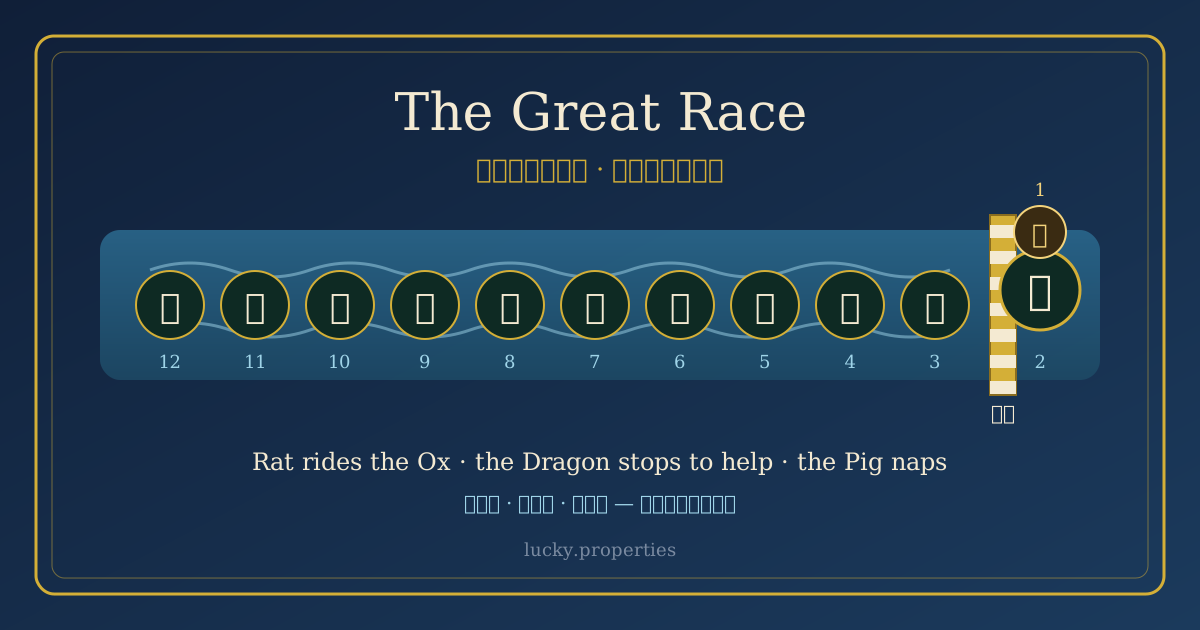
The Great Race: The Legend Behind the Order of the Twelve Zodiac Animals
Why does the Rat open the Chinese zodiac and the Pig close it? The most-told legend says the Jade Emperor held a race, and the finishing order became the 12-year cycle: the Rat riding the Ox, the Dragon stopping to help, the Snake surprising the Horse, the Goat, Monkey and Rooster crossing together, and the Pig arriving last. This guide retells the legend animal by animal, covers the Cat that never made it, the alternate banquet version, and what the story explains (and does not) about the real zodiac system.
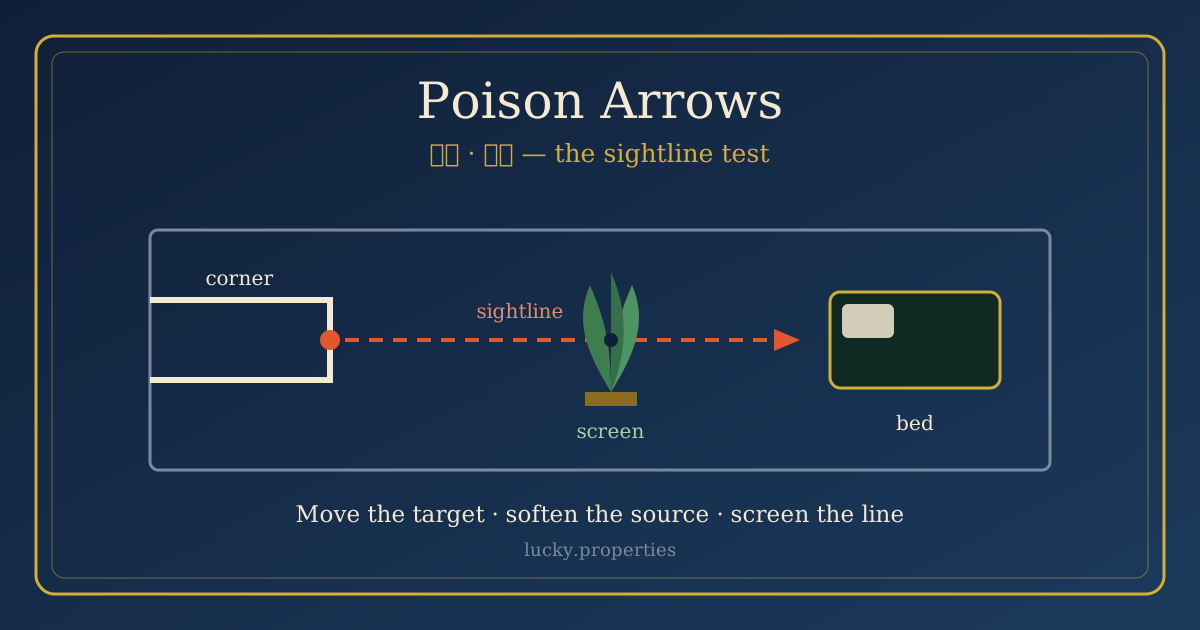
Poison Arrows in Feng Shui: Sharp Corners, Straight Lines, and Sha Qi
A sharp corner aimed at a bed, a straight road aimed at a front door, a long corridor aimed at a desk: in feng shui tradition these are poison arrows, the pointed form of sha qi. This guide explains where the term comes from in Form School practice, gives a sightline test for telling a real arrow from an ordinary corner, catalogues the exterior and interior sources tradition actually names, and sets out the remedy order tradition prefers, from moving the seat to screening the line, with the limits stated plainly.
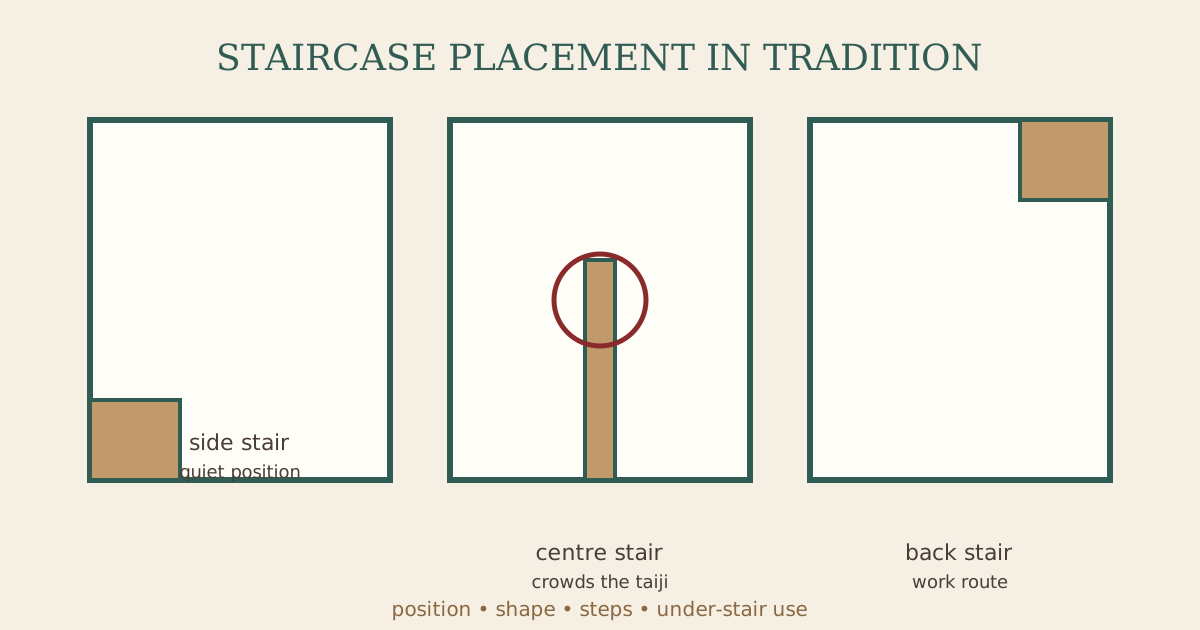
Feng Shui Staircase Placement: Where Stairs Belong in the Home, in Tradition
Staircases join the floors of a home the way hallways join its rooms. This guide works through what feng shui tradition says about where stairs should sit, which shapes and step counts carry which readings, how to treat the space beneath them, and where the tradition draws its own limits. Placement, shape, steps, and under-stair use are covered with a worked floor-plan walkthrough.
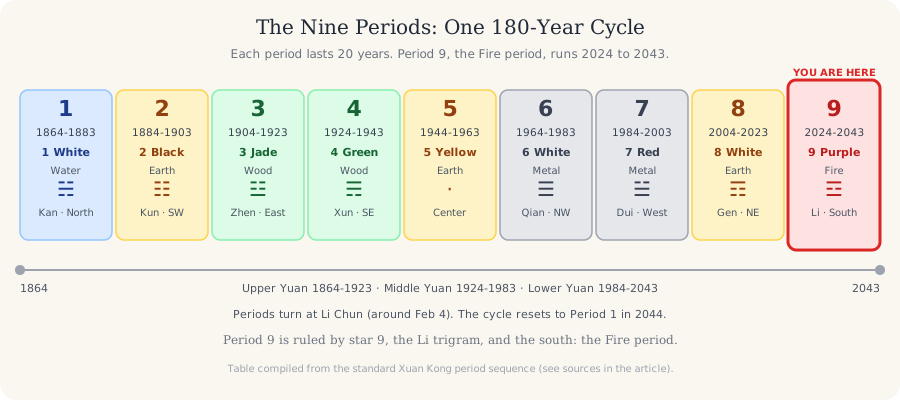
Period 9 Feng Shui (2024-2044): The Fire Period, the Li Trigram, and How Tradition Reads the Current Era
On February 4, 2024, feng shui 20-year clock turned from Period 8 to Period 9. This guide lays out the nine-period cycle behind that turn, what the Fire period ruling star 9 and the Li trigram mean in tradition, which stars count as timely, rising, or fading now, the Zheng Shen and Ling Shen mountain-water rule for the period, and how to read your own home against it. Everything is presented as cultural practice, the way teachers describe the system, never as prediction.
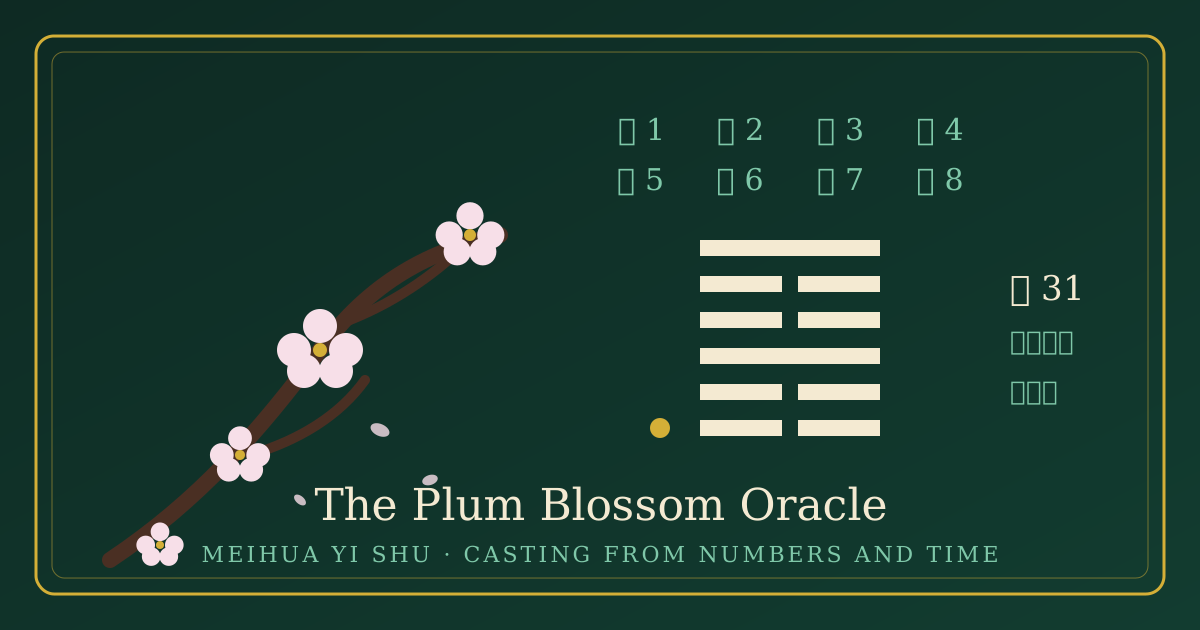
Meihua Yi Shu: How the Plum Blossom Oracle Casts a Hexagram from Numbers and Time
The Plum Blossom Oracle casts an I Ching hexagram without coins or yarrow stalks, using numbers, the date and hour, or things observed in the moment. Traditionally attributed to the Song scholar Shao Yong, the method turns any number into one of the eight trigrams through the early-heaven numbering, works out upper and lower trigrams and the moving line by simple division, and reads the result through the ti and yong relationship. This guide walks through the full arithmetic with a worked casting you can check line by line.
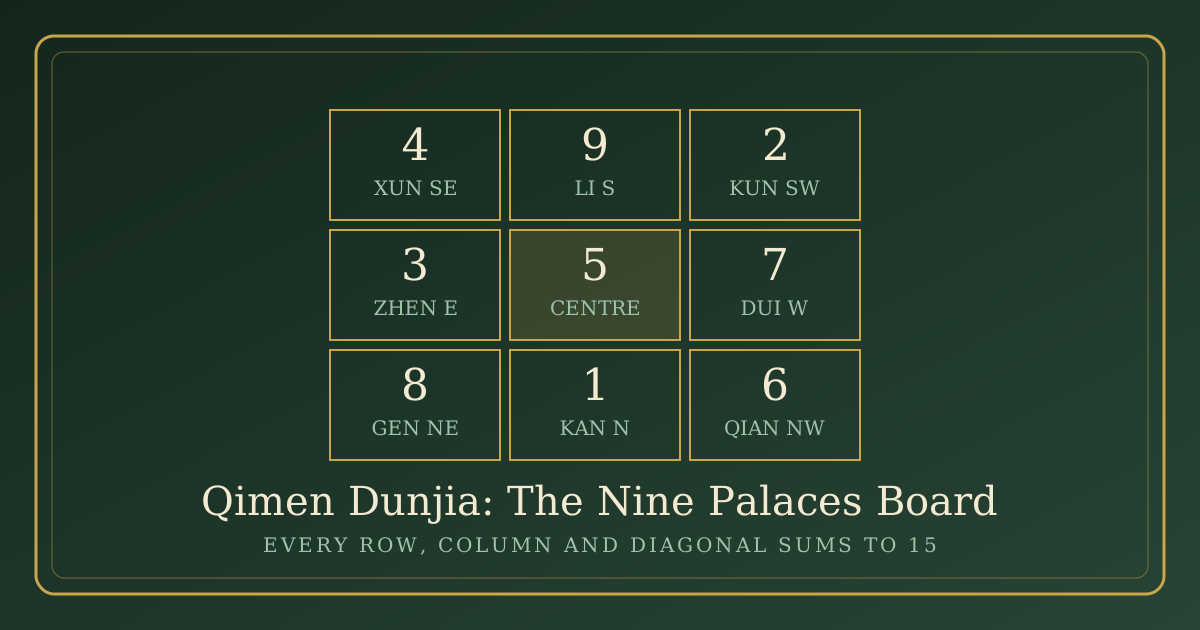
How to Read a Qimen Dunjia Chart: Nine Palaces, Eight Gates, Nine Stars, and Eight Spirits
Qimen Dunjia builds a chart for a moment rather than a person. Nine palaces hold the board still while nine stars, eight gates, eight spirits, and two rings of Heavenly Stems turn over it with the hour. This guide lays out the board, names every layer, shows how a reader picks a focus for a question, and works one schematic palace in the open so the moving parts stay visible.
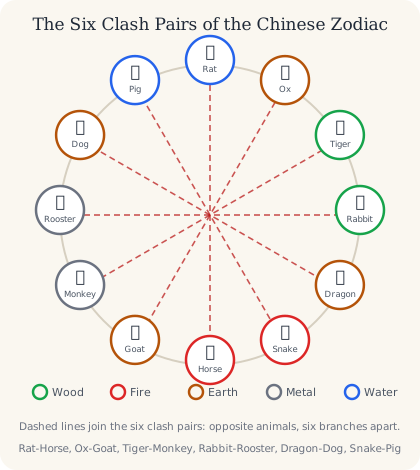
The Six Clash Pairs of the Chinese Zodiac: What Liu Chong Means in Tradition
Every zodiac animal has exactly one opposite on the twelve-branch wheel, six places away: Rat against Horse, Ox against Goat, and so on through Snake and Pig. This guide lays out all six clash pairs with their branch characters and fixed elements, shows how clashes sit beside the harmony trines and secret-friend pairs, works out the clash years from 2026 to 2031, and explains how traditional readers use a clash in a birth chart, a relationship reading, and a Tai Sui year, always as cultural practice rather than prediction.
Your Chinese Zodiac Element: Find It From Your Birth Year and Read the Full 60-Combination Table
Your zodiac animal repeats every twelve years, but your element comes from the Heavenly Stem of your birth year, and the two wheels together make sixty combinations before they repeat. This guide gives the last-digit rule for finding your element in seconds, states the January and February boundary that can change the answer, sets out the ten stems with their yin and yang polarity, and prints the full twelve-by-five table with one year for every combination in the 1984 to 2043 cycle.
Feng Shui Lighting: How Brightness and Colour Temperature Carry the Fire Element, Room by Room
In feng shui tradition, light belongs to the Fire element, and it is the one element a renter, a new buyer, or a tired homeowner can adjust tonight with no tools and no permission slips. This guide separates the tradition from the physics: what the Fire association actually claims, what Kelvin numbers on a bulb box actually measure, how the three working layers of light (ambient, task, accent) map onto rooms, and a room-by-room set of placements and bulb choices that respect leases, wiring, and eyes in equal measure.
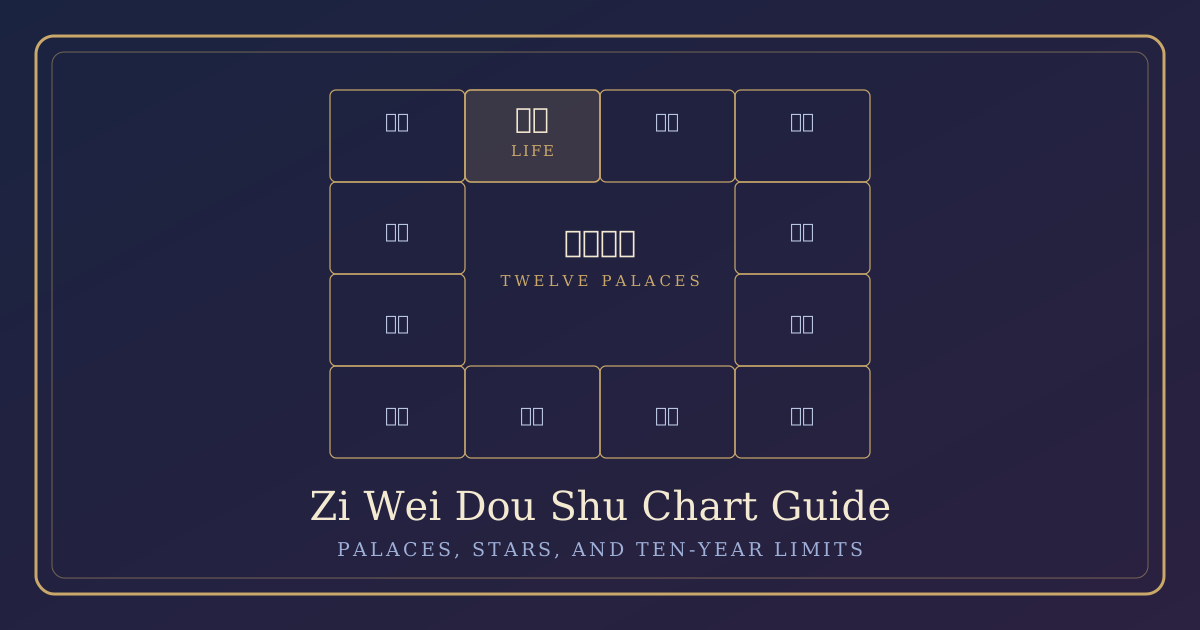
How to Read a Zi Wei Dou Shu Chart: The Twelve Palaces, Fourteen Major Stars, and Ten-Year Limits
Zi Wei Dou Shu takes a lunar birth date and a birth double-hour and builds a fixed square of twelve palaces, then seats fourteen major stars and over a hundred smaller ones inside it. The Life Palace anchors the reading, the Zi Wei star anchors the star placement, and the birth-year stem adds four transformations that mark where ease, drive, recognition, and friction sit in the chart. This guide lays out the twelve palaces in order, the two star groups, the full ten-stem transformation table, the Five Elements Bureau that sets the first ten-year limit, and one labelled hypothetical chart read palace by palace, including San Fang Si Zheng, empty palaces, and the ten-year major limits.
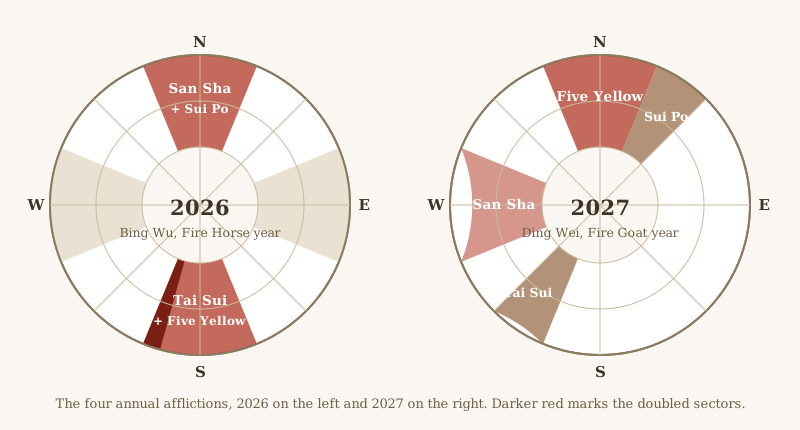
Tai Sui, San Sha, Sui Po, and the Five Yellow: Where the Annual Afflictions Sit in 2026 and 2027
Four directions in a home change their standing every feng shui year: the Tai Sui, the Sui Po opposite it, the San Sha, and the Five Yellow star. They come from two different systems, the year branch directions and the annual Flying Star flight, and tradition layers them on one floor plan with one shared rule: do not break ground in those sectors while they sit there. This guide sets out all four with their compass degrees, shows the 2026 and 2027 positions side by side, works one labelled hypothetical apartment through both years, and gives the short pre-Li Chun routine for moving last year placements out and the new year placements in.
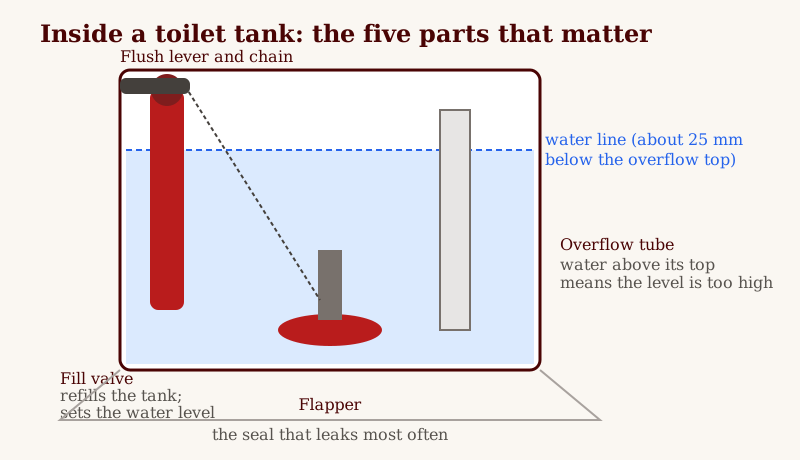
Fix a Running Toilet: Flapper, Fill Valve, and Water Level
A toilet that runs on and off by itself almost always has one of three faults: a worn flapper letting tank water seep into the bowl, a fill valve that will not shut off, or a water level set too high for the overflow tube. All three fixes need no special tools, cost little, and take under an hour. This guide shows how to tell which fault you have before you buy anything.
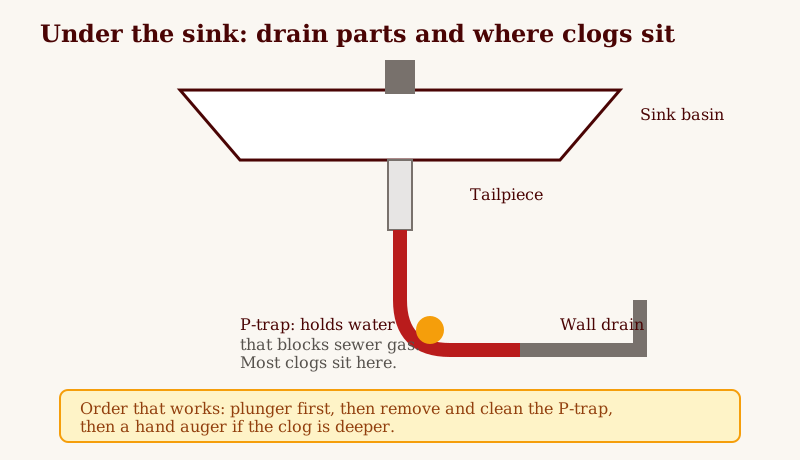
Unclog a Drain Without Chemicals: Plunger, Trap, and Auger
Most slow drains clear with three mechanical steps in order: a properly used plunger, removing and cleaning the P-trap, and a hand auger for clogs further down the line. Chemical openers are the last resort, not the first, and they make the mechanical work more dangerous when they fail. This guide walks the order that actually clears drains.
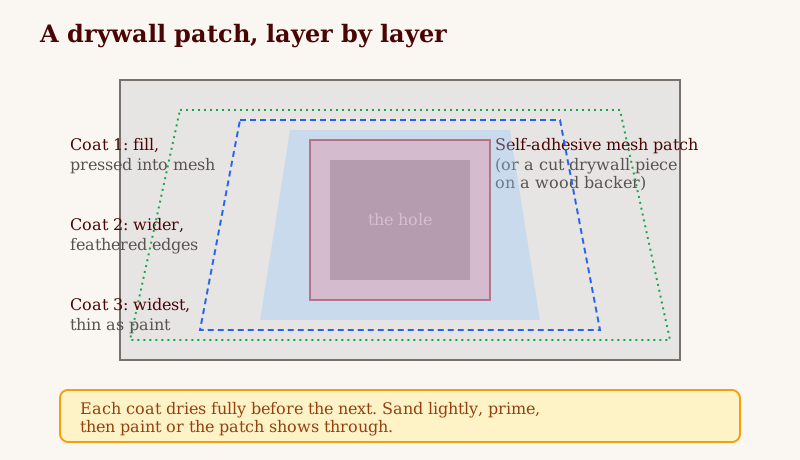
Patch a Drywall Hole: Small, Medium, and Doorknob-Sized
Drywall patching is a layering job, not a filling job. Small holes take spackle, medium holes take a self-adhesive mesh patch, and anything bigger than about 15 cm takes a real piece of drywall on a wood backer. The secret is three thin coats, each wider than the last, and primer before paint. This guide sizes the job correctly and walks each level.
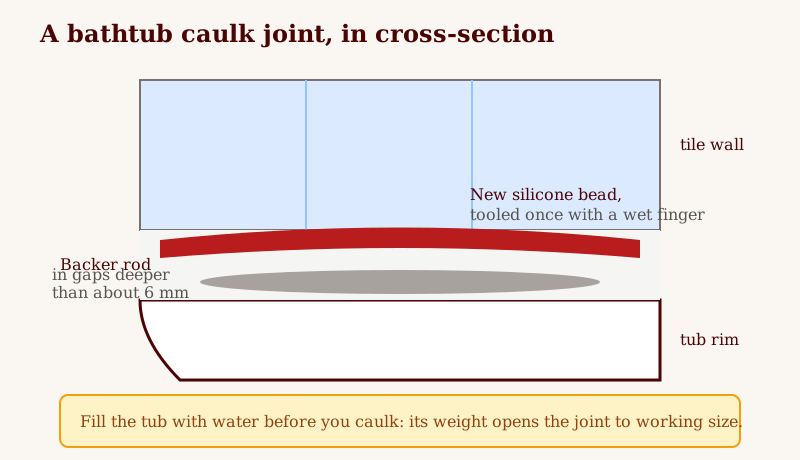
Reseal a Bathtub or Shower: Remove, Prep, and Bead It Right
Caulk fails by peeling, cracking, or growing mould that no longer scrubs off, and behind a failed bead, water reaches the wall board. The reseal job is 80 percent removal and preparation: every trace of old silicone out, the joint dry, then one smooth bead tooled once. Most DIY caulk jobs look bad because the old bead came out badly, not because the new one went in badly.
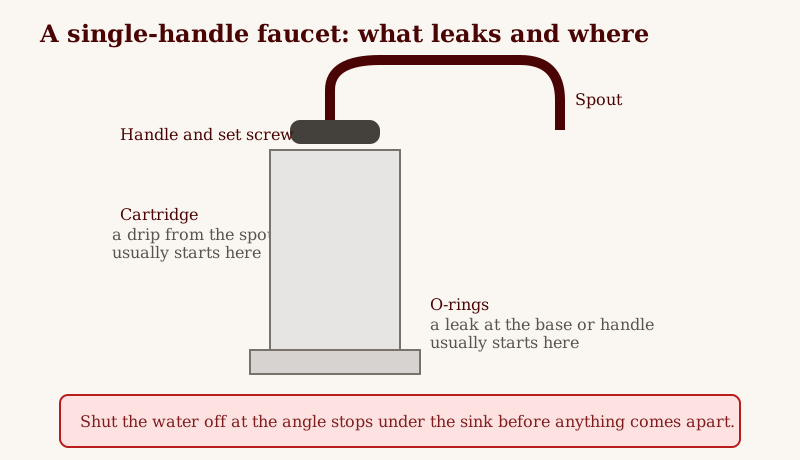
Fix a Leaky Faucet: Cartridge, O-Rings, and Seats
A dripping faucet is a worn seal, and where the water appears tells you which one: from the spout means the cartridge or washers; from the base or handle means O-rings. This guide covers the single-handle cartridge faucet most homes now have, plus the older two-handle compression type, with the water shut off properly first.
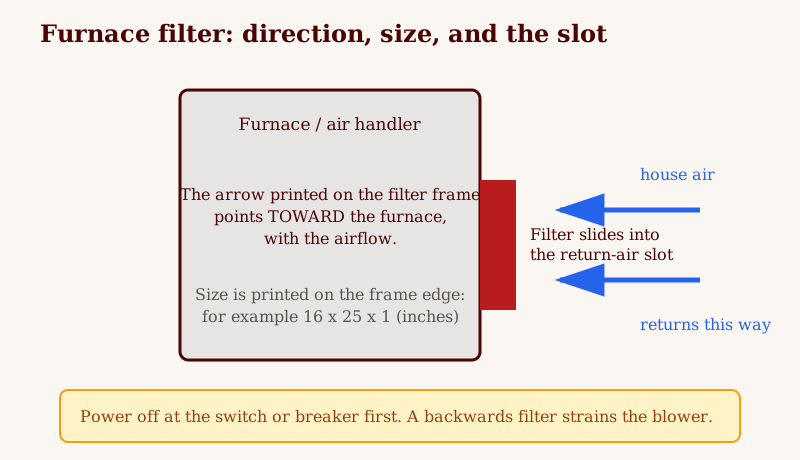
Replace Your Furnace Filter: Size, Direction, and Schedule
The furnace filter is the cheapest maintenance part in the house and the one that protects the most expensive: the blower and the heat exchanger. This guide covers reading the size off the old filter, the airflow arrow that half of all filters get installed against, MERV ratings without the upsell, and a replacement schedule by household rather than by the box.
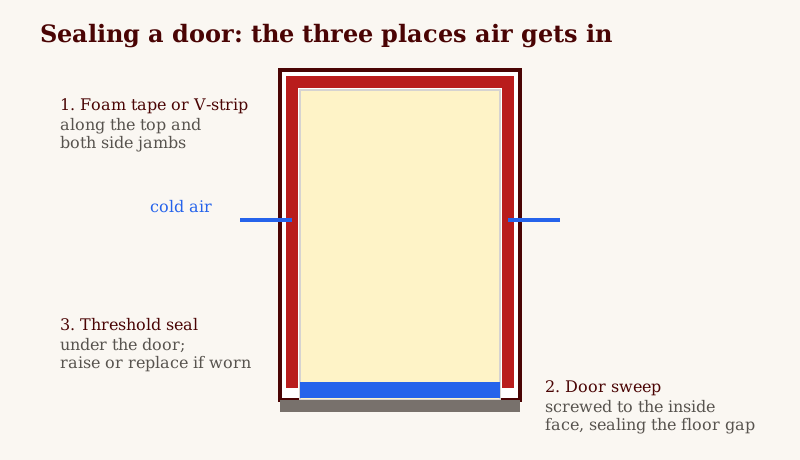
Weatherstrip Doors and Windows: Stop the Drafts You Can Feel
A drafty door leaks heated air around all four edges, and each edge seals differently: foam tape or V-strip on the top and sides, a sweep at the bottom, a sound threshold underneath. This guide finds the leaks with a candle test, picks the right seal per edge, and covers the window fixes that take an afternoon instead of a renovation.
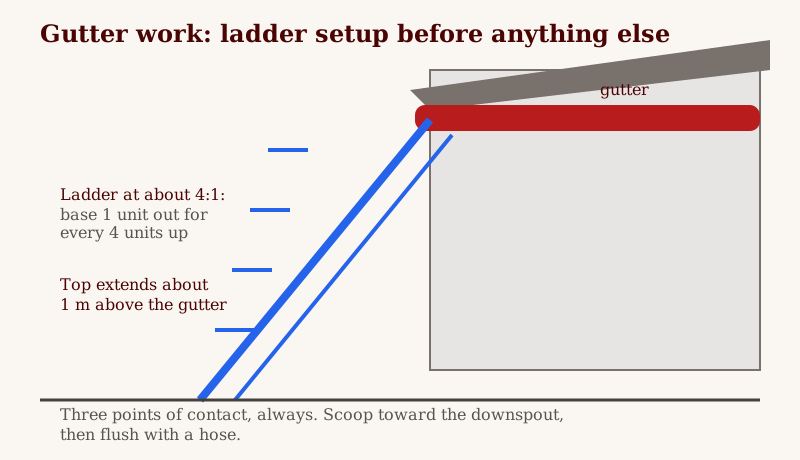
Clean Gutters Safely: Ladder Setup, Scoop, and Flush
Clogged gutters send water behind fascia boards, into soffits, and down foundation walls, and the repair bills for all three dwarf the cost of cleaning. The job itself is simple: scoop, flush, check the downspouts. The injuries come from the ladder, not the gutter, so this guide spends its care where the risk actually is.
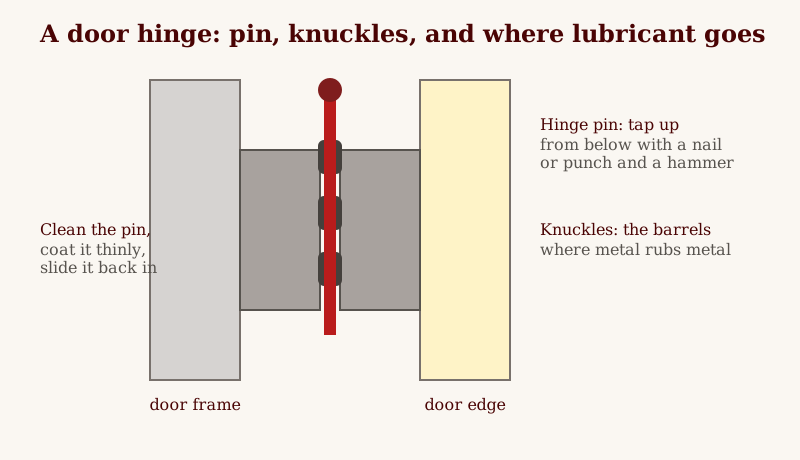
Fix a Squeaky Door: Hinge Pins, Lubricant, and Alignment
A squeak is metal grinding on metal inside the hinge barrel, and it is cured at the pin: tap it out, clean it, grease it, put it back. Spraying lubricant at the outside of a closed hinge mostly perfumes the problem. This guide also covers the squeak that is really a sagging door, and the floor squeak underneath it.
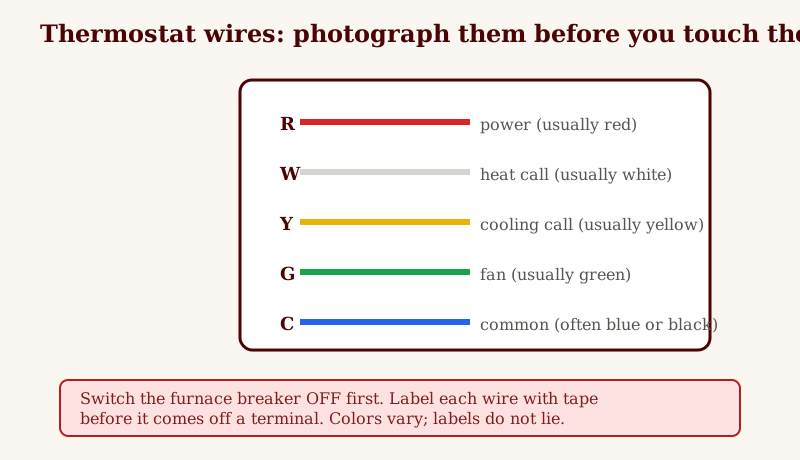
Replace a Thermostat: Wiring Labels, the C-Wire, and Setup
A basic thermostat swap is one of the safest electrical-adjacent jobs in the house because the wiring is low voltage, 24 volts, not mains. The whole risk is bookkeeping: label every wire before it moves, photograph the old plate, and know whether you have a C-wire before choosing the new unit. This guide walks the swap and names the systems that should not get a DIY thermostat.
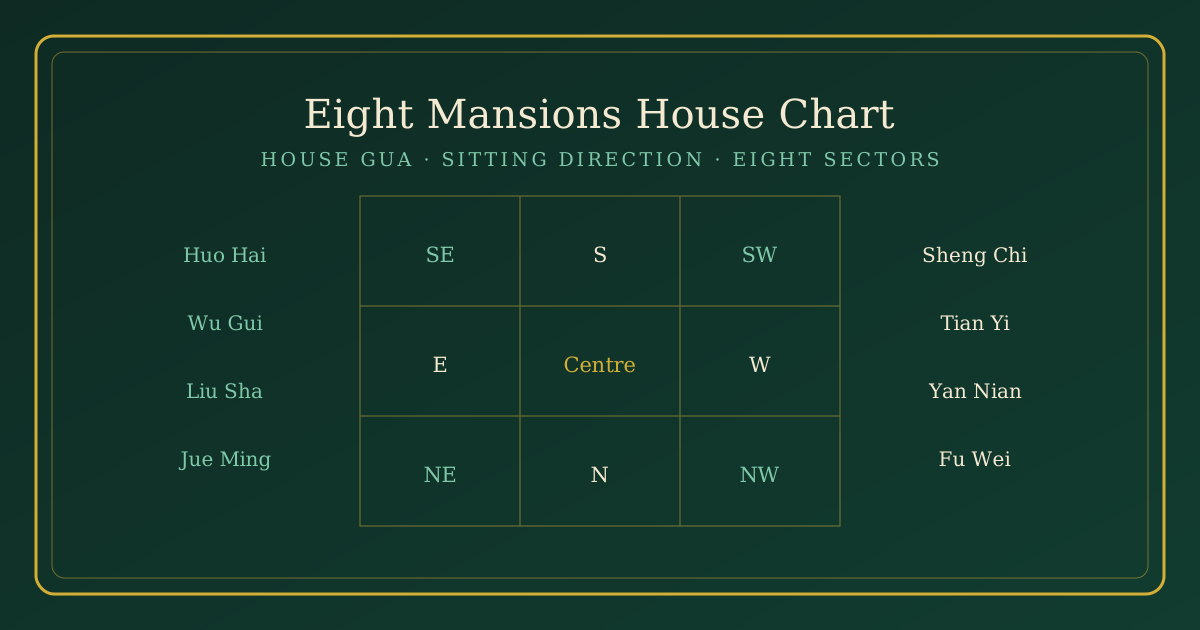
Eight Mansions Feng Shui: Find Your House Gua and Read the Sector Chart
The Kua number covers the person. Eight Mansions has a second chart that covers the building: the house gua, set by the direction the house sits in. This guide shows how to find the sitting direction with a compass, lays out all eight house types with their full sector charts, works one labelled hypothetical house room by room, and covers the door, stove, toilet, and bedroom placement rules teachers actually use.
2027 Fire Goat Year Guide: Dates, the Ding Wei Fire Element, and What Tradition Says for Each Sign
The Fire Goat year starts at Lunar New Year on February 6, 2027 in festival counting and at Li Chun on February 4, 2027 in BaZi counting. This guide sets out both dates and the year end on January 25, 2028, explains the Ding Wei stem and branch and why teachers read Fire feeding Earth in this year, works the January and February 2027 boundary births with exact dates, and lays out the twelve signs in their traditional groupings for a Goat year.
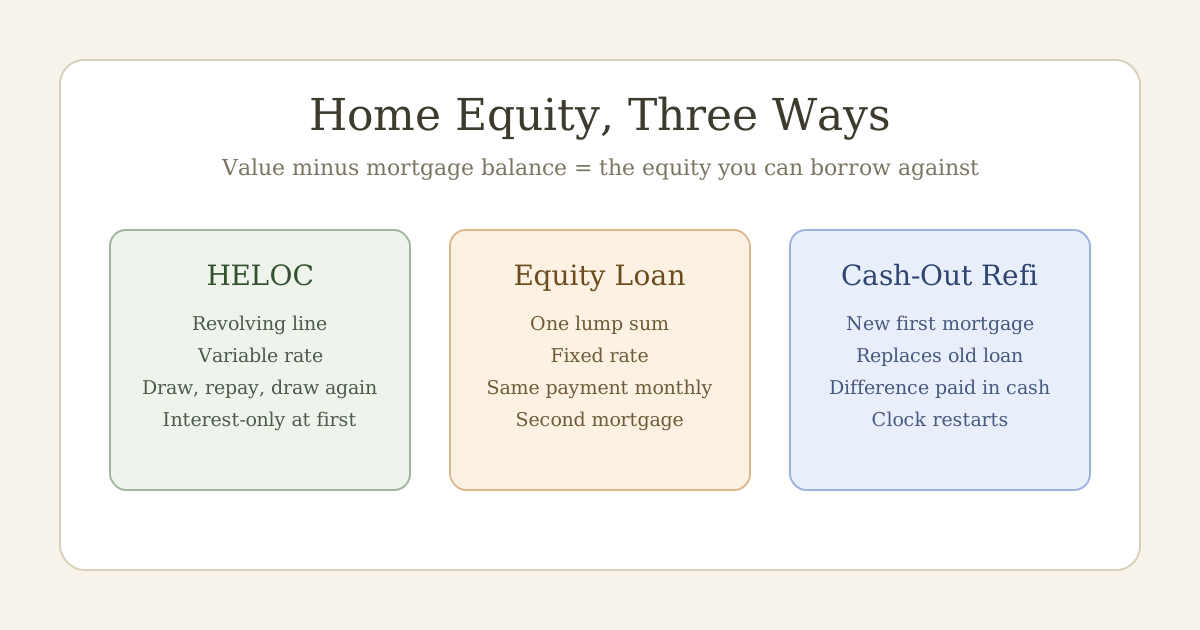
Home Equity Explained: HELOC vs Home Equity Loan vs Cash-Out Refinance
What home equity actually is, how lenders turn it into a borrowing limit with combined loan-to-value, and how the three ways of borrowing against a home - a HELOC, a home equity loan, and a cash-out refinance - differ in rate structure, payment shape, closing costs, tax treatment, and risk. Includes a worked hypothetical example with the payment math shown for all three.
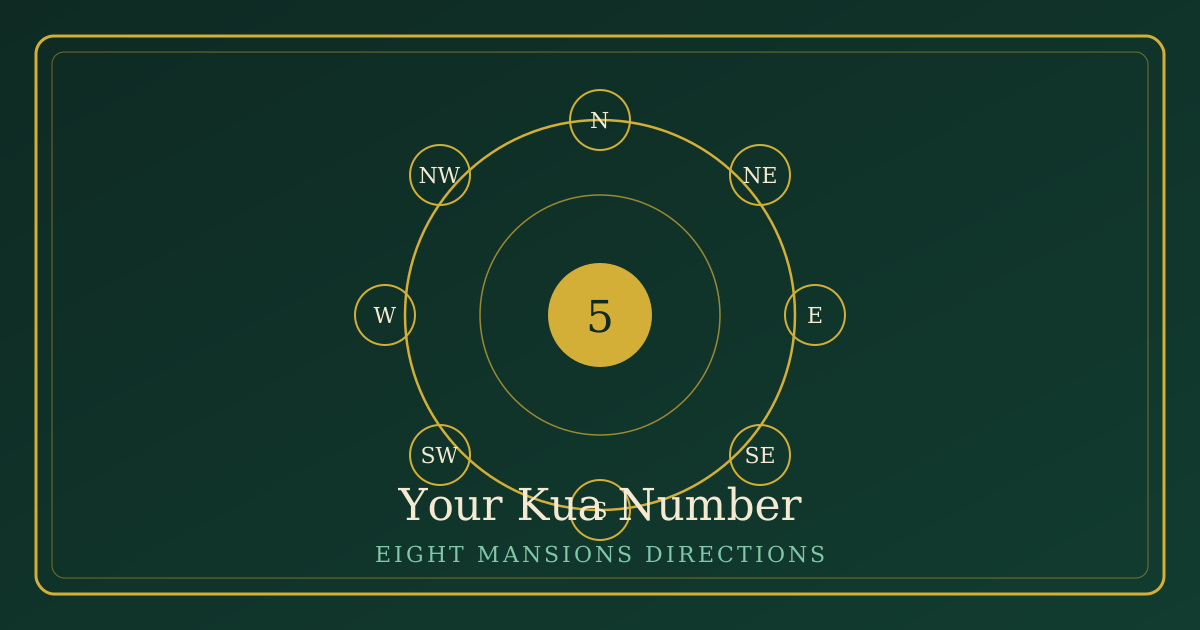
Kua Number: Find Yours and Read Your Eight Directions
The Kua number turns a birth year into a personal set of favourable and unfavourable compass directions within the Eight Mansions tradition. This guide shows the calculation step by step, works through four birth years, lays out all eight directions for every Kua, and explains how practitioners use the result for desk position, bed direction, and room choice.
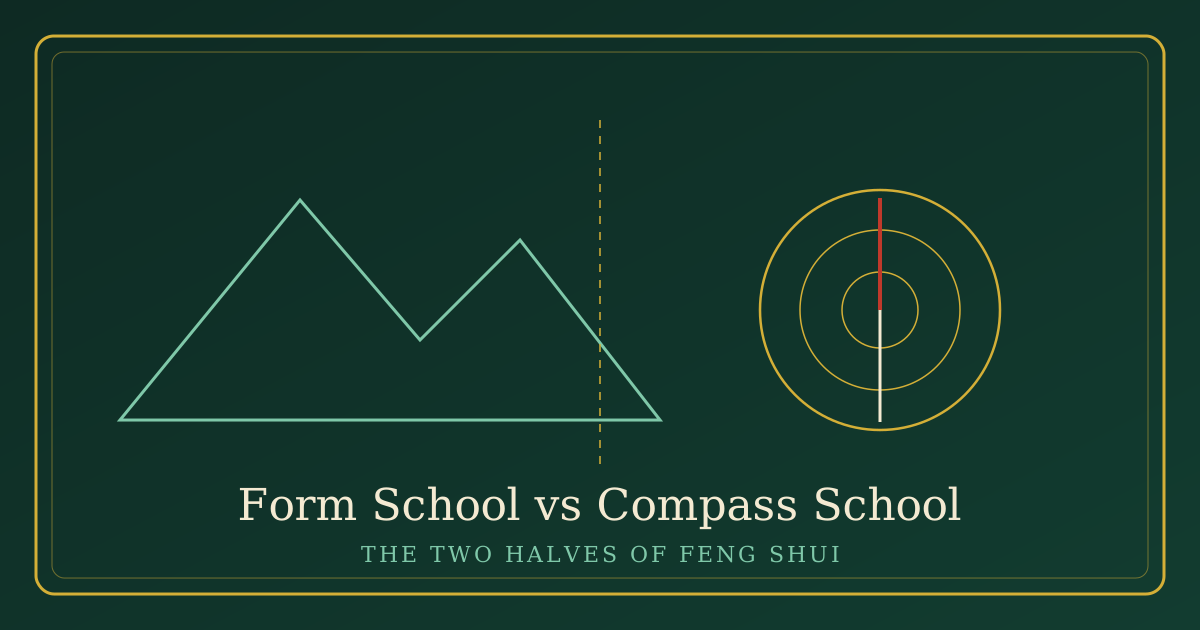
Form School vs Compass School: The Two Halves of Feng Shui
Form School reads the land and the room with the eyes. Compass School reads direction and time with the luopan. This guide traces where each branch came from, what each one can and cannot answer, sorts everyday feng shui tips by the school behind them, and shows how practitioners run the two together in one apartment.

Feng Shui Cures Explained: What a Cure Is, and the Salt Water Cure Done Properly
What practitioners mean by a feng shui cure, how the five-element cycles decide which object is used where, and the traditional salt water cure set up step by step - including where cures go wrong, how long they stay, and where schools disagree.
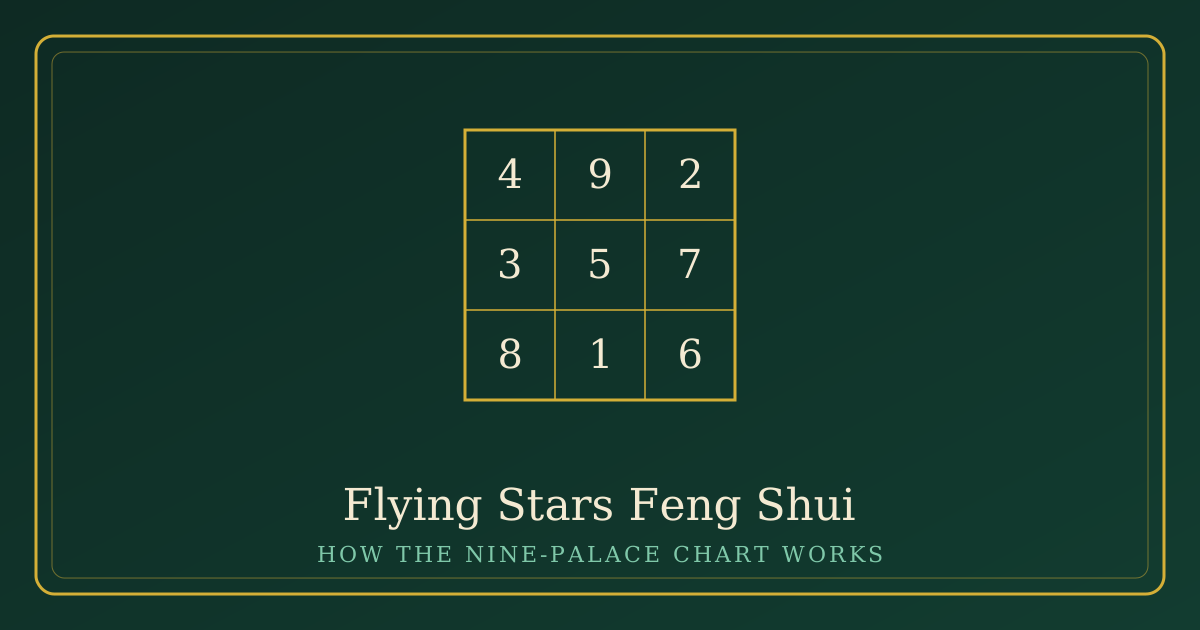
Flying Stars Feng Shui: How the Nine-Palace Chart Actually Works
How the Flying Stars nine-palace chart is built: the Lo Shu square underneath it, the nine stars and their traditional labels, periods and timeliness, the flight path that fills an annual chart, and how natal, annual, and monthly layers sit on top of each other in a real home.
Lucky Plants in Feng Shui Tradition: Lucky Bamboo, Money Tree, and Jade
Lucky bamboo, money tree, and jade are the three plants most often sold as symbols in Chinese shop and gift culture. This guide covers what each plant actually is, the customary meanings attached to stalk counts and placement, the folk stories behind the names, and the care each plant needs to stay alive.
Ben Ming Nian: What Tradition Says About Your Own Zodiac Year
Ben ming nian is the year your own Chinese zodiac sign comes back around, returning every twelve years. Tradition reads it as a year of friction with Tai Sui, the year's presiding deity, and answers with customs of steadiness: red clothing, a jade pendant, temple rites, and careful decisions. This guide explains the five forms of offending Tai Sui, works the 2026 Fire Horse year as an example, and shows how to find your own ben ming nian years.
Your Chinese Zodiac Sign by Birth Year: The Full Chart with Elements
Find your Chinese zodiac sign by birth year using the Lunar New Year chart from 1996 to 2032, with animal, element, and exact start and end dates. The guide explains the January and February cutoff rule, the 60-year element cycle, the Li Chun difference used in BaZi, and how to work out years outside the chart without guessing.
The Chinese Zodiac Hours: Your Birth-Hour Animal and the 12 Double-Hours
The traditional Chinese day is split into 12 double-hours, each tied to one Earthly Branch and animal. This guide gives the full double-hour table, explains why noon carries the Horse, shows where the hour pillar sits inside a BaZi chart, and covers the midnight split, boundary births, and local time questions that change a reading.
How to Cast an I Ching Hexagram: The Three-Coin Method, Step by Step
A plain walkthrough of the three-coin I Ching cast: the coin values, how six tosses build a hexagram upward from its first line, how changing lines produce a second hexagram, and how the Judgment and line texts are read together. Includes an eight-trigram table and one worked cast carried from first toss to final reading.
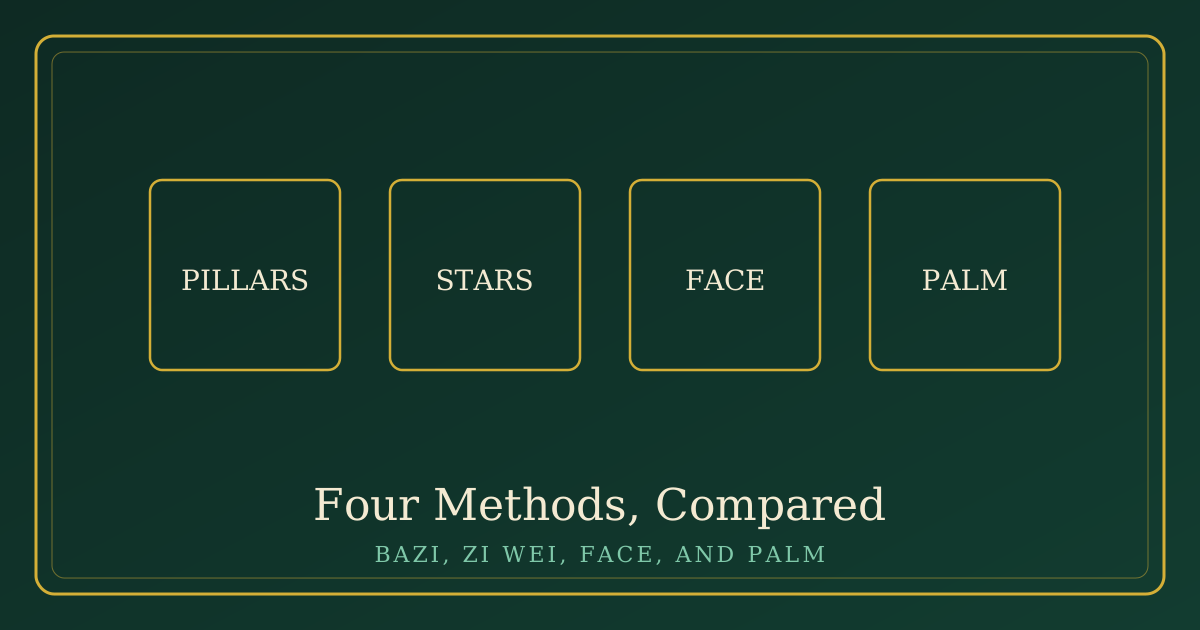
Chinese Fortune-Telling Methods Compared: BaZi, Zi Wei Dou Shu, Face Reading, and Palm Reading
Four Chinese pattern-reading traditions side by side: BaZi and Zi Wei Dou Shu build fixed charts from birth data, while face reading and palm reading work from the person in the room. Covers what each method reads, what input it needs, how its time cycles work, and what a sitting actually looks like, with a comparison table and a career question carried through all four.
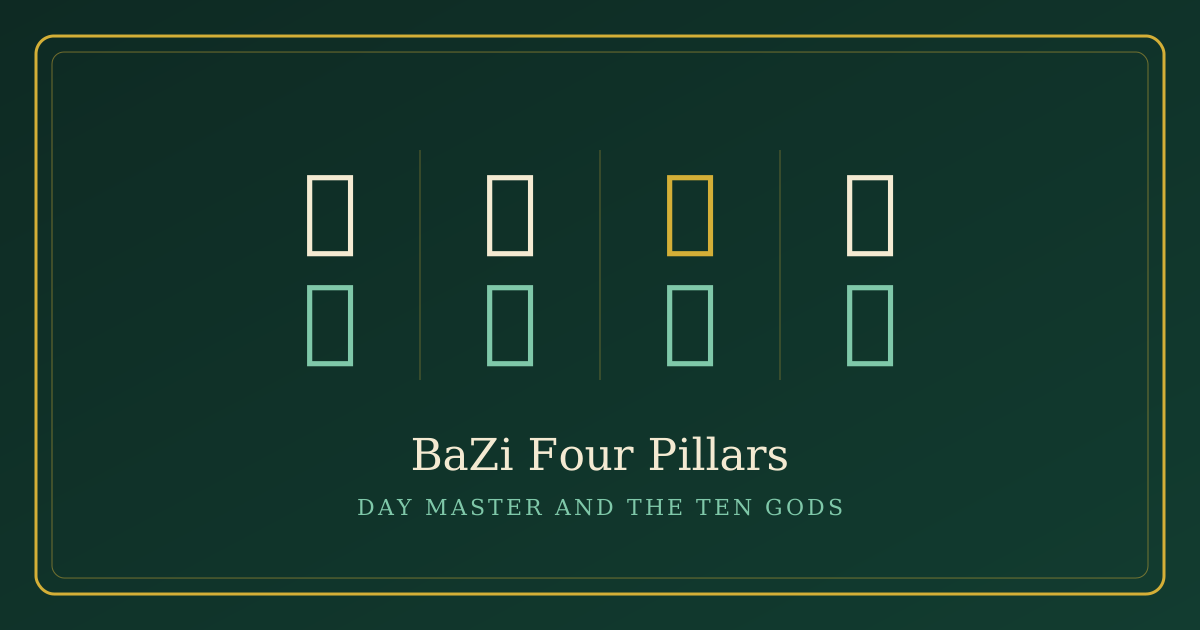
How to Read a BaZi Chart: The Four Pillars, Your Day Master, and the Ten Gods
BaZi takes a birth year, month, day, and hour and writes them as eight characters: four pillars, each one Heavenly Stem over Earthly Branch. The stem on the day pillar, the Day Master, is the reference point a reader uses for everything else. This guide sets out the ten stems, the twelve branches with their hidden stems, the five element relationships, and the Ten Gods that come out of them, then walks a labelled hypothetical chart through the reading steps a teacher actually follows, including the Li Chun boundary, the birth-hour question, and the ten-year luck pillars.
Rental Property Tax Deductions: What Landlords Can Claim
How rental property tax deductions actually work: the operating-versus-capital line, the categories landlords claim in the year they pay them, depreciation and capital cost allowance explained in plain language, what does not count, and a record system that makes filing calm instead of archaeological.
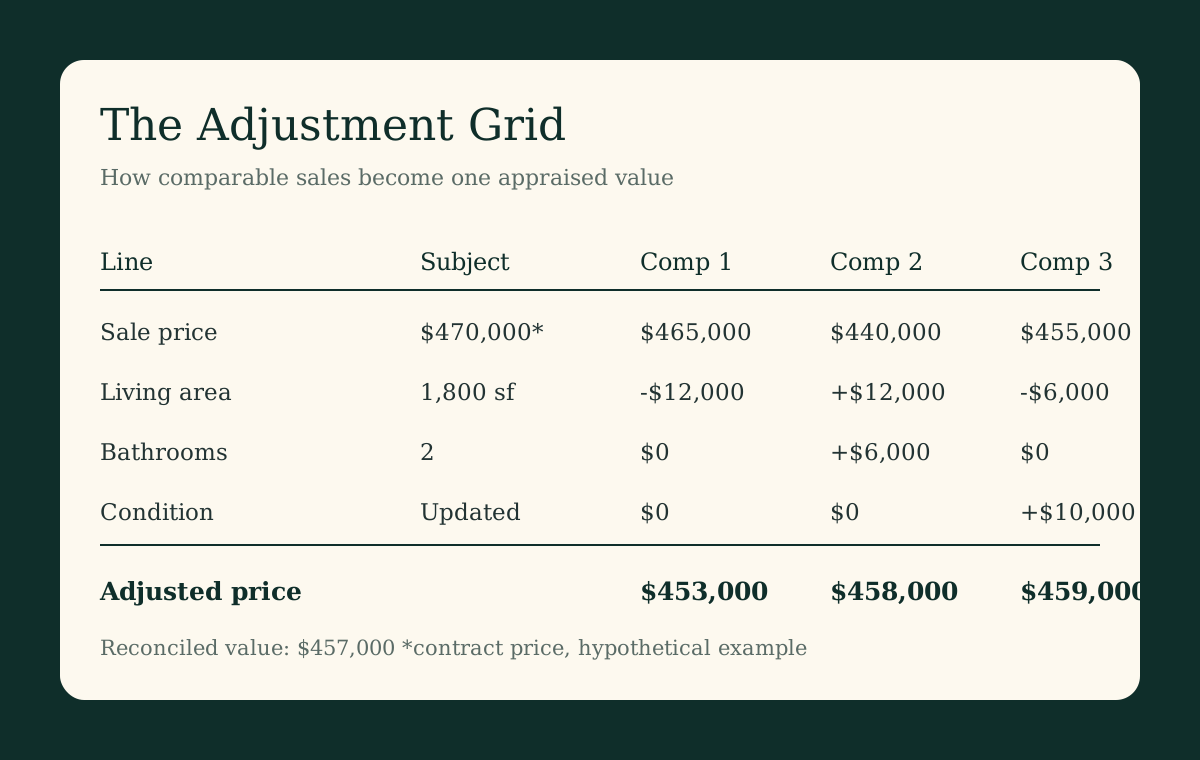
Home Appraisal Explained: How the Number Is Built
How a home appraisal actually produces its number: the three approaches to value, how to read the comparable-sales grid line by line, a fully worked hypothetical adjustment example, and the step-by-step playbook for buyers and sellers when the value comes in low, including the reconsideration of value process.
Property Management: Self-Manage or Hire a Manager
What a property manager actually does, how management fees are structured, what self-managing costs in time, and a decision framework to choose between them.
Rental Property Maintenance Schedule: A Year-Round Checklist
The seasonal, monthly, and per-system maintenance calendar for a rental property: what to service, inspect, and replace, how to size a repair reserve from your own numbers, and a copyable annual checklist.
Lease Agreement for Landlords: A Complete Guide
A clause-by-clause landlord guide to the lease agreement: what each section has to settle before signing, the local rules to confirm first, the gaps that cause disputes, and a worked audit you can copy.
Landlord Insurance Explained: Coverage and Gaps
What landlord insurance actually covers (building, liability, loss of rent, landlord contents), what it never covers, what moves the premium, and a quote audit you can run before you sign.
How to Buy a Home: Budget to Keys in 8 Steps
Buy a home in the right order: budget, pre-approval, search, offer, inspection, closing costs, and move-in, with a deep guide for every step.
How Much House Can You Afford? The Math Lenders Skip
Work out what you can afford from the monthly payment outward: lender ratios, the full carrying-cost stack, and a labeled hypothetical to rerun.
Mortgage Pre-Approval: Documents, Steps, and Timing
What pre-approval is and is not: the documents lenders ask for, how the review runs step by step, how long the letter lasts, and mistakes to avoid.
Home Inspection Checklist for Buyers: Room by Room
What a professional inspection covers system by system, what you should check yourself at the second visit, how to read the report, and how findings turn into negotiate, repair, or walk-away decisions.
Closing Costs Explained: Every Fee Between Offer and Keys
Closing costs in four buckets: lender charges, title and escrow, prepaids, and government taxes, plus how to audit the final disclosure line by line.
Home Selling Guide: Price, Prepare, List, Close
Sell in order: price from comparable sales, prepare what earns its cost back, list and show well, review offers, and close without surprises.
How to Price a Home to Sell: The Comparable-Sales Method
Price a home from evidence: choose comparable sales, adjust for size and condition, read the range, set list strategy, and respond to the market.
Prepare Your Home for Sale: The Room-by-Room Checklist
Prepare a home for sale room by room: fix objections first (water, safety, systems), then light, space, and scent, and skip what does not pay back.
Renting Out a Property: The First-Time Landlord Guide
Decide if the property works as a rental, price the rent, set up the legal groundwork, screen fairly, run the lease and move-in, collect rent, hold reserves, and know your exit options.
How to Set Rent for a Rental Property
Set rent with three lenses: comparable listings for the ceiling, a cost-based floor you cannot price below, and screening heuristics used only as a rough sort, then adjust and hold or lower with discipline.
Rental Property Expenses: What Landlords Actually Pay
The real landlord expense stack: tax, landlord insurance, maintenance, vacancy, management, utilities, association fees, licensing, accounting, and the capital items that sit below the operating line.
Home Improvement ROI: What Pays Back and What Does Not
Which improvements repay at resale and which pay the owner instead: the 2025 Cost vs Value national table, the neighborhood ceiling, cost-per-use thinking, and a decision framework with a worked example.
How to Screen Tenants for a Rental Property
Screen tenants with one written criteria set applied the same way to every applicant: define the standard, run lawful checks in order, verify what can be verified, and keep the file that proves it.
Security Deposits for Landlords: A Complete Guide
Handle a security deposit without the argument: confirm your local rule, collect and receipt it properly, hold it as prescribed, document condition at both ends, and return it on deadline with an itemized account.
Kitchen Remodel ROI: What Pays Back at Resale
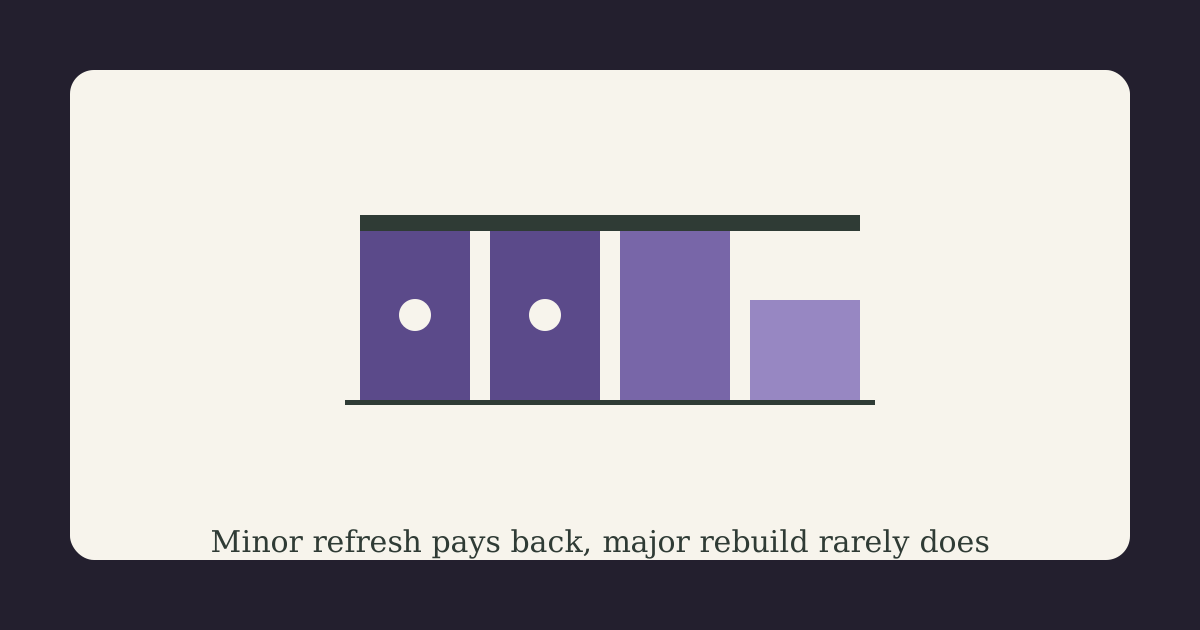
Kitchen ROI by scope from the 2025 Cost vs Value report: why a minor midrange refresh recoups 113 percent while major remodels recoup 51 and 36 percent, and how to choose your scope.
Bathroom Remodel ROI: What Pays Back at Resale
Bathroom ROI by scope from the 2025 Cost vs Value report: midrange remodel at 80 percent recouped, universal design at 61, additions at 53 and 36, upscale at 42, and how to choose.

Feng Shui Nursery: Layout for Sleep, Safety, and Calm
A nursery layout that treats safety rules as the foundation and Feng Shui as the styling layer: crib placement off the door line, command position for the nursing chair, light and sound control, and what not to buy.

Feng Shui Hallways and Corridors: Light, Flow, and Doors
The corridor treated as circulation, not leftover space: lighting layers, door alignment and hardware, long-hallway pacing, runner and art placement, and fixes for dark or cluttered halls.
Rental Yield Explained: Gross vs Net, Worked Out
Gross and net rental yield, the formulas, a full worked example on labeled hypothetical numbers, and the vacancy and cost lines that move the result most.
How to Take a Feng Shui Compass Reading at Home
Take a repeatable compass reading of your home: magnetic vs true north, the NOAA declination correction, where to stand, interference traps, and recording degrees exactly as read.
Cap Rate Explained: NOI, Value, and a Worked Example
Cap rate is NOI divided by property value. How NOI is built, what it leaves out, a fully worked hypothetical example, the reverse valuation, and how cap rate differs from yield and cash flow.
Cash-on-Cash Return Explained: The Leveraged Math
Cash-on-cash return is the annual before-tax cash flow divided by the cash you actually put in. A fully worked hypothetical example, how leverage helps or hurts, and why it differs from cap rate and rental yield.
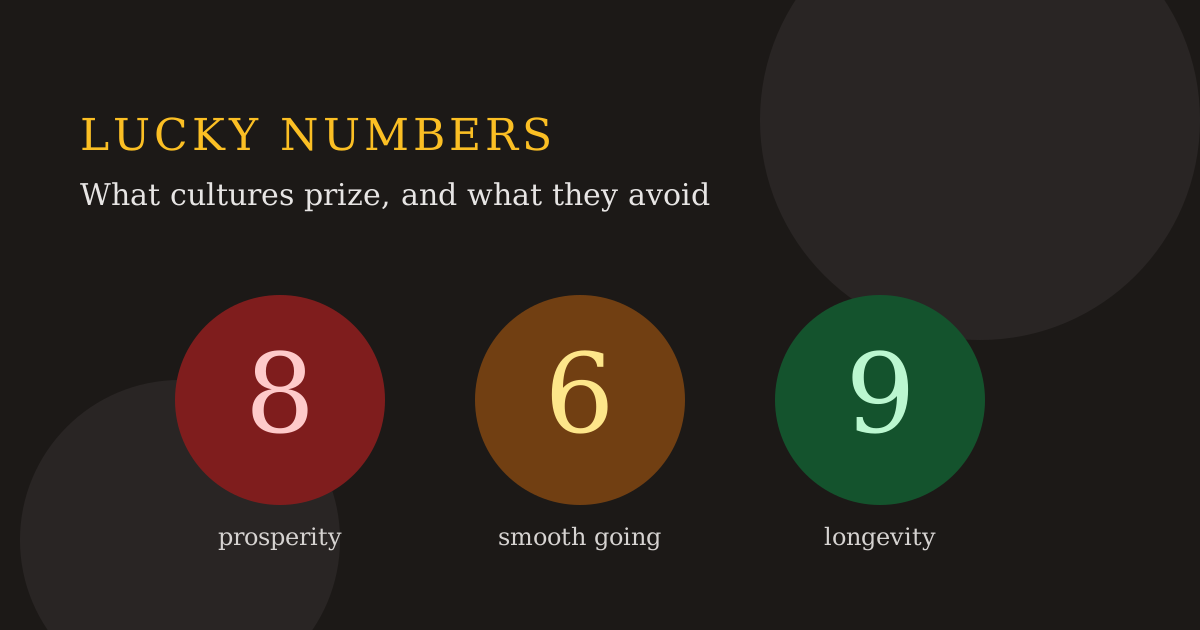
Lucky Numbers Around the World: A Cross-Culture Guide
Why 8 means prosperity, why 4 gets skipped on whole continents, and why 7 carries the West: a clear, respectful guide to lucky numbers across cultures, plus what people actually pay for them.
Lucky License Plates: World Records and Wild Prices
A plain Dubai plate reading "P 7" sold for AED 55 million. How lucky license plates became auction assets, the verified world records, and why governments run the auctions.
Lucky Telephone Numbers: The Million-Dollar Digits
Beijing courts have auctioned phone numbers ending in five 8s for RMB 2.25 million, and a UAE number of seven 7s sold for AED 7,877,777. Inside the premium lucky-number market.
Why 8 Is Lucky in Chinese Culture: Sound, Money, Proof
One syllable made 8 the most valuable digit on earth: ba sounds like fa, to prosper. The homophones, the 88 and 168 combinations, the Olympics timestamp, and the receipts.
Why 4 Is Unlucky in East Asia: Tetraphobia Explained
Four sounds like death in Mandarin, Cantonese, Japanese, and Korean, so buildings skip floors, hospitals skip rooms, and 4-heavy phone numbers sell at a discount. The full picture.
Lucky 7 and Unlucky 13: The West's Favourite Digits
Seven wins every favourite-number poll and carries the West's luck, while 13 got a Greek name for its fear and a missing label in hotels. Where each reputation came from, with documented behaviour separated from legend.
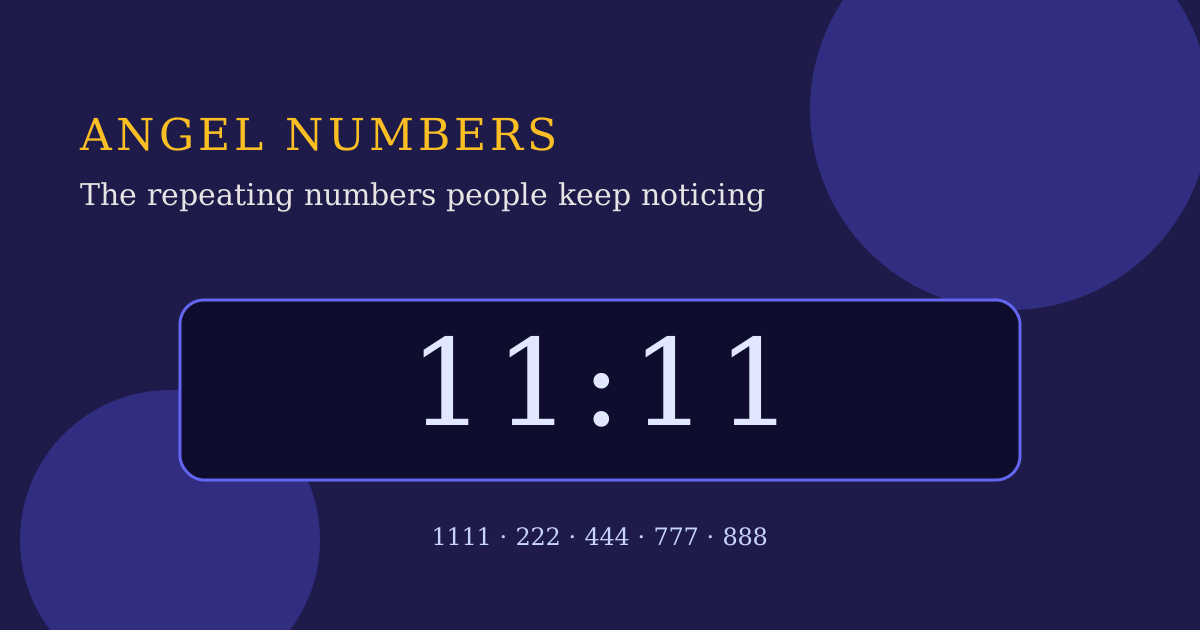
Angel Numbers: A Guide to Repeating-Number Meanings
Why you keep glancing at 11:11, what numerology tradition says each repeating sequence means, and the psychology that explains the noticing. A respectful guide to angel numbers.
1111 Angel Number Meaning: The 11:11 Moment Explained
1111 is the most famous angel number: alignment, beginnings, and the wish people make at 11:11. What numerology tradition says, how it differs from 111, and why you keep catching it.
222 Angel Number Meaning: Balance, Patience, Partnership
222 is the diplomat of the angel numbers: balance over force, trust over hurry, and relationships handled with care. What numerology tradition says, and how to use it well.
444 Angel Number Meaning: Stability, Home, Foundations
444 is the foundation stone of the angel numbers: stability, protection, and the practical work of building a life. The numerology reading, its home-and-hearth meaning on this site, and what the limits are.
777 Angel Number Meaning: Luck Turned Inward
777 marries the luckiest digit in the West to numerology's inward turn: intuition, study, and trust. The tradition's reading, the slot-machine glow it borrows, and the grounded response.
888 Angel Number Meaning: Abundance, Flow, and Return
888 is where two great number traditions shake hands: China's prosperity digit tripled meets numerology's abundance sequence. What each tradition says, and the grounded truth about money.

Lucky Colors: Zodiac, Feng Shui, and Cultural Guide
Red for fortune in Beijing, white for weddings in the West and mourning in parts of Asia, gold almost everywhere: a full guide to lucky colors by zodiac, feng shui element, and culture.
Lucky Colors by Zodiac Sign: All 12 Signs Charted
Aries runs on Mars-red, Taurus on Venus copper and green, Pisces on sea tones. The traditional lucky colors for all twelve zodiac signs, where each association comes from, and how to wear them well.
Chinese Zodiac Lucky Colors for All 12 Animals
Rat years favour blue, gold, and green; Dragon years gold and silver; Horse years yellow and green. The traditional lucky colors for every Chinese zodiac animal, with the years to find yours.
Feng Shui Colors by Room: The Five Elements at Home
Green feeds the family room, fire warms the dining room, water calms the career corner. How feng shui assigns colors by element and room, with paint-level guidance and the balance rules.
Red in Chinese Culture: Luck, Envelopes, and Weddings
Why red rules Chinese celebration: the Nian legend, red envelopes and their etiquette, wedding red versus Western white, lanterns, couplets, and the small courtesies (never a green hat) around the luckiest color on earth.
Front Door Colors by Direction: Feng Shui Traditions
Red for a south-facing door, deep blue or black for north, green for east and southeast: the feng shui traditions for choosing a front door color by compass direction, with the caveats stated plainly.
Why Do I Keep Seeing Repeating Numbers?
You notice 111, 222, or 11:11 everywhere because your attention has learned to flag them. This guide explains the psychology, the tradition, and how to tell a pleasant pause from a costly habit.
111 Angel Number Meaning: The Spark Before 1111
111 is the forming beginning of the angel numbers: a new cycle taking shape and a nudge to watch your thoughts. How it differs from 1111, and why 11 is a master number.
333 Angel Number Meaning: Expression and Encouragement
In numerology tradition, 333 amplifies the digit 3: expression, creativity, and optimism read as encouragement to speak, make, and share. Here is the full reading and why it keeps appearing.
555 Angel Number Meaning: Change and Transition
In numerology tradition, 555 amplifies the digit 5: change, movement, and freedom read as a major transition already in motion. The full reading, a cross-cultural footnote, and why it keeps appearing.
666 Angel Number Meaning: Fear, Luck, and a Reframe
666 carries opposite reputations: the number of the beast in one tradition, high praise in Chinese online culture, and a gentle reframe in angel-number reading. This page holds all three with respect.
999 Angel Number Meaning: Completion and Long Life
999 closes the angel number cycle: endings that make room. In Chinese tradition 9 means long-lasting, honoured at the Double Ninth Festival. What both readings say about finishing well.
Number 9 Meaning: Longevity, Completion, and a Tale of Two Cultures
In Chinese tradition 9 sounds like the word for long-lasting and stands for longevity and yang fullness, while in Japan the same digit can echo suffering. A field guide to one number with two reputations.
666, 888 and 999: A Field Guide to Chinese Internet Number Slang
In Chinese chats, 666 means awesome, 520 means I love you, and 233 means you are laughing. How sound-driven number slang works, what 888 and 999 add, and how to use it without landing awkwardly.
How to Choose a Lucky Phone Number Without Paying Auction Prices
A practical guide to choosing a phone number that feels lucky and works hard: sound traditions, pattern craft, carrier and resale checks, and the recycled-number risks nobody mentions.
Wedding Lucky Colors Across Cultures: White, Red, Gold, and You
Queen Victoria made white fashionable in 1840, Chinese and Indian brides wear red for joy and prosperity, and Japan pairs white with a fresh beginning. How wedding colors carry meaning, and how couples adapt them.
Lucky Numbers by Culture: India, Japan, Korea and Thailand
India counts to 108, Japan honours seven gods and a widening eight, Thailand steps forward on nine, and Korea keeps a quieter list beside a shared caution about four. A respectful field guide to what each number means, why, and where you will actually meet it.
Lottery Numbers Psychology: The Most Picked Combinations and What They Really Mean
Why crowds choose birthdays, sevens and tidy patterns, how jackpot sharing turns a popular win into a small share, and the one point that matters in this whole subject: your choice cannot change your odds, but it can change how many people you split with.
Lucky Business Numbers: Shop Addresses, Unit Numbers and Brand Digits
A practical guide to how shops and brands choose addresses, unit numbers, floors, phone digits, opening dates and prices with number traditions in mind, and when readability and rent should come first.
Angel Number 1212: Meaning in Numerology Tradition
1212 pairs the beginning digit 1 with the partnership digit 2 and repeats the complete cycle number 12. In numerology tradition it is read as steady steps taken in order and with balance. Why 12:12 is noticed so often, and how 1212 differs from 1111 and 1221.
Angel Number 1234: What the Staircase Sequence Means
1234 is the staircase of the angel numbers. In numerology tradition readers take the ascending run as steps in order: begin, cooperate, express, and build. A grounded guide to the reading, the clock moment at 12:34, and why the sequence stands out.
Angel Numbers vs Life Path Numbers: How They Differ
Angel numbers are sequences noticed in everyday life. A life path number is calculated once from a birthdate. This guide explains how numerology tradition derives and uses each one.

Lucky Colors for the 2026 Fire Horse Year
2026 is a Fire Horse year (Bing Wu) in the Chinese sexagenary cycle, beginning at Lunar New Year on 17 February 2026. What the five-elements tradition associates with fire, earth, metal, water, and wood colors, and how practitioners use those colors at home and in clothing, framed as tradition throughout.
Car Colors and Luck: What People Believe vs Why They Really Buy
White leads global car sales for plain practical reasons, red carries prosperity hopes in China, black signals status, and feng shui matches color to birth element. A clear-eyed guide to belief, physics, and how to choose well.
What Color to Wear for a Job Interview or Exam: Convention, Culture, and Luck Traditions
Navy, charcoal, and white became interview convention for practical reasons. Exam day rewards familiar, comfortable clothes. How luck traditions, from gaokao red to zodiac colors, fit beside both.
Black, White and Green: How Three Colors Change Meaning Around the World
White can dress a bride in London and a mourner in Beijing, black can mean grief, formality, or the water element, and green can signal faith, money, envy, or nature. A culture by culture guide for readers and for mixed culture homes.

Feng Shui Dining Room Layout Guide
A whole-room dining guide: table size math, host-seat placement, lighting heights, rug sizing, mirrors, color, and a 12-mistake checklist.

Feng Shui Kids Bedroom Layout Guide
A children's bedroom guide: bed placement, bunk and loft choices, sleep-study-play zones, light and color by age, and a safety checklist.
Feng Shui Bagua Map: Room-by-Room Guide
Apply the Bagua map room by room: entry, living room, kitchen, bedroom, bathroom, and office, using one map method consistently throughout.

The Command Position: A Whole-Home Guide
The three command-position rules: see the door, stay out of its direct path, keep solid backing. Applied to bed, desk, seating, and stove.

Period 9 Feng Shui & Acoustic Harmony
How sound behaves in a Period 9 home: dampening, soundscapes, and room checks you can verify, with Feng Shui symbolism kept in its proper place.

House Facing Direction in Feng Shui: N, S, E, W
Compare north, south, east, and west facing homes by daylight, heat, glare, wind, and room use, with compass inputs labeled and checked.
Apartment Doors, Elevators, and Corridors
Assess a condo or apartment door near an elevator, stair, chute, or long corridor through noise, privacy, access, shared-building rules, deliveries, air, and real unit conditions.

Garden Gates, Paths, Fences, and Trees
Plan gates, paths, fences, and trees around drainage, visibility, roots, mature size, and accessible movement, with Form School flow second.

Feng Shui for Renters
Improve a rental home with reversible room layouts, light, storage, privacy, maintenance documentation, lease-aware changes, and Feng Shui symbolism presented as tradition, not prediction.

Moving Into a New Home: 30-Day Guide
Use the first 30 days in a new home to document condition, secure access, learn light and air, and set up sleep and daily routes that work.

Fireplace and TV Living-Room Layout
Arrange a fireplace, television, sofa, windows, doors, and conversation areas around viewing, heat, glare, routes, anchoring, storage, and optional Fire-element symbolism.

Beams, Columns, and Sloped Ceilings
Work with exposed beams, structural columns, bulkheads, and sloped ceilings through clearance, furniture fit, lighting, structure, maintenance, and non-alarmist Form School.

Basement and Attic Feng Shui: Damp, Light, Use
Assess basement and attic rooms first by moisture, radon, exits, ceiling height, and ventilation, then by lawful use, before any symbolism.

Multi-Generational Home Feng Shui
Plan a shared home around privacy, accessible routes, sleep schedules, caregiving, kitchens, bathrooms, storage, family rituals, and equitable decision-making.

Nursery and Child Bedroom Feng Shui
Create a nursery or child bedroom around safety guidance, supervision, sleep, cords, storage, and play, with symbolism as the optional layer.

Feng Shui With Pets: Beds, Litter, Safe Plants
Place pet beds, litter, food, water, gates, plants, routes, windows, and storage around animal welfare, cleaning, household access, and calm shared zones.

Closet and Storage Feng Shui: Declutter Systems
Design closets, pantries, and everyday storage around inventory, reach, doors, moisture, weight, and cleaning, not just how they photograph.

Semi-Detached and Townhouse Feng Shui
Navigate shared walls, entrances, driveways, yards, noise, drainage, repairs, privacy, and neighbour relationships in townhouses, duplexes, and semi-detached homes.

Stairs Facing the Front Door
Assess stairs facing a front door through landing space, handrails, lighting, door swing, visibility, storage, renter limits, and optional Feng Shui symbolism.

Bathroom Door Facing the Bed
Solve an ensuite or bathroom door facing a bed with practical checks for door swing, sightlines, moisture, exhaust, night lighting, privacy, and renter-friendly layouts.

Stove and Sink Placement
Evaluate stove and sink placement through work zones, landing space, ventilation, plumbing, heat, splashing, accessibility, and optional Fire–Water symbolism.

Front Door Facing the Back Door
Assess a front door aligned with a back door, window, or long hallway using distance, sightlines, drafts, privacy, circulation, daylight, and safe zoning.

Awkward Bedroom Layouts
Choose a bed position in an awkward room by comparing doors, windows, wardrobes, radiators, beams, access, privacy, noise, and sleep routines - not fear-based rules.

Home Office Feng Shui: Doors & Windows
Build a practical home-office layout around door awareness, window glare, video backgrounds, acoustics, shared rooms, cables, privacy, and renter constraints.

Dining Table Shape and Placement
Choose and place a dining table using chair clearance, circulation, light, household size, accessibility, maintenance, and the symbolic meanings of round and rectangular forms.

Garage, Mudroom & Laundry Feng Shui
Turn a busy service entrance into a safe, clear arrival system with storage, moisture, ventilation, appliance, fire-separation, pet, and laundry checks.

Corner Lots, Cul-de-Sacs, and Slopes
Evaluate corner, cul-de-sac, flag, wedge, and sloped lots through approach, drainage, privacy, traffic, sunlight, access, boundaries, and Form School context.

How to Read Cards: A Three-Card Spread for Beginners
Learn a beginner three-card reading: choose a deck, ask a useful question, read positions together, journal the result, and pick a grounded next step.

How to Read Playing Cards
Learn the cultural history and basic vocabulary of playing-card cartomancy, then use an original suit, rank, spread, and journal method to turn a draw into one grounded question and a testable next step.

Palm Heart Line Guide
Locate the heart line, compare traditional palmistry interpretations with what you can actually observe, and use a five-step reflection practice without predictions about love, health, or the future.

Palm Head Line Guide
Find the head line, compare traditional palmistry language with what you can actually observe, and use a five-part study method without making claims about intelligence, mental health, or the future.

Palm Life Line Guide
Find the palmistry life line, separate its cultural history from health and lifespan myths, and use a calm observation practice when a mark makes you worry.

Feng Shui Mirror Placement
Decide where a mirror belongs by checking what it reflects, how it changes light and movement, and which traditional Feng Shui preference still fits the room.

Feng Shui Decluttering
Use Feng Shui as a cultural lens for a realistic decluttering reset: protect exits and daily routines, identify the friction in each room, then make smaller changes you can keep.
Feng Shui Bagua Map: Overlay It on Your Floor Plan
Choose an entrance-aligned or compass-aligned Bagua method, overlay it on a room or apartment, and read the grid without turning it into a prediction.

Feng Shui Kitchen Layout
Use Feng Shui as a kitchen-design lens while checking cooking flow, ventilation, clearances, moisture, fire safety, storage, and the real limits of a rental or remodel.

Feng Shui Bathroom Layout
Use Feng Shui as a bathroom-design lens while prioritizing moisture control, ventilation, plumbing, safe access, privacy, cleaning, and realistic rental or renovation choices.

Feng Shui Wealth Corner
Find the wealth corner without mixing the two Bagua map methods, choose one, and audit the space for safety, calm, and use before symbolism.

Feng Shui Home Buying Checklist: What to Check
Use Feng Shui to notice approach, light, layout, and landform at a viewing, then pair it with checks for inspection, flood, radon, and access.

Feng Shui Study Desk for Students
Set up a student desk around door awareness, screen comfort, light, storage, shared rooms, and Feng Shui tradition - without promises about grades or exam luck.

Chinese Zodiac Love Compatibility
Use Chinese zodiac compatibility as a cultural conversation starter, not a relationship score: learn the animal-year cycle, traditional groupings, limits, and better questions for couples.

Bedroom Feng Shui for Sleep: Bed, Light, Noise
Arrange a bedroom for real sleep: bed position, darkness, noise, temperature, and access first, with Feng Shui preferences as the second layer.

Feng Shui Living Room Layout
Plan a living room around usable walking routes and conversation first, then use traditional Feng Shui preferences to choose between workable furniture layouts.

Feng Shui Studio Apartment Layout
A renter-first Feng Shui plan for one-room homes: protect the exit and daylight, then create distinct sleep, work, and living cues without unnecessary partitions.

Feng Shui Balcony Garden for Apartments
Build a balcony garden as a calm outdoor threshold while respecting load limits, drainage, wind, local rules, sun exposure, and plant care.

House Facing vs. Front Door Direction
Learn the difference between a property façade, house-facing direction, and main-door direction; make repeatable measurements before using any Feng Shui chart or colour advice.

Feng Shui Room Colors by Light
Use Five Elements colour associations as a design vocabulary, then choose paint from actual daylight, artificial light, finish, undertones, rental limits, and room function.

Lucky House Numbers in Feng Shui: Meanings 1 to 9
Calculate your house or unit number, compare meanings 1 to 9, and see what culture, transaction research, and safety say before you decide.
Entryway Feng Shui for Small Condos
A practical guide to improving entryway flow in compact condos using lighting, storage, mirrors, plants, and clear arrival zones.
Backyard Water Feng Shui: Fountain and Pond Rules
Plan a fountain, pond, pool, or water bowl with checks for drainage, safety, maintenance, access, and sound, then add Period 9 symbolism last.

Feng Shui Mistakes to Avoid: A Room-by-Room Audit
A practical room-by-room Feng Shui audit that separates safety, moisture, access, light, comfort, and maintenance questions from optional traditional symbolism.

Garden Water Features: Fountain and Pond Placement
Plan a garden fountain, pond, rill, or bird bath with drainage, electricity, safety, and maintenance checks, plus optional Feng Shui symbolism.

Front Yard Feng Shui: Entry, Path, and Planting
Use Feng Shui’s “Mouth of Qi” as a design lens for a front yard that is visible, safe, welcoming, maintainable, and respectful of real access, drainage, light, and neighbourhood constraints.
Backyard Feng Shui 2026 Guide & Data
Use Feng Shui’s ideas of support, Yin, and Yang to plan a backyard that is usable, safe, maintainable, and suited to its light, slope, drainage, and household routines.

Feng Shui Plants by Element
Choose plants for the light, temperature, pets, and people you actually have, then use Five Elements symbolism as an optional design layer.
Water Feature Feng Shui
Choose a fountain, pond, aquarium, or water bowl for its real use, maintenance, safety, sound, light, and drainage needs - then add Feng Shui symbolism as an optional finishing layer.

Feng Shui for Glass Condos
A practical guide to floor-to-ceiling glass and high-rise condo living: assess daylight, glare, heat, privacy, noise, ventilation, window safety, views, and layout before using Feng Shui as a design preference.

Feng Shui Renovation Dos and Don'ts
Use Feng Shui as a design lens while planning a safe, buildable remodel. This guide pairs entry, kitchen, bedroom, bathroom, and circulation choices with a project brief for permits, trades, ventilation, dust, and inspection questions.

Feng Shui Bedroom Layout for Couples
Place a shared bed around safe circulation, balanced access, doors, windows, storage, light, and optional Feng Shui symbolism - with plans for standard and small rooms.

The Five Elements Balancing Guide
Use the Five Elements as a practical design lens for balancing color, material, light, and texture in a modern home - without treating Feng Shui as a guarantee of outcomes.

Feng Shui for Selling a House
Prepare a home for sale with a Feng Shui-informed, evidence-led staging plan. Clarify the arrival, rooms, repairs, records, photos, and next questions without promising a faster sale or higher price.

T-Junction House Feng Shui
Use the traditional “road rush” idea as a prompt to inspect traffic, glare, noise, visibility, drainage, setbacks, and local rules - not as a prediction about a home or its occupants.
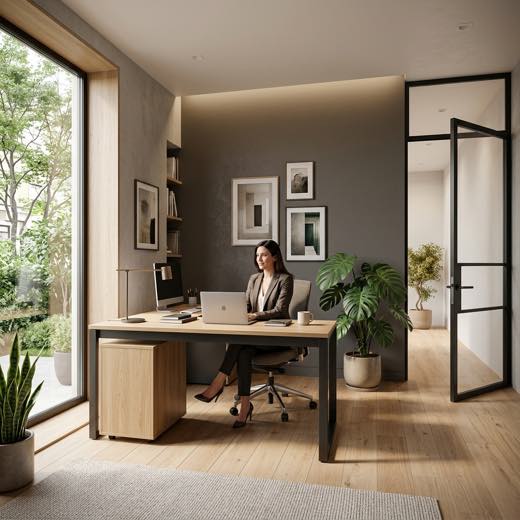
Home Office Feng Shui
Compare five home-office desk layouts using command-position tradition, ergonomic checks, glare, cables, door clearance, and small-room fallbacks.

Feng Shui Front Door Direction
Measure a front door direction carefully, distinguish it from a home’s façade and everyday entrance, then use Feng Shui as a design preference alongside light, weather, access, visibility, security, and maintenance.
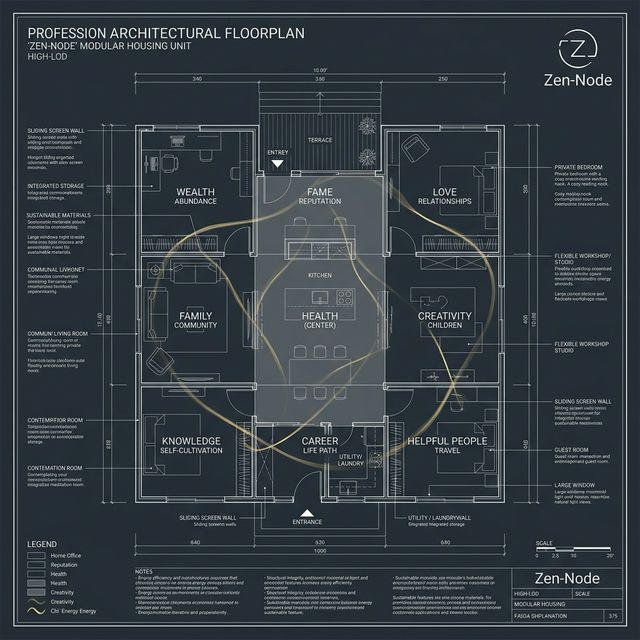
Feng Shui Lot Shape Analysis
Use traditional preferences for regular landforms as a design lens, then assess usable outdoor space, slope, drainage, access, setbacks, easements, privacy, and local rules before buying or changing a property.
Open Floor Plan Feng Shui: Zones Without Walls
Use Feng Shui as a design lens for an open floor plan: create legible zones, maintain clear routes, and solve the daily problems of light, sound, storage, cooking, and privacy.

Micro-Bagua Desk Map: Nine Zones for Your Desk
Use a nine-area desk map as a cultural organisation prompt, then make the workstation work through screen, chair, light, access, and task checks.

Feng Shui for High-Rise Apartments 2026 Analysis
Use Feng Shui as a practical design lens for a high-rise apartment: distinguish the unit door from the building façade, then assess arrival, glazing, glare, ventilation, moisture, privacy, balcony constraints, and shared-building rules.

Home Office Feng Shui for Summer 2026
Fire energy fuels creativity but sabotages sustained concentration. Your home office needs specific adjustments for May through August 2026 to channel Fire's passion without burning out your focus.

Mian Xiang Face Maps: A Responsible Study Guide
Learn how to study historical Mian Xiang face maps as cultural vocabulary and reflection prompts, with clear boundaries: facial appearance is not evidence of character, health, ability, wealth, or someone’s future.

Healing Home Feng Shui: Light, Air, Sleep, Calm
Check light, air, moisture, noise, sleep, and storage in apartments and small homes, with Feng Shui as a cultural design lens, not a treatment.

Tong Shu Almanac Guide: The 12 Day Officers
Learn the Tong Shu calendar layers and the 12 Day Officers, then use a decision card that keeps date choices grounded in real planning.

Feng Shui for Small Condos: Space-Saving Layouts
Arrange a small condo around protected routes, light control, and separated tasks, respecting fixed building limits before adding symbolism.

BaZi Four Pillars Guide: How to Read Your Chart
Learn how a BaZi chart is structured, identify the Day Master and Ten Gods, and use a study worksheet without turning it into life advice.
Feng Shui 2026
The Fire Horse year starts February 17, 2026. Use the cultural context for a practical home reset: entry, light, room function, and less overload.
No matching guides yet
Try a broader search or browse a nearby topic.