The short version
Short answer: A lucky phone number is really three things wearing one costume: a sound your culture reads as a wish, a pattern strangers can remember after one hearing, and a string of digits that carries a story you enjoy telling. The verified top of the market shows how far that costume can be priced: a Beijing court auctioned a mobile number ending in five 8s for RMB 2.25 million in August 2020, and an etisalat Diamond Plus number, 050 777 7777, sold for AED 7,877,777 at a March 2014 Dubai charity auction, with the winner receiving a two-year package while the numbers themselves remained government property in the UAE. You do not need either budget. This guide walks through choosing a number step by step: pick your tradition, craft the pattern, say it aloud, run the practical checks, and understand recycled-number risk, so the number you carry for a decade is one you chose with your eyes open.
For the market that creates those records, read lucky telephone numbers and the million-dollar digits. For the beliefs underneath the digits, start with lucky numbers around the world.
Why numbers feel lucky in the first place
Before choosing anything, it helps to know what you are actually choosing between, because three different engines make a number feel right, and good numbers usually run on at least two of them.
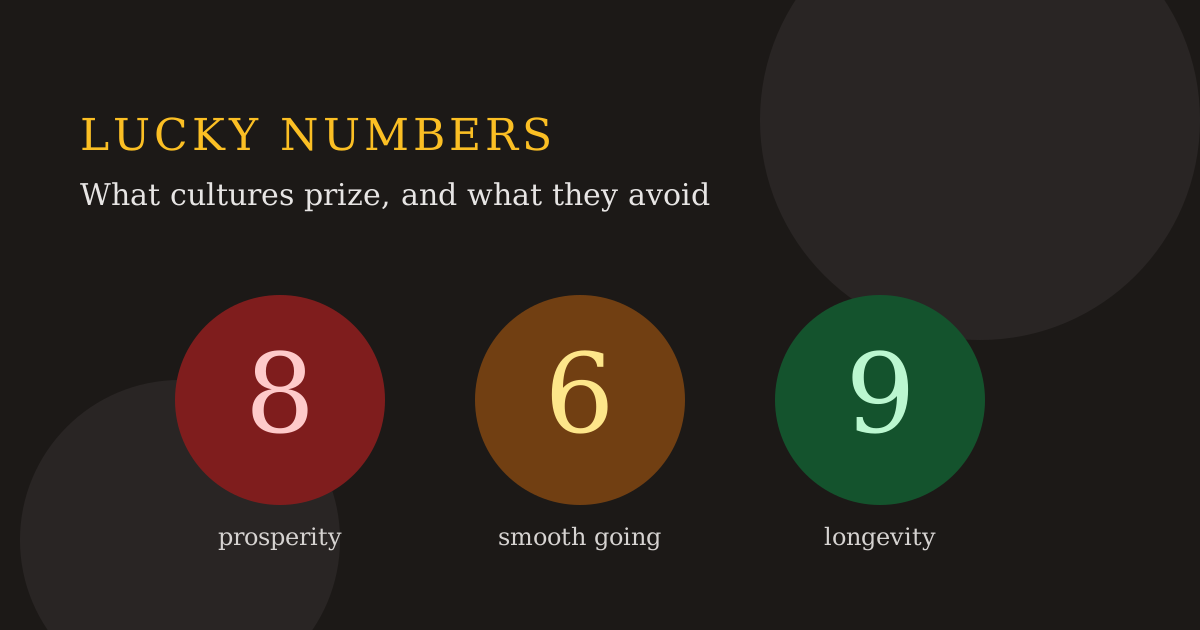
Sound. In Chinese tradition, the master engine. Digits are pronounced, the pronunciations echo words, and the echo becomes the meaning: eight toward prospering, six toward smooth, nine toward long-lasting, four toward a word nobody wants at a wedding. A number chosen for sound is a sentence you carry. When a business pays for 8888 it is buying the phrase, spoken every time the number is read aloud.
Memory. The rational engine, and the one even sceptics pay for. A hotline a customer recalls without searching, a taxi number that sticks after one radio jingle, your own mobile recited correctly by a tired grandparent, these are worth real money, and the premium market quietly prices memory alongside luck. Repeated digits, clean sequences, and mirror patterns all score here regardless of culture.
Story. The personal engine. The number that ends in your wedding year, the house number of the street you grew up on, the digits your daughter chose, these carry private luck that no auction can price because it does not transfer. Story numbers are the best value in this entire guide: priceless to you, ordinary to everyone else, and therefore usually free.
When people argue about lucky numbers they are usually running different engines and talking past each other. Decide which engines matter for this number, and the rest of the process becomes engineering.
Step one: pick your tradition
Traditions are audiences. Ask who will read this number most: clients, family, a group chat, a shopfront sign. Then choose the dialect they speak.
| Digit or pattern | Traditional reading | Choose it when |
|---|---|---|
| 8 and 88, 888, 8888 endings | Prosperity in Chinese tradition | Business faces Chinese-speaking clients; you want the classic premium signal |
| 6 and smooth runs | Smooth progress, things going easily | You like the understated cousin of 8; also reads well in internet slang as skill |
| 9 endings | Longevity, endurance | Family numbers, elder-facing services, businesses signalling permanence |
| Avoid 4, 14, 24 endings | Four echoes death in East Asian contexts | Your number will be seen in East Asian business contexts |
| 7 | Classic lucky digit in Western tradition | Your audience is Western and you want the familiar favourite |
| 520, 1314 sequences | I love you, for a lifetime, in number slang | Romantic and gift numbers in Chinese-speaking circles; see the slang guide |
| Personal dates and repeats | Private story value | The number is mainly for you and the people who love the story |
The choice matters here in a specific way: do not borrow a tradition as costume for an audience that does not share it, and do not abandon your own tradition to chase a market signal nobody in your life can read. A number ending in 8888 on a business that serves no one who hears the pun is expensive decoration. The same ending on a family restaurant where grandmothers smile at the sign is working exactly as intended. And if the number 4 tradition is yours, honour it without apologising to anyone; the discount rack exists because other people feel otherwise, and both sides can be content.
Step two: pattern craft
With a tradition chosen, craft the pattern the way brokers grade numbers, because grading logic is really memorability logic wearing a price tag.
Endings do the heavy lifting. The last four digits are what people retain, repeat, and misdial. Put your meaning there: the lucky run, the birthday, the mirror. A glorious prefix with a forgettable ending is a story that trails off, and the market discounts it for the same reason callers forget it.
Repeats beat variety. 8888, 777, and paired patterns like 1818 are recalled after one hearing. If a full run is unavailable or unaffordable, a strong pair at the very end, 88, 99, 66, buys much of the memorability at a fraction of the drama.
Sequences tell time. Ascending runs, 1234 or 6789, read as momentum and are beloved for business lines. Descending runs feel deliberate and are rarer. Wedding years, birth years, and anniversaries are sequences with a story attached, which makes them the easiest numbers in the world to remember for exactly the people who call you most.
Say it aloud, in both languages of your life. Numbers live in the ear. Read your candidate at phone-recitation speed, then faster, then as if through a bad connection. Chunking matters: a number that falls into two friendly groups survives dictation; one that stumbles will be misdialed for a decade. If the number will be heard in Mandarin and English, test both, because a pattern that sings in one can mumble in the other.
Check the unwanted readings. Read the digits as phrases the way the slang does, and as area habits do. You are checking for jokes at your expense, unfortunate phrase echoes, and the ex-partner birthdays of the world. Five minutes of paranoid reading is cheaper than ten years of a number that makes strangers snort.
Advertisement
Step three: the practical checks
This is the section auction headlines never include, and it is the one that decides whether your lucky number is actually a good number.
Carrier premium and vanity services exist; keep it general and ask. In many markets carriers reserve patterned numbers and offer them through premium or vanity selection at activation or port-in, sometimes free, sometimes tiered. Because products and prices vary, ask your carrier what patterned inventory they can show you before you talk to any reseller. The carrier floor price disciplines every other quote you hear.
Resale marketplaces exist; enter them as a lease inspector. Where resale is legal, brokers list graded numbers and the best patterns change hands like small assets. Verify that the number can transfer cleanly into your name, that no debts or contract obligations ride along with it, and that the transfer completes before final payment. The 2020 Beijing court buyer, remember, inherited the number's outstanding charges along with the five 8s. Charm is not a substitute for paperwork.
A recycled number inherits a past; test before you commit. Most numbers issued today are recycled, and the previous owner's life can follow the digits: calls from their contacts, reminder texts, delivery codes, and, the serious one, password-reset and two-factor attempts on accounts they never updated. Test any new number for a few days before you print it anywhere. Receive calls, receive texts, search whether the number appears tied to services, and if stranger traffic is heavy, ask for a different number while exchanges are still easy.
Protect two-factor and account recovery before you go public. Your phone number is a master key in modern security: banks, email, and social accounts use it for recovery. Before making a new number your public business line, update recovery settings on your critical accounts, understand which services will send codes to it, and think about whether the number that appears on your website should also be the number that can reset your bank login. Many people sensibly separate the two. Lucky is not a security strategy.
Porting rules vary by country; check before you fall in love. Whether you can bring a number with you across carriers or borders, how long transfers take, and what happens to a premium number when a contract ends all depend on local rules. In the UAE model, numbers remain government property and premium buys a package term. Elsewhere you may hold stronger rights. Read your situation before paying for permanence that the fine print rents to you by the year.
What the record sales actually teach
Two verified sales, both already in this site's ledger, are worth rereading as lessons rather than spectacles.
The Beijing sale, August 2020, RMB 2.25 million for a number ending in five 8s, came through a court auction of a debtor's assets. Lesson one: in China a premium number is legally an asset, transferable enough to seize and sell. Lesson two: the asset came with liabilities, the outstanding bills the buyer had to clear, which is exactly why the practical checks above exist.
The Dubai sale, March 2014, AED 7,877,777 for etisalat's Diamond Plus 050 777 7777, happened at a charity auction, and the winner received a two-year package built around the number. Lesson one: charity framing lifts prices beyond private value, so records are ceilings with air in them. Lesson two: even at that altitude, the buyer licensed the prestige rather than owning the digits outright, because UAE numbers remain government property.
What the records do not teach is that any ordinary buyer needs to spend. Both sales price rarity, spectacle, and generosity at once. Your number needs to price sound, memory, and story, all of which remain available at human prices.
A choosing checklist
Work through this list in order and you will end with a number you can defend to a sceptic and enjoy like a believer.
- Name the audience and the tradition they read: prosperity 8s, smooth 6s, longevity 9s, Western 7, slang phrases, or private story.
- Choose the engine: sound, memory, story, or a blend, and write down what the finished number should say.
- Craft three candidate patterns with the meaning in the last four digits; include one story number and one tradition number.
- Say each candidate aloud ten times at dictation speed, in every language your callers use, and drop any that stumble.
- Read candidates backwards and as phrases to catch unwanted echoes and jokes.
- Ask your carrier what patterned numbers they can offer before pricing any resale listing.
- If reselling is involved, confirm clean transfer into your name, no attached debts, and what happens at contract end.
- Test the issued number for recycled traffic before printing, publishing, or registering it anywhere.
- Set up two-factor and account recovery deliberately; decide whether your public number and your recovery number should be the same.
- Confirm porting rights and timelines with your carrier, in your country, before paying any premium.
The balanced bottom line
Tradition framing is exactly that: framing. No regulator, carrier, or guide can certify that a digit string improves fortune, and this site sells no such certificate. What a well-chosen number genuinely delivers is memorability, meaning you can feel every time you recite it, and a small daily pleasure that compounds over the decade most numbers serve. That is real value, priced at everything from free to auction-millions depending on rarity, and it needs no luck claims to justify itself. Choose the digits the way you would choose a name for something you will say ten thousand times: for the sound, for the story, and for the people who will hear it. The luck, as the traditions themselves quietly admit, was always in the lasting.
Three choosing scenarios
The takeaway owner who needs calls, not compliments. A takeaway does not need the most prestigious number in the city. It needs a number a hungry customer can recall from a menu glimpsed last week. The owner should rank memory above symbolism, choose a repeated pair or clean sequence, and place the strongest pattern at the end. If the owner serves a Chinese-speaking neighbourhood, an 8 ending can carry the prosperity echo, but only after the memory test. A number that sounds blessed and is forgotten loses to a plainer number customers can dial.
The consultant whose clients span Shanghai and Tokyo. This number will be read in two sound systems. An ending in 9 may suggest endurance to one audience and recall the suffering echo to another in sensitive settings, while an ending in 4 can create a separate concern described in the tetraphobia guide. The consultant should ask representative clients or local colleagues rather than searching for a universally safe digit. There may be no symbol that flatters everyone. Clarity, a stable country code, and easy grouping can matter more than squeezing another meaning into the final digit.
The couple choosing matching numbers. Matching numbers can be chosen for story, with a shared birthday, anniversary, or the 520 and 1314 phrases explained in the internet slang guide. The risk is practical rather than symbolic. Matching patterns can make the numbers easier to confuse, especially when both phones sit on the same table. Label contacts clearly, set distinct voicemail greetings, and make sure account recovery does not route both people through one device. A romantic pattern should not create a single point of failure.
How to evaluate a resale listing
Begin by separating the digits from the sales language. Write down only the number, then grade its ending, pattern class, unwanted phrases, and spoken rhythm. Next ask what exactly transfers. Can the number move into your name? Are there contract obligations, unpaid charges, or a minimum term? What happens if you later move carrier or country? Then compare the listing with what a carrier can offer directly. Even if the carrier's patterns are less glamorous, that price tells you how much of the broker quote is rarity and how much is convenience.
Do not let a record headline set your reference point. The verified RMB 2.25 million Beijing court result and AED 7,877,777 Dubai charity result described above involved auction settings and unusual patterns. They do not make an ordinary repeated ending underpriced by comparison. A sane price is one you can explain by the number's usefulness and scarcity in your market, not by its distance from a world record.
If a seller rushes the transfer or cannot explain the paperwork, stop. A phone number touches banking recovery, private messages, and years of contacts. Insecure ownership is worse than an unmemorable number. The same caution applies to numbers promoted only through social messages with no verifiable transfer process.
Mistakes that make a good-looking number bad
The first mistake is choosing for a photograph of the number rather than its sound. Many numbers will be spoken through cars, kitchens, and poor connections. The second is ignoring grouping. A sequence that looks neat on a screen may have no natural pause when spoken, making every digit a separate burden. The third is adopting a number already saturated with someone else's calls. That problem is annoying for a personal line and potentially serious when reset codes arrive.
A fourth mistake is publishing the same number everywhere before securing accounts. Set recovery options deliberately, and do not assume a lucky sequence deserves trust. A fifth is paying a premium for a pattern your actual audience cannot decode. Ask three people who resemble your callers what they notice. If none notices the intended phrase, you are buying private satisfaction. That can still be worthwhile, but name it for what it is and price it as private satisfaction rather than marketing.
Questions to ask before you pay anything
| Question | Why it matters |
|---|---|
| Can this number transfer into my name? | A pattern has little value if the rights stay elsewhere |
| Are bills, deposits, or contract terms attached? | The Beijing court case shows charges can travel with digits |
| Can I keep it when changing carrier? | Porting rules vary, and a premium is hard to justify without portability |
| How much stranger traffic does it receive? | Recycled numbers can carry calls, texts, and reset attempts |
| Should this be my recovery number? | Public visibility and account security may need separation |
| What does my audience hear in it? | Sound traditions are local, so the prettiest explanation may not be theirs |
A final decision rule
Shortlist three numbers, then score each from one to five for sound meaning, memorability, personal story, spoken clarity, transfer safety, and security fit. Do not let one perfect score conceal a zero elsewhere. A number that is symbolically ideal but unsafe to own should lose. A number that is moderately lucky, easy to say, cleanly transferred, and quiet after testing is the professional choice. Keep it for years and let familiarity deepen the story. Most lucky numbers become lucky in retrospect, because good things happen while they are yours and the digits collect the credit. Choosing a sound, memorable, secure number gives that harmless process the best possible material.