The short version
Short answer: Chinese internet slang is built from sound. Digits are typed because their Mandarin pronunciations echo words and phrases, and a whole emotional vocabulary has grown out of the puns: 666 for awesome, 555 for mock crying, 233 for laughter, 886 for bye-bye, 520 for I love you, 1314 for a whole lifetime, 888 for prosperity, and 999 for praise that lasts. This page decodes the major codes, explains the sound logic underneath them so you can reason about new ones, places 999 between its two competing explanations, and finishes with etiquette: where this slang lives, when a non-native speaker using it lands as charming, and when it lands as costume. Numbers here are not decoration. They are a second keyboard, and this is its layout.
For the deeper tradition these codes grow from, see lucky numbers around the world, the number 8 guide, and our guide to the meaning of number 9. If you arrived from the angel number internet instead, our 888 guide covers the other dialect that claims the same digits.
Why numbers? The sound engine underneath
English internet slang mostly compresses words: acronyms, clippings, emoji. Chinese internet slang compresses sound, and it can do that because Mandarin packs an unusually large amount of meaning into a small set of syllables. When digits are pronounced in sequence, their syllables slide toward other words with similar sounds, and chat culture froze the happiest accidents into permanent vocabulary. Type the digits and you have said the phrase, faster, and with a wink that says we are playing the same game.
Three properties of the system are worth understanding before the table, because they let you decode codes you have never seen.
It is approximate on purpose. The echoes are near-homophones, not perfect ones. 520 does not sound exactly like the phrase for I love you; it sounds close enough that, in context, with feeling, everyone hears it. Slang tolerates the slippage the way English tolerates reading lol as a laugh rather than a literal report. Precision is not the point; shared recognition is.
It is tonal clay. Mandarin tones mean the same syllable can bend toward several words, and internet writers exploit that flexibility shamelessly. A code can carry two or three plausible readings, and the room decides which one is live. Context, not the dictionary, is the parser.
It is playful, not formal. Almost none of these codes appear in contracts, newsreaders, or anything with a seal on it. They belong to games, streams, friend groups, fan spaces, and the joking edges of commerce, red envelopes and sale prices and wedding dates where a business borrows the playfulness on purpose. Register is everything, and we return to it in the etiquette section.
The table: major codes decoded
| Code | Sound echo | Meaning in use | Typical habitat |
|---|---|---|---|
| 666 | Six echoes smooth, skilled | Awesome, brilliantly played, respect | Gaming chats, livestream comment floods |
| 555 | Echoes wuwuwu, mock crying sounds | Playful sadness, oh no, I am jealous in a joking way | Friend chats, fandom spaces |
| 233 | From early forum laughter numbering | Laughter, the lol equivalent | Comments, chats, older forum culture |
| 886 | Echoes bye-bye, off I go | Casual goodbye | End of chats, stream sign-offs |
| 520 | Echoes I love you | Declaration of love, affection | Messages, gifts, romantic dates and amounts |
| 1314 | Echoes a whole lifetime | Forever, for life, usually paired with 520 | Weddings, anniversaries, romantic numbers |
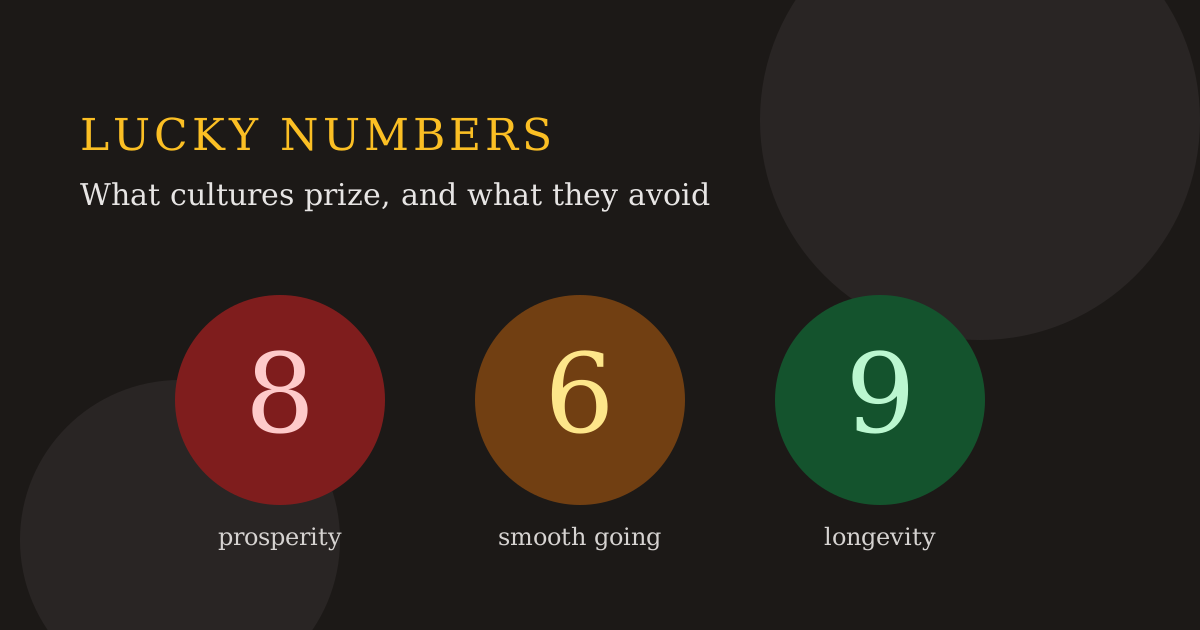
| 888 | Eight echoes to prosper | Prosperity wishes, congratulations | Business greetings, launches, New Year |
| 999 | Nine echoes long-lasting | Enduring praise, may it last | Praise, well-wishing, celebratory chats |
| 999 (popular joke) | Read as 666 flipped | Even more awesome | Joking explanations in chats and memes |
Read the table as a native speaker does, by situation rather than by digit. Nobody consults a chart mid-game. The codes are learned the way you learned to type gg, by absorption, and the table is a map of a territory most users navigate by feel.
666: the applause code
The king of the system deserves its own section. 666 is typed praise, the spam of respect that floods a livestream chat when a player does something clean. Its sound chain runs from the digit six, liu, toward a word meaning smooth and skilled, the sense of a move executed without friction. Triple it and you get the chant form, and the chant is the meaning: not one person approving quietly but a crowd doing it loudly, in characters that take a fraction of a second to send.
The spread is documented in gaming culture, and League of Legends streams are the standard example of the vector: spectators who needed a fast, uniform way to applaud a play found the digit chant ready-made, and from gaming it leaked into general chat, video comments, and everyday messaging. Today 666 can praise a play, a comeback, a cooking video, a parking job, anything done with visible skill. Two cautions for outsiders. First, the code carries no satanic freight in this context; importing the Western association into a Chinese gaming chat marks you as a tourist instantly. Second, sincerity is the default but irony exists, as it does for nice one in English. A failed play can draw a sarcastic 666 from friends, and tone, as everywhere online, is read from the relationship, not the digits.
Advertisement
555, 233, and 886: the supporting cast
555 is the sound of stylised crying, wuwuwu, typed by someone performing sadness for comic effect. You lost the limited item, your friend got the promotion you joked about wanting, the drama ended on a cliffhanger. It is grief with jazz hands, and answering it with comfort is correct only in the playful register it arrived in.
233 is laughter with a paper trail: it traces to an early forum emoticon numbering system where the 233rd icon was the laughing one, and the number escaped its catalogue to become a standalone lol. Longer strings, 23333, stretch the laugh the way extra ha characters do in English. Younger slang evolves fast and 233 now reads slightly retro in some spaces, which is itself a lesson: number slang has generations.
886 is the exit code, echoing bye-bye with a verbal shrug: I am off, see you. It closes chats and streams with a lightness that a formal goodbye would overweigh. If 666 is applause and 555 is a sob, 886 is the wave from the doorway.
Together these three show the system's range. Not every code is about luck. Most of the working vocabulary is emotional punctuation, numbers doing the job emoji do elsewhere, and any guide that treats Chinese number slang as purely a lucky-number phenomenon has only read the wedding and business pages of the dictionary.
520 and 1314: the romantic sentence
Romance industrialised the system. 520 echoes I love you closely enough that May 20, 5/20 on the calendar, became an unofficial internet Valentine day in China, complete with gifts, marriage registrations, and marketing campaigns built on the pun. 1314 echoes the phrase for a whole lifetime, and the welded pair 5201314, I love you for a lifetime, is the most complete sentence the number keyboard can type.
Once a code can propose marriage, commerce finds it. Red envelopes move in amounts of 520 and 1314. Businesses price in the echoes. Phone numbers and plates carrying the sequences sell as rolling declarations, which is why our lucky telephone numbers guide prices phrase numbers as a literary tier, and why couples choosing numbers together should read how to choose a lucky phone number before paying for the poetry. The codes also migrated to wedding dates, where September nines and May twentieths fill registries. None of this promises a lasting marriage, and this site does not sell that idea. It documents a culture that found a way to say forever in seven digits and then, characteristically, put the forever on a license plate.
888: prosperity said three times
If 666 is the gaming code, 888 is the boardroom one, and it stands on the oldest ground in Chinese numerology. Eight sounds close to the word for prospering, so the digit became the prosperity digit centuries before the internet, ruling prices, opening dates, and the premium tiers of the number 8 tradition. The internet simply tripled it. 888 in a chat or a greeting is congratulations in numerical form: may you prosper, said with emphasis.
Because of that lineage, 888 travels better across generations and registers than the gaming codes. A young streamer and her grandfather both read 888 warmly, which is rare in slang. Businesses exploit the bridge deliberately: prices ending in 888, launch dates stacked with eights, greetings that let the digits do the blessing. The overlap with the angel number world, where 888 is also read as flow and abundance, makes this digit the most translated number on earth, and our angel number 888 guide covers that separate, Western-born reading on its own terms.
999: two explanations
Here is where careful guides earn their keep, because 999 arrives with two explanations and only one of them is sturdy.
The sturdy one runs through nine itself. Nine carries the long-lasting association in Chinese tradition, the subject of our number 9 guide, so a triple nine reads naturally as endurance praised: may this last, may you last, well done and keep going. In use, 999 tends to feel slightly warmer and more blessing-shaped than 666, praise with a wish folded inside it.
The second explanation is the one the internet tells about itself: 999 is 666 flipped upside down, therefore something even more awesome than awesome. You will find this in chats, comment threads, and meme explainers, and it is genuinely popular. It is also a folk story, a joke etymology that spread because it is elegant, not a settled origin. Digits typed on a screen do not flip, the code predates its flip story in the retelling, and no authoritative source settles the matter. So we present it the way the evidence supports: a playful popular explanation, widely repeated, sitting alongside the sounder longevity reading. If a friend explains 999 to you with the flip, smile, because they have shared the culture's favourite joke about itself. Just do not cite it in a linguistics exam.
Etiquette: when to type numbers and when to use words
Slang is social technology, and like all technology it fails loudly when used in the wrong room. A few field rules:
Match the speed of the room. Number codes thrive where messages move fast: game lobbies, stream chats, group threads with friends. In slow, considered exchanges, a sudden 666 reads like shouting during a string quartet.
Praise with 666, bless with 888 and 999. Skill gets sixes; occasions get eights and nines. Congratulating a colleague on a promotion with 666 praises their play; 888 blesses their fortune. Both are kind, and the distinction is the kind of fluency native speakers notice.
Keep numbers out of sorrow. Condolences, illness, and bad news call for full words in every language. The hospital corridors where nine is avoided in numbering, described in our number 9 guide, are a reminder that digit play has an off switch, and kindness is knowing where it is.
As a foreigner, earn it lightly. One well-timed code after someone else has used it reads as joining in. Opening a conversation with a stack of codes reads as performing. Follow, do not lead, and let native speakers set the slang level the way you would with any dialect.
Business use is borrowed playfulness. A brand pricing at 888 or greeting customers with the codes is borrowing chat warmth for commerce, which works when the brand voice is already friendly and feels forced when it is not. The codes will not rescue a stiff company, but they will happily garnish a warm one.
How codes are born, and why most die
Every year produces candidate codes: new puns, event numbers, prices that accidentally spell something. Almost all vanish within a season, and the survivors share traits visible across this page. They echo cleanly, so a stranger hears the phrase without a footnote. They fill a frequent need, applause, laughter, love, farewell, the emotions a chat day is made of. And they compress beautifully, three identical digits being about as compressible as language gets. 666, 520, and 888 are not the cleverest codes ever typed. They are the most reusable, which in slang, as in tools, is what clever means.
Expect the system to keep generating. Any sound-driven language with fast keyboards will, and Mandarin's homophone density makes it the most productive slang engine on the internet. The codes that join the permanent table will look obvious in retrospect, the way 666 does now: a pun so handy that a hundred million people picked it up and never put it down.
The bottom line
Chinese number slang is sometimes taught to outsiders as a lucky-number curiosity, and that undersells it. It is a living dialect built from sound, maintained by the most demanding editors on earth, teenagers in chat rooms, and devoted overwhelmingly to ordinary human business: applauding, laughing, flirting, leaving, and wishing each other well. The luck is in it, certainly, in 888 and in the longevity inside 999, because the older digit traditions flowed into the new slang and enriched it. Learn the table, respect the register, present the 999 flip as the joke it is, and you can read a Chinese comment section the way it begs to be read: at full speed, smiling, with the sound on.
Reading a live chat without a dictionary
Imagine a game stream in which the player survives a team fight with almost no health and turns the match. The chat fills with 666 because the play was clean, not messy. Someone who expected defeat types 555 in the playful crying sense, meaning they cannot believe the turn. Another viewer adds 233 because the failed enemy dive was funny. When the streamer thanks everyone and leaves, 886 appears as a wave. None of these messages is primarily about luck. They are reactions, and the numbers let thousands of people react in the same small shape at the same second.
Now imagine a shop announcing a promotion. It chooses prices and greetings built around 888 because prosperity is the appropriate public blessing for commerce. A couple sharing good news may receive 999 from friends who mean may this last. The same platform therefore contains at least two kinds of number use: quick emotional punctuation and deliberate cultural blessing. New readers often merge them into one vague idea called lucky numbers. Fluent readers separate the speed of the room from the weight of the occasion.
Misreadings outsiders commonly make
The first misreading is to treat every repeated digit as 666. A run of 555 is not failed praise, and 444 is not an applause code. The second is to carry the Western religious association of 666 into Chinese gaming spaces, where it disrupts the local meaning. The third is to read 520 as a price only, missing the sentence it makes when paired with 1314. The fourth is to explain 999 with total confidence as an upside-down 666. That story is popular, but confidence should be saved for the sounder longevity reading through nine.
A subtler mistake is tone blindness. In English, the difference between great play and great play with sarcasm can depend on friendship. Number slang works the same way. A sarcastic 666 is usually aimed at an obvious mistake among friends, while a sincere one follows visible skill. Copying digits without reading the event is like typing wow at every funeral and birthday alike. The code is small, but context remains king.
How businesses borrow the slang without breaking it
Brands use 520 around romantic shopping moments, 888 in launch greetings, and sometimes 666 when a product demonstration is meant to feel impressively smooth. The successful uses share three features. The audience already knows the code. The message remains understandable without it. The tone of the brand permits play. When any of those fails, numbers become a costume. A bank can use 888 because prosperity language has long belonged to formal good wishes. A solemn public notice should use full words.
For small businesses, the practical test is local: ask staff who actually chat in the dialect whether the line sounds natural. One sentence of native review is worth more than a campaign deck. Also avoid stacking several codes in one message. Native slang is usually economical because the room moves quickly. Three codes in a polished advertisement tell the reader that the writer learned the table this morning.
What to do when you meet a new code
First, identify the situation. Was someone praised, teased, thanked, dismissed, or congratulated? Second, say the digits in Mandarin if you can, or ask a speaker what phrase they suggest. Third, look at repetition and punctuation, because a longer run often signals a longer laugh or stronger applause. Fourth, search the exact code with the platform or game name rather than assuming a universal answer. New codes can be community-specific, tied to a streamer, a character, or an event. Finally, do not repeat a code until you know whether it is praise, mock sadness, or a farewell. The vocabulary is friendly, but no vocabulary is context-free.