The short version
Short answer: Choose a business number the way you would choose a shop name: for the audience who will actually read it, in the tradition they already recognise, and only after the practical tests pass. A street address, unit number, floor, hotline, opening date, and price ending can all carry number tradition, and in the right market customers notice that care. None of it replaces a readable sign, a findable entrance, fair rent, or steady foot traffic. Use lucky digits as a tie breaker between good options, and skip them when they would cost you clarity, access, or money you need elsewhere. The verified records at the top of this market are spectacle, not a shopping list. For the beliefs underneath the digits, start with lucky numbers around the world and the guide to house numbers and address tradition. For the digit that anchors so much business tradition, see why number 8 is considered lucky in Chinese culture.
What a business number has to do all day
A personal lucky number can be private. A business number has to work in public, for strangers, under time pressure, and often in more than one language. It has three jobs, in this order. It has to be found, so a customer, a courier, and a first time client can match the digits on a phone to the digits on your door without calling for help. It has to be repeated correctly, because business numbers live in speech: a receptionist reciting a hotline, a driver confirming a unit, a friend recommending a restaurant. Digits in friendly groups survive that journey. And it has to be remembered without effort, which is why repeated digits, clean sequences, and familiar endings beat a random string.
Only after those jobs are done does symbolism get its turn. It is real value, but it is the last layer, not the foundation. Business numbers are also sticky. Changing a registered address, a hotline on packaging and cards, and a saved map listing is slow, error prone, and sometimes restricted by a landlord or licensing authority. Choose as if you will live with the digits for the full lease.
How customers read a shop address
Most people skim a commercial address for the parts that help them act. The last digits do the heavy lifting. The building number is the anchor, and the unit number is the final instruction, because the ending is what customers use last before knocking or pressing a buzzer. That is why units ending in 8, such as 08, 18, 28, and 88, attract attention in markets that hear prosperity in 8: the association sits where memory lands. The tetraphobia guide explains the contrasting reading for an ending in 4.
Unit numbers carry a practical reading too. Good numbering tells a story about the building: odd and even sides, a rising sequence along a corridor, and floors that can be guessed from the first digit or digits. A number that fits building logic as well as tradition beats a symbolically perfect number that confuses visitors. Before signing anything, run the stranger test. Give three people who resemble your customers only the address as it will appear in an advertisement, and ask how they would find you and what the digits say to them. If they cannot find you, fix findability first. If they find you easily but hear no association, price the tradition as private pleasure rather than marketing.
Floors, towers and the missing fourth floor
In a number of East Asian markets, buildings omit a labelled fourth floor, moving from level 3 to level 5, and some omit other levels whose numbers end in 4 as well. The practice responds to the sound association described in the number 4 tradition guide, and tenants there meet it as a fact of the building. If you lease in such a building, use the official floor label exactly in directions, invoices, and delivery notes, even when the label skips. Never invent a corrected floor number to make a point. Clarity protects visitors, couriers, and emergency services.
At the other end of the same tradition, high floors and floor numbers featuring 8 are sometimes presented as prestige choices, and new towers in markets that value the association have marketed levels such as 8 and 88 as headline addresses. Read that marketing as a story about status attached to height and views, with the digit as a label. A high floor may suit a business that hosts clients. The same unit may suit a retailer badly if it removes passing trade. When you tour premises, ride the lift and walk from the lobby to the door as a first time visitor would. Lift capacity, evacuation routes, step free access, and delivery access all belong in the decision before symbolism does.
Phone and hotline digits as brand assets
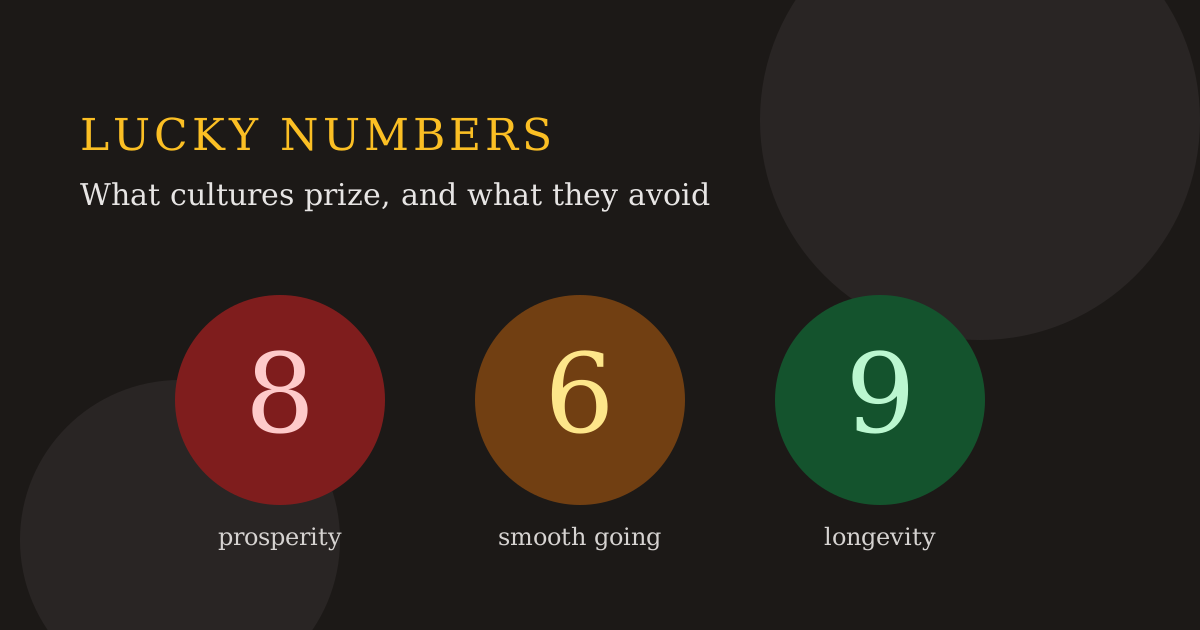
If the street address is read, the phone number is performed. It is spoken on calls, heard in local advertisements, tapped from memory after a recommendation, and saved by customers who may never visit your premises. Endings matter most, because the final digits are what a listener keeps after the prefix has faded. Repeated endings and paired patterns are recalled after a single hearing, and clean ascending sequences can suggest momentum in a way that suits a growing firm. In Chinese speaking markets, endings built from 8, 6, and 9 carry sound associations many businesses deliberately choose, as the lucky phone number guide sets out in full. Audition any hotline aloud, in every language your customers use, at the speed a busy receptionist speaks.
Patterned numbers sit on a spectrum, from ordinary allocations with a friendly pattern that cost nothing extra to request, through carrier reserved premium tiers, to brokered rarities that should not set your expectations. Start with your carrier and judge every broker quote against that starting point. Then confirm transfer and porting, ask about the number past life, because recycled numbers can inherit calls and account reset attempts aimed at a previous owner, test before you publish, and keep account recovery on a deliberately chosen number. Write the number in the grouping your market expects. For wider market context, see lucky telephone numbers and expensive digits. Memorability is the asset, tradition is one route to it, and clean ownership beats a perfect pattern held on unclear terms.
Advertisement
What the record sales do and do not prove
Headline auctions show how far rarity, tradition, and generosity can stretch a price. Four results already verified on this site mark the documented top of the wider lucky number market. In Dubai, the plate P 7 sold for AED 55M through Emirates Auction in April 2023, with Guinness confirmation. In Abu Dhabi, the plate 1 sold for AED 52.2M in 2008. In Beijing, a court auction in August 2020 sold a mobile number ending in five 8s for RMB 2.25M. In Dubai again, the etisalat number 050 777 7777 sold for AED 7,877,777 at a March 2014 charity auction, with the reminder that numbers remain UAE government property.
Read together, those results share a pattern that has little to do with shopkeeping. Each involves extreme scarcity, sold where publicity and, in the charity cases, public generosity formed part of the bid, and each transferred a right whose paperwork is part of the product. Our license plate records guide places the two plate results in their fuller market setting. The records prove that number meaning is culturally real enough for governments to auction and for courts to treat as an asset. They do not prove that an ordinary unit number or hotline needs an auction budget, or that spending more on digits brings more customers. Always ask what exactly is being sold: what do we hold, for how long, in whose name, and what travels with it.
Pricing digits: the 8 ending and the .99 ending
Price endings are the smallest numbers a business chooses and the ones customers see most often, so two different traditions dominate two different markets. In many Chinese markets, prices ending in 8 are a reported practice. The reasoning offered is the sound association between 8 and prospering, applied to a tag, a menu, or a service fee so the final impression feels intentional and festive. The practice is styling with a familiar local meaning, clearest where a deliberate price is part of the presentation, such as banquets and gifts. It carries no promise.
In Western retail, the familiar convention runs the other way: prices set just below a round number, most visibly the .99 ending and its cousins. The practice is long established and is commonly described as charm pricing, on the idea that a price beginning with a lower digit reads at a glance as sitting in a cheaper bracket. Neither tradition should be imported blindly into the other market. An 8 ending where customers expect .99 comparisons may look like a rounder, higher shelf price. A .99 ending where an intentional round figure signals sincerity may look evasive. Ask which ending your customers already know how to read. Say the price aloud, keep endings consistent within a category, and never ask an ending to do the work of a fair price.
Opening dates and calendar choices
An opening date is the one business number you choose in full public view. Businesses choose it on several calendars at once: the commercial calendar of lease start, fit out, stock, staff, paydays, and holidays. There is the personal calendar of family availability and anniversaries. And in many cultures there is a traditional calendar in which certain days are considered suitable for beginnings and others are avoided for launches. Owners who follow it are marking a beginning, not predicting results.
Use a traditional opening date as a coordination device inside a ready business. First pick the window in which the shop can genuinely open well: shelves stocked, systems tested, staff rested, licences in hand. Then, if a favoured date falls inside that window, take it and enjoy the story. If the favoured date falls before you are ready, open well on an ordinary date instead. Customers remember a chaotic first week long after they have forgotten the calendar. Confirm the date is a legal trading day for your licence category, that suppliers will be operating, and print the date in the format your market writes dates to avoid a day and month transposition. A memorable opening date also gives you an easy yearly story, and that modest benefit needs no claim about fortune.
Signage first: if it cannot be read, it cannot work
Every tradition here reaches customers through signage, and signage obeys physics before symbolism. A lucky number nobody can read fails in ordinary ways: too small, too low in contrast, hidden by shadow at noon, dazzling at night, or covered by a parked van. Run the physical tests before approving any design. Stand across the street, in daylight and after dark, and read the number as a stranger would, from both directions. If the digits require squinting, increase size, weight, spacing, or contrast before debating which digits they are.
Consistency multiplies whatever digits you choose. The number on the fascia, the door, the window hours panel, the invoices, the map listing, and the delivery instructions should be the same number in the same grouping. Inconsistent styling teaches customers to distrust their own memory. Accessibility is part of readability. Digits should sit where a person using a wheelchair, a person with low vision, and a child sent to fetch a parent can all find them. Avoid numerals rendered purely as decorative script for the functional address. Put the art in the logo and the address in a form built to be read at speed by tired eyes. Budget for cleaning and relamping. The luckiest address on the street should also be the most legible one, and legibility is maintenance.
What you can and cannot change
Tenants often discover the limits of number choice after falling in love with a digit, so map control before you shortlist. The street address is usually assigned by a public authority and recorded across postal, emergency, tax, and licensing systems. Trading names, signage, and marketing can emphasise parts of it, but inventing an alternative address creates real risk: mail goes astray, licences mismatch, and customers saved in two systems cannot reconcile them. If an official address contains digits you would not have chosen, accept the official form everywhere it matters and put your preferred digits where you lawfully control them. Unit and floor designations are usually controlled by the building, and renaming a unit or floor for branding alone is rarely permitted. Ask in writing what must match the lease exactly and how directories and lifts will show your unit.
Phone numbers, opening dates, price endings, loyalty numbers, and internal references such as invoice sequences are far more fully yours to choose, subject to carrier rules, trademark care, and accurate presentation. Apply tradition generously here instead. Accept an ordinary street address, and spend choice on a memorable hotline, a favoured opening date inside a ready window, and price endings your market reads fluently. Many licences tie a business to a premises address, and changing premises, even within the same building, can require notification or a fresh application. If a unit number is part of why you want a particular space, confirm with the relevant authority that the unit as officially designated is licensable for your trade before signing.
Number choices by business type
Traditions land differently depending on how customers find and use you. The table below offers starting points, not rules, and it assumes the practical tests in this guide have already been passed.
| Business type | Address and unit emphasis | Phone and date emphasis | Pricing note |
|---|---|---|---|
| Walk in retail and food | Ground floor visibility and an ending unit number regulars can repeat; tradition only after frontage and foot traffic pass | Hotline with a short, speakable pattern for orders and bookings | Use the ending your local market reads fluently; keep it consistent across the menu or shelf |
| Professional services and clinics | A calm, findable unit and floor with step free access; avoid confusing renumbering at all costs | A stable main line that survives dictation, with recovery kept separate from the public number | Considered fees suit intentional round figures; clarity matters more than a bargain cue |
| Import, trade and wholesale | Warehouse logic first: loading, courier recognition, and unit sequences drivers can predict | Repeated or sequential endings that dispatchers and drivers recall under time pressure | Relationship pricing rewards consistency; a familiar local ending signals steadiness |
| Online first with a small studio | Treat the registered address as compliance first and symbolism last; choose for mail reliability | Put creative energy into the phone number and domain digits customers actually type | Digital checkout endings should match the market you sell into, not the founder home market by default |
| Hospitality and celebrations | Memorable floor and room pairings guests can repeat to drivers and family | A booking line that sounds warm when spoken slowly; an opening or anniversary date you can celebrate yearly | Festive, intentional pricing can suit occasions; never let a digit disguise the true total |
Read your row as a set of questions. Where do customers first meet our digits: kerb, lift, phone, or screen? Which number will they repeat to another person? Which choice will be expensive to change in year three? Answer those, then let tradition choose among the finalists. Businesses serving more than one cultural audience should expect trade offs. A unit and hotline one audience hears as festive may be neutral to another, and neutrality is acceptable. Avoid a combination one audience actively reads as careless when an ordinary alternative was available at the same rent. For a wider tour of how readings shift by place, see lucky numbers by culture in India, Japan, Korea and Thailand and, for the appeal of repeating sequences in digital life, the angel numbers guide.
When to skip the numerology entirely
Skip it when safety is in the room. If a preferred unit compromises evacuation, accessibility, lighting, ventilation, or secure entry, the digit loses. If an opening date pressures you into trading before fire, food, electrical, or professional sign off is complete, the date loses. No tradition, properly understood, asks a business to endanger its guests. Skip it when access is in the room. A beautiful number at the end of an unlit lane, up steps your customers cannot manage, or behind a lobby your couriers cannot enter will tax every transaction for years. Businesses live on repeated small conveniences. Protect them.
Skip it when the rent maths is in the room. A premium charged purely for digits is still rent, paid monthly in good months and bad. Compare any digit premium against what the same money buys in frontage, repair, better signage, or a longer marketing runway. If the comparison embarrasses the digit, choose the shop. Skip it when foot traffic is the business model. Cafes and impulse services buy flows of passing people first. A symbolically perfect unit in a quiet corridor is a quiet business. Finally, skip it when the tradition is not yours and not your customers. Borrowed symbolism neither side can read is costume. A plain number, clearly signed and fairly priced, carries its own good reputation.
A short pre-lease and pre-launch checklist
Use this list in order, and stop at the first item that fails. Number tradition enters only at item seven, by design.
- Confirm the official street address and unit designation in writing, exactly as licences, mail, and emergency services will use them.
- Walk the route as a first time customer, driver, and courier would, from the nearest landmark to your door, in daylight and after dark.
- Test step free access, lift reliability, delivery access, and evacuation information for the actual floor and unit.
- Say the unit and floor numbers aloud to three people who resemble your customers, and ask what they hear and what they remember a day later.
- Compare rent, lease length, and frontage against your alternatives, pricing any digit premium as ordinary rent.
- Confirm signage rules, directory presentation, and what you may and may not display or relabel.
- Choose among the surviving finalists using your audience tradition: address ending, unit, floor pairing, and any prestige story the building supports on its record.
- Select a hotline through your carrier first, test it for recycled traffic, confirm porting and ownership, and audition it aloud in every language you serve.
- Set price endings to the convention your market reads fluently, keep them consistent by category, and verify them at your real checkout.
- Fix the opening window around genuine readiness, choose a favoured date inside it if one exists, and print the date unambiguously in every announcement.
- Audit every surface where the numbers appear, from fascia to map pin to invoice footer, so one business speaks with one set of digits.
For the psychology of why certain combinations feel chosen even at random, our lottery numbers psychology guide is a useful companion. The business version of the same insight is gentle: people love patterns they can hold. Give them a pattern attached to a shop that is genuinely easy to reach.
The bottom line
Number traditions are a language. They work when speaker and listener share them, charm when used with care, and embarrass when used to say something untrue. A business address, hotline, opening date, and price tag are sentences in that language, spoken to strangers who decide quickly. Speak them in the right order. Be findable before you are symbolic. Be readable before you are clever. Be fairly priced before you are festive. Then choose the digits your real audience recognises, the pattern your staff can recite without error, and the date you will still enjoy in year five. Let the business itself earn the reputation that makes any number look lucky in retrospect.