A slow drain is a mechanical problem: something physical is narrowing the pipe. Hair and soap in bathroom drains, grease and food in kitchen drains. The fix that works is mechanical too, in a specific order, easiest first. People reach for a bottle of caustic opener because it feels like action. What it usually does is sit on top of the clog, generate heat, and wait for you to do the real work in a puddle of chemicals.
Step 1: plunge properly (10 minutes)
Most plunging fails on technique, not effort.
- Fill the basin so water covers the plunger cup. Water pushes; air compresses and wastes the stroke.
- Block the overflow opening with a wet cloth. An open overflow vents your pressure straight out.
- Seat the cup flat over the drain and work it in short, sharp pushes and pulls for 20 to 30 seconds. The pull matters as much as the push: it works the clog back and forth until it breaks apart.
- Lift the cup and watch the drain. Fill and repeat twice more before you judge it.
For a double kitchen sink, plug the second basin with a stopper and hold it down, or you will push water across instead of pressure down.
Step 2: clean the P-trap (20 minutes)
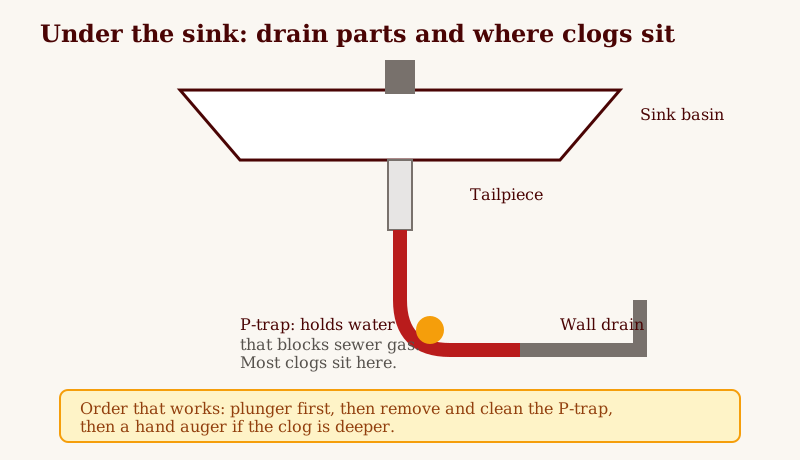
If plunging fails, the clog is probably sitting in the trap under the sink, which is exactly where it is designed to be caught.
- Put a bucket under the trap. What comes out is grey, slimy, and smells like it has been there a while, because it has.
- Loosen the two slip-joint nuts on the P-trap by hand. Plastic traps usually need no wrench. Lower the trap into the bucket.
- Scrub the trap out with an old bottle brush. Check the tailpiece above and the wall arm beyond with a finger or the brush.
- Reassemble with the washers seated the way they came off, cone side facing the nut. Hand-tight, then a quarter turn more. Run water for a full minute and check every joint with a dry hand.
Kitchen traps add one wrinkle: grease coats the whole inside of the trap in a hard layer. Hot water and the brush handle it. This is also the moment to see why the drain slowed down, which tells you what to stop putting in it.
Advertisement
Step 3: hand auger for deeper clogs (30 minutes)
A hand auger, also sold as a drain snake, is a flexible cable with a corkscrew tip, usually 3 to 7 metres for household models.
- Feed the cable into the drain opening, or through the wall arm with the trap off, until it resists.
- Lock the cable, turn the handle clockwise while pushing gently, and let the tip work into the clog rather than forcing it.
- When the cable moves freely again, pull it back slowly and wipe it into the bucket as it comes. The clog usually arrives attached.
- Run hot water for two minutes to flush the loosened residue down.
Work the auger with gloves and patience. Forcing the cable can kink it inside the pipe, which turns a small job into a professional one.
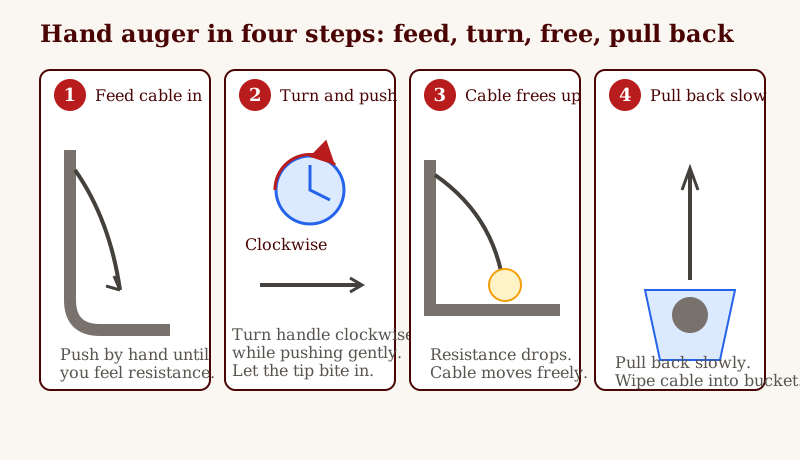
How it should feel at each stage: feeding by hand is smooth until the first bend or the clog, and you should need only light pressure. When the tip bites, the handle gets harder to turn for a few rotations, then eases. That ease is the signal. If the cable starts to spring back, twist into a loop outside the drain, or buck under your hand, stop pushing and back off a quarter turn. Force is what kinks cable.
Pull back slower than you went in. The clog is often hanging on the tip, and a fast pull strips it off inside the pipe or flicks it across the room. Wipe the cable through a rag into the bucket as it comes out, a short section at a time.
What about tubs and showers?
Same order. Plunge first. Then remove the drain cover and pull the hair mat out with needle-nose pliers or a plastic drain stick; shower clogs are nine times out of ten a hair wad right at the grate. Only auger if the line still runs slow after that.
If the drain is still slow
| What you see | Likely cause | What to try next | | Plunger will not build pressure | Cup not sealing, overflow open, or basin too dry | Wet the cup edge, block the overflow with a wet cloth, and add water until the cup sits under water | | Plunger feels sealed but nothing moves | Clog sits past the trap or is a dense grease mat | Move to the P-trap clean, then auger through the wall arm with the trap off | | Trap comes out clean and drain still runs slow | Clog is further down the branch line | Auger through the wall arm; work in short advances and test with hot water between passes | | Auger turns but makes no progress | Tip is spinning in front of the clog, or cable is coiling | Pull back a little, re-feed with light pressure, and keep clockwise turns steady rather than fast | | Drain clears, then slows again in a few days | Grease coating left on pipe walls, or a partial clog left behind | Flush with hot water for two full minutes; if it returns again, the line needs a powered clean | | Water rises in the other basin of a double sink | Both basins share the trap and branch | Plug and hold the second basin while plunging, or clean the shared trap first |
Time each stage before you move on. Give plunging three full rounds. Give the auger ten minutes of steady work at the clog. Jumping to the next tool after one try tells you nothing.
Common mistakes
- Starting with chemical opener. It fails on most hair and grease clogs and leaves caustic water sitting in the trap you are about to open.
- Using a flange plunger on a flat sink. The fold-out ring is shaped for a toilet bowl and leaks pressure on flat surfaces.
- Plunging with no water over the cup. You end up pushing air, which compresses and wastes the stroke.
- Leaving the overflow open. The pressure vents straight out and the clog never feels it.
- Cranking slip-joint nuts with a wrench on plastic traps. Hand-tight plus a quarter turn seals them; more force cracks washers and nuts.
- Forcing the auger when it resists. A kinked cable inside the pipe turns a CAD $40 job into a plumber call.
- Pulling the auger out fast. You lose the clog in the pipe and spray the room on the way out.
- Reassembling the trap washers backwards. The cone side faces the nut; flipped washers weep under the sink for days before you notice.
Done looks like this: a full basin drains without backing up and pulls a small vortex at the end. Run the tap for a full minute after. No slow rise, no gurgle, and a dry hand under every trap joint.
When to call a plumber
Every drain in the house slow at once, sewage smell from floor drains, gurgling when other fixtures run, or a clog that returns within days of a thorough cleaning. Those are branch-line or main-line problems. Powered equipment and a camera are worth paying for once rather than renting your weekend to a losing fight.
Keep the chemical opener out of it and the whole job stays simple, the same way the other jobs in this pillar stay simple: fix a running toilet before it inflates the water bill, and reseal the bathtub caulk before water gets behind the tile.