Short answer
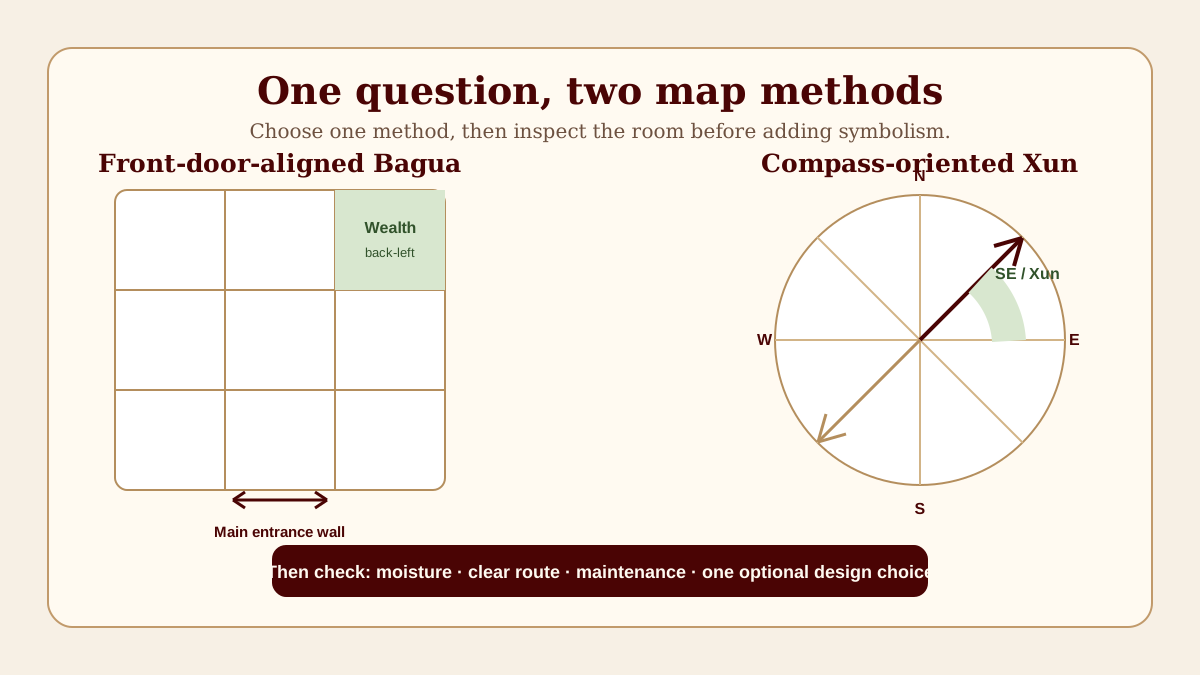
There is no single universal “wealth corner.” Two popular approaches use different maps: a front-door-aligned Bagua often places the wealth area in the far back-left area of a floor plan, while compass-oriented systems associate Xun (巽) with the southeast. Pick one method, record it, and do not combine them. Then make the space dry, safe, accessible, and useful before adding any optional plant, colour, or symbol. A corner, bathroom, missing floor-plan area, or object cannot predict income, debt, property value, or the future.
The wealth-corner question is popular because it offers a tidy answer to an untidy subject. People want a home to feel supportive while they deal with bills, job changes, a renovation, a move, or the ordinary work of keeping a household running. Search results often turn that understandable wish into a formula: find one corner, add a particular object, and expect money to follow.
That formula leaves out the part that matters most. Different Feng Shui systems use different maps. A healthy plant can still be the wrong choice if it blocks a door, gets no light, leaks onto a floor, or harms a pet. A small fountain may be a welcome symbol for one household and a moisture, noise, cable, or cleaning burden for another. And none of these choices replaces a budget, emergency savings, tenant-rights process, property inspection, or financial advice.
This guide preserves the cultural language while giving you a better process: identify the map, inspect the space, choose a useful action, and keep symbolism optional.
Why online wealth-corner advice conflicts
Two statements appear constantly online:
- “The wealth corner is the far back-left corner from the entrance.”
- “The wealth corner is in the southeast.”
Both can be references to a Bagua-based practice, but they are not instructions to stack on top of each other. The first is commonly used with a front-door-aligned or simplified nine-area overlay. The second uses a compass-oriented association with Xun, the Wind/Wood trigram. If a page gives both answers without explaining the difference, a reader may end up moving an object from one part of a room to another without knowing what they are studying.
The disagreement is not a signal that you need more objects. It is a reason to slow down and name the method.
For a whole-home, apartment, or room drawing that goes beyond this one association, use the Bagua floor-plan guide. It walks through boundaries, irregular plans, entrance alignment, compass orientation, and a one-week test without treating a square as a financial forecast.
| Method | How the map is oriented | Where the wealth association is commonly placed | Best use | Boundary |
|---|---|---|---|---|
| Front-door-aligned Bagua | Align the map’s entry side with the main entrance wall, then read inward | Far back-left area from the entrance | A simple room-by-room reflection or organisation exercise | It is an overlay, not a measurement of a building’s finances or occupants |
| Compass-oriented Bagua | Use the building or unit’s directional orientation | Southeast / Xun sector | Studying directional vocabulary and traditional correspondences | A phone compass, a complex floor plan, nearby metal, and an unclear facing direction can all create uncertainty; do not claim false precision |
This table is the core decision aid for this guide. It solves a question most “activate your money corner” articles leave unresolved: which map are you actually using?
Before you map anything: the four non-negotiables
Do a normal home check first. It is more useful than locating a corner in a room that cannot function.
1. Water stays where it belongs
Look for drips under a sink, a wet baseboard, staining, condensation, soft flooring, a damp cabinet, or a musty smell. The U.S. Environmental Protection Agency’s guidance is straightforward: moisture control is central to preventing mould, and a leak or spill deserves prompt attention. A bowl, crystal, plant, or colour cannot repair the water source. Read the EPA’s guide to moisture and mould if you have a persistent issue.
2. The route works for the people who live there
Open the entry door, closet, bathroom door, and cabinet. Carry a grocery bag through the area. Consider a child, pet, visitor, mobility aid, stroller, or person arriving late at night. Do not make a route narrower with a fountain, floor plant, stool, heavy ornament, or unstable screen just because a chart calls that location important.
3. The object is maintainable
A plant needs suitable light, a pot that does not leak, and care the household can actually provide. A lamp needs a sensible cord route. A display needs dusting. Paperwork needs a home that does not become a pile. If a choice creates an uncleanable, damp, or obstructed corner, it has failed its practical job regardless of its symbolism.
4. Real financial work has its own place
A wealth-corner ritual can prompt a useful question: “What financial task needs attention?” The answer might be checking an invoice, setting a reminder, consolidating documents, or reviewing a household budget. It is not a substitute for making that decision. If you need a calculation, use a tool such as CalculatorVillage’s budget calculators and seek qualified advice for a consequential decision.
Advertisement
Method one: the front-door-aligned Bagua
This is the method behind the familiar “back-left corner” explanation. Start with the entrance that functions as the main arrival point to the home or apartment—not a balcony door, a side gate used only for bins, or a hallway door in the shared building. Stand just inside it and look inward.
Imagine the floor plan divided into a three-by-three grid. In a common front-door-aligned layout, the wealth/prosperity association sits in the far-left area, away from the entrance. Some people apply the same grid to one room, such as a bedroom or home office. That is a personal study choice, not a rule that requires every room to contain nine separate life outcomes.
A simple way to document the method
Draw a rough rectangle for the unit or room. Mark the main entrance. Divide it into nine equal-ish areas. Mark the far back-left area with “front-door-aligned Bagua: wealth association.” Then write the date and method in the margin.
Do not redraw the grid until it gives a nicer answer. Irregular apartments, L-shaped rooms, open plans, shared hallways, and oversized closets rarely fit a neat square. The purpose of the diagram is to help you notice the space, not to create a test you can fail.
What to inspect in that area
Ask practical questions in this order:
- Is there a leak, stain, dampness, mould, loose outlet, damaged floor, or blocked vent?
- Can the area be reached and cleaned without moving too many things?
- Does it hold something the household actually uses: bills, a desk, a reading chair, a cabinet, a plant, a laundry hamper, or nothing at all?
- Is the first sightline calm enough for the people who live there?
- Would one small optional design choice make it more intentional?
That order turns a symbolic prompt into a useful household review.
Method two: compass-oriented Xun and southeast
In directional Bagua language, Xun is commonly associated with southeast and Wood. This may be the method a teacher, book, or school intends when it names Xun rather than “the back-left corner.” It is a different starting point.
If you are studying this method, begin by learning what your source means by the home’s orientation. A compass reading near appliances, large metal objects, reinforced concrete, or an unfamiliar unit entrance may be less straightforward than it appears. A phone sensor can be a rough observation tool, not a surveying instrument. If the direction affects a renovation, purchase, or a high-stakes decision, do not pretend an informal reading is enough evidence.
Once you have a reasonable southeast sector, use the same practical review: moisture, access, maintenance, light, storage, and what the room needs to do. In traditional Five Elements language, Wood may guide a preference for living greenery, wood tones, a vertical form, or an image of growth. Keep this as visual symbolism. It does not cause a salary increase, repair a financial problem, or prove a home is a better investment.
Do not mix the two methods
The most common mistake is saying a bedroom’s “wealth corner” is southeast and the back-left corner at the same time, then using both to prescribe different objects. Choose one system for one exercise. If you are curious about the other, make a separate sketch and compare what each helps you notice. The comparison is the learning; forcing them to agree is not.
The wealth-corner worksheet
Use this worksheet before buying anything. It is designed for a home, a condo unit, a rented room, or a home office.
| Write this down | Why it helps | Example |
|---|---|---|
| Map method | Stops you mixing systems | “Front-door-aligned Bagua, main unit entrance” |
| Exact location | Makes the question concrete | “Back-left of living room: window wall beside bookcase” |
| Current condition | Identifies a real task | “Plant pot leaves a ring; cord crosses floor; bills are mixed with mail” |
| First practical action | Improves daily use | “Add a tray for incoming mail; move lamp cord; use a saucer under the plant” |
| Optional cultural choice | Keeps symbolism proportionate | “One healthy green plant if the light works” |
| Review date | Tests whether the change helped | “Recheck in two weeks: easier to clear papers and vacuum?” |
The worksheet deliberately does not include a “wealth score.” A score would imply that a layout can measure future money or personal worth. It cannot. What it can reveal is whether an overlooked place in the home is making paperwork, access, cleaning, or concentration harder than it needs to be.
What belongs there? Choose from the room’s real job
There is no mandatory wealth-corner shopping list. Start with the room.
In a living room
Choose an object that gives the corner a clear purpose: a stable lamp, a small table with nothing blocking it, a piece of art, a plant that suits the light, or simply open floor space. A living room can benefit from a calm visual anchor. It does not need a crowded display of coins, crystals, fountains, and plants competing for attention.
In a home office
This is often the most natural place for the topic because people connect work, income, paperwork, and focus. Use the area for an organised file box, a reliable light, a charging station that does not create cable clutter, or a small plant if it fits the light and your routine. Pair the symbolic theme with a concrete task: file a receipt, review a contract deadline, back up a document, or schedule a budgeting session. For desk position, screen comfort, and shared-space constraints, use the home-office desk placement guide.
In a bedroom
The bedroom’s job is rest, privacy, and easy nighttime movement. Do not turn a bedroom corner into a paperwork pile or a noisy water feature because an online chart calls it a wealth location. A tidy nightstand, stable light, clothing storage that closes, and a clear route to the door are more compatible with sleep. The sleep-supportive bedroom guide explains the practical checks.
In an entry
An entry may need a place for keys, shoes, deliveries, a coat, and a quick glance before leaving. Choose a landing zone that makes arrival easier. A healthy plant can work if it gets light and does not narrow the doorway. An attractive bowl is useful only if it catches the small items that would otherwise become clutter.
Plants, water, colour, and symbolic objects
Traditional wealth-corner advice often recommends Wood- and Water-associated items. Use these only when the actual home supports them.
Plants
A living plant can be a pleasant symbol of care and growth. The practical test is harder: does the spot have the right light, does the pot protect the surface, can someone water it without spilling, and is the species appropriate around children or pets? Check a plant by its scientific or common name against the ASPCA’s toxic and non-toxic plant list before bringing it into a pet household. A dead or struggling plant is not “bad energy”; it is information that the plant and location do not suit each other.
Water features
Water has rich symbolic associations in Feng Shui, but an indoor fountain is optional and often unnecessary. Avoid one if the pump is noisy, the cord crosses a route, the bowl could spill, cleaning will be skipped, a pet might drink from it, or the room already has a humidity or mould concern. Water and electricity need conservative handling; for any concern about damp electrical equipment, use a qualified electrician rather than an ornament. The Electrical Safety First guidance on water-damaged electrics is a useful reminder of the principle.
Colour and material
Green, purple, blue, black, wood grain, ceramics, and metallic details appear in different modern wealth-corner lists. Choose a finish because it works with the existing light, floor, cleaning needs, and your taste. A deep green can make a bright room feel grounded; it can also make a dark alcove feel heavier. A purple accent can be lively; it can also fight every other finish in the room. Sample it, view it at the time of day you use the room, and keep only what you like.
Coins, art, and meaningful objects
Traditional coins, family objects, travel photographs, artwork, or a written goal can be meaningful if they are handled respectfully and do not create clutter. Do not use a sacred or cultural object as a mechanism to control another person’s money, health, choices, or success. A symbolic object is best when it reminds you of a value—care, patience, generosity, stewardship, learning—not when it promises an outcome.
Difficult layouts: bathroom, closet, “missing” corner, and shared building
A bathroom in the mapped area
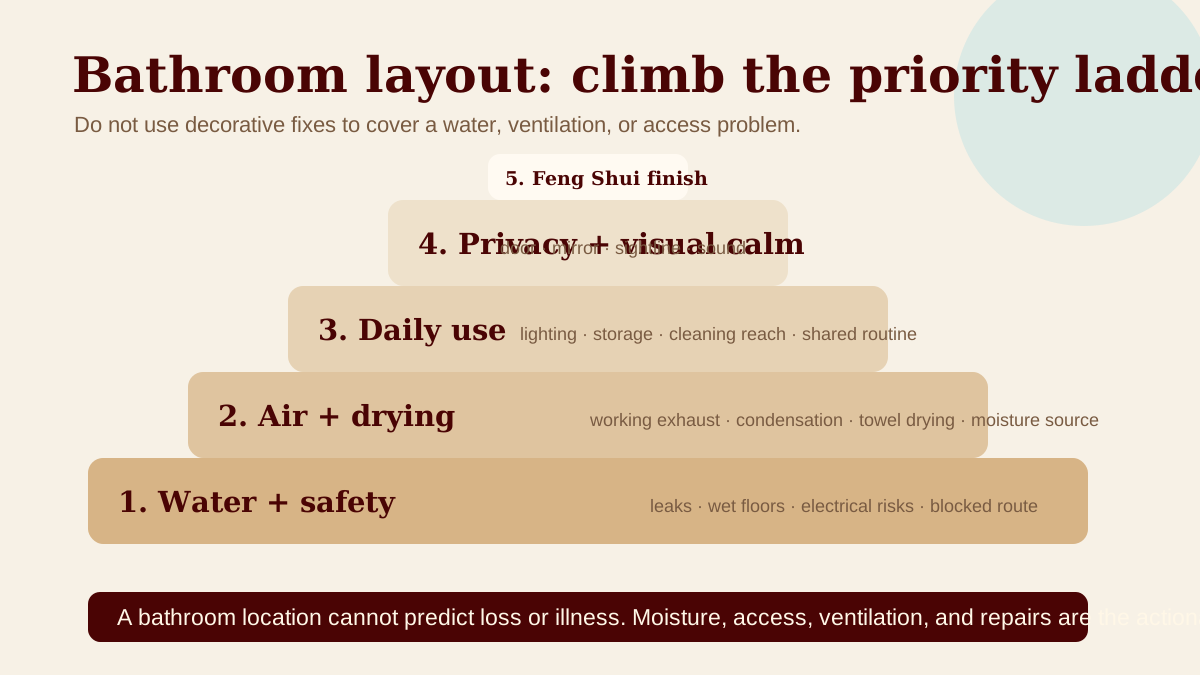
Do not panic and do not buy a cure. A bathroom is a water-using service room. Give it the best practical review in the house: check for leaks, run appropriate ventilation, keep the route safe, clean the surfaces, keep storage manageable, and report a failed fan or moisture problem. If you enjoy a wood-toned tray, a plant that truly suits the light, or an Earth-coloured container, treat it as a design choice. It does not protect income or change a mortgage. The bathroom layout guide gives a full moisture-and-privacy checklist.
A closet or storage area
This can be a useful prompt to make storage legible. Sort one category at a time: documents, seasonal items, cleaning supplies, or household tools. Label what needs a label. Leave enough space to see what you own. A closet is not an omen of blocked finances; it is simply a place where hidden accumulation can become hard to manage.
An L-shaped plan or “missing” area
An irregular footprint does not remove a part of your life. Do not add a mirror outside, an unstable flagpole, or an object that bothers neighbours to symbolically extend the plan. Look at the actual exterior: drainage, access, lighting, privacy, maintenance, planting, and local rules. If a missing area is a balcony, yard, or shared setback, its real responsibilities matter more than a diagram.
A condo, apartment, or shared hallway
Map the unit you control, not the entire tower or another household’s home. Respect lease terms, condo rules, fire safety, and shared access. You can keep a small entry clear, use a removable organiser, choose a lamp or plant that fits your unit, and document any moisture issue. You do not need to renovate a rental or apologise for a fixed layout to practice a cultural design preference.
Three worked examples
Example 1: A back-left living-room corner with a radiator
Using the front-door-aligned method, a renter identifies a living-room corner beside a radiator and a curtain. Online advice suggests a large plant and moving water. The audit says otherwise: a big pot may crowd heat circulation, a fountain adds a cord and water near a route, and the light is poor. The useful choice is to leave the radiator clear, use a small heat-safe side table only if allowed, and keep the adjacent mail tray organised. If the renter wants symbolism, a framed botanical print is lower-maintenance than a plant that will struggle.
Example 2: Southeast bathroom in a condo
Using a compass-oriented exercise, an owner identifies the ensuite as southeast. The room has a slow drip under the sink and a fan that runs loudly. The first actions are to address the drip, ask about the fan, and reduce counter clutter so cleaning is easier. A green hand towel or wood-framed art may be an enjoyable finishing choice after the repair. Neither item changes the building’s value, the owner’s earnings, or the result of a future sale.
Example 3: Home-office corner with bills and cables
The mapped area is the home-office corner. It holds old mail, a power bar, and a half-dead plant. The person first sorts mail into action, file, and recycle; moves the power bar so a chair cannot roll over it; and removes the plant. They add a modest task light and schedule one weekly finance-admin session. This is a useful interpretation of a wealth theme because it changes a real habit. It works even for someone who does not believe the map has any predictive power.
A monthly five-minute reset
- Check the mapped area for water, heat, cord, trip, or access problems.
- Remove one item that does not belong there.
- Wipe or vacuum the surface and make the object you keep easy to maintain.
- Review one real household task: a bill, insurance renewal, receipt, savings transfer, repair request, or document backup.
- Notice whether the space now supports the way you live. If not, change the layout rather than adding another symbolic object.
This is the most grounded version of “activating” a corner: make it easier to care for a home and meet a responsibility.
Sources and limits
The descriptions of front-door-aligned and compass-oriented wealth-area methods summarise widely used contemporary Bagua conventions; schools differ in terminology and procedure. The practical moisture guidance comes from the U.S. EPA’s mould and moisture guide, pet-plant precaution from the ASPCA plant database, and electrical-safety caution from Electrical Safety First. These sources support maintenance and safety decisions, not Feng Shui predictions. Follow local building, tenancy, condominium, electrical, and safety requirements, and seek qualified advice for persistent moisture, mould, electrical work, plumbing, structural alterations, investments, or financial decisions.
What to read next
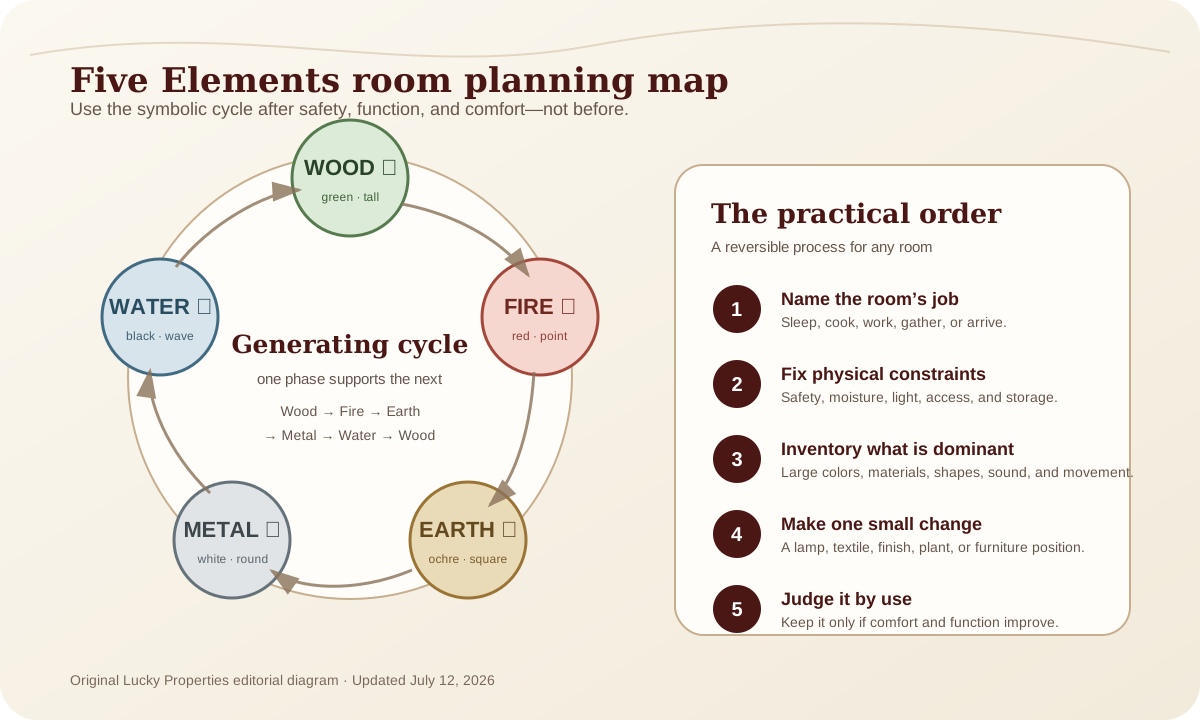
For the broader symbolism behind Wood, Water, Fire, Earth, and Metal, continue with the Five Elements balancing guide. If you are considering a property instead of rearranging one you already own, use the Feng Shui home-buying checklist to separate daylight, condition, access, maintenance, and legal checks from cultural preference.