Short answer
A sleep-supportive Feng Shui bedroom starts with a room that is quiet, cool, dark, safe to move through, and comfortable for the person sleeping there. Traditional bed placement can be a useful final preference: a stable wall behind the headboard, a view of the door, and no direct line through the doorway. But it never outranks a clear exit, a working window, a manageable temperature, mobility needs, or treatment for a real sleep problem.
Use Feng Shui here as a design language for calm and order. Don’t use it as a diagnosis. A moved bed cannot cure insomnia, sleep apnea, anxiety, chronic pain, depression, or conflict at home.
What the top bedroom guides miss
Search results tend to offer the same instructions: command position, matching nightstands, no mirror, no clutter. Those ideas may be familiar, but they do not help someone whose window leaks street noise, whose radiator dries out the room, whose partner works a late shift, or whose only workable bed wall is beside a closet.
The more useful question is: which change will make this room easier to sleep in tonight without creating another problem? The National Heart, Lung, and Blood Institute and the CDC both point to a quiet, cool, dark bedroom as part of healthy sleep habits. Those are observable conditions. Start there, then add the traditional layout preference that fits your actual room.
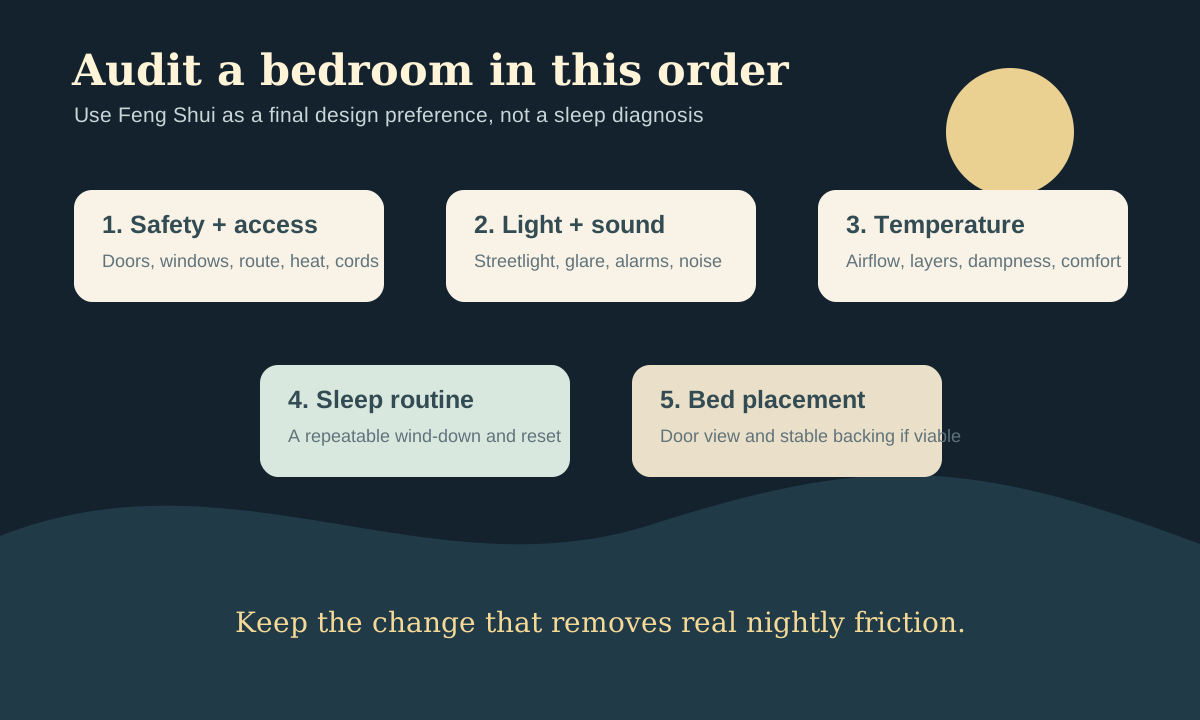
Use this priority order:
- Safety and access. Doors, escape windows, heating equipment, ventilation, smoke alarms, cords, furniture stability, and every sleeper’s nighttime route come first.
- Light and sound. Solve the streetlight, early sun, television, mechanical hum, or hallway noise that actually reaches the bed.
- Temperature and bedding. Test air movement, heat, cold, moisture, and layers before changing the whole room.
- Sleep routine. A room cannot compensate for a schedule that gives no time to sleep, but it can make a wind-down routine easier.
- Bed placement. Among the layouts that pass the first four checks, choose the one with a stable visual anchor and a workable view of the door.
- Symbolic finishing choices. Colour, pairs, artwork, and Five Elements objects are optional. Keep only what supports the room rather than crowding it.
Command position without the fear story
In Form School Feng Shui, a command position generally means you can see the door while seated or lying down, you are not in its direct line, and you have a stable backing. For a bed, that often means a headboard against a solid wall with a diagonal view toward the entry.
Some guides say a bed aligned with the door guarantees bad sleep, illness, or relationship trouble. It does not. The door alignment has cultural and funeral symbolism in some traditions, which a reader can respect. It is still a layout preference, not a medical finding.
Ask more practical questions:
- Does the open door strike the bed or chair?
- Does the direct path create a trip route at night?
- Does the headboard wall carry plumbing, an elevator shaft, a noisy neighbour, or a heater?
- Can you open the window, closet, and bedroom door fully?
- Can every person who uses the room reach light, water, medication, a mobility aid, or the bathroom safely?
If the command position wins those checks, use it. If it loses to a quieter wall or a clearer route, the quieter and safer wall wins.
Audit the room before buying anything
Do a twenty-minute audit at the time you usually try to sleep. Sit on the bed. Turn off the lights you normally turn off. Listen. Look at the ceiling, the door gap, the window, the mirror, and the routes to the bathroom. You are looking for a real source of friction, not a symbolic flaw.
| Check | What to notice | First low-cost test |
|---|---|---|
| Door and route | Door swing, cords, rug edges, furniture corners, mobility route | Tape the route; walk it with the lights you use at night |
| Light | Streetlights, early sun, indicator LEDs, reflected screens | Cover one light source or test a mask/curtain for three nights |
| Sound | Traffic, fan rattle, neighbour noise, snoring, household activity | Identify the loudest source before buying a sound machine |
| Temperature | Hot wall, draft, radiator, fan direction, bedding layers | Change one layer or airflow setting at a time |
| Bed surface | Sagging support, pillow fit, heat retention, allergy concerns | Note discomfort and wake-ups for a week; replace only after identifying the issue |
| Visual load | Work gear, laundry, open storage, a mirror reflecting motion | Clear the single sightline you see when lying down |
This is the original Lucky Properties sleep-environment audit. It does not score your luck. It makes tradeoffs visible so you do not buy décor for a problem caused by a rattling vent or an overfull laundry chair.
Advertisement
Light: start with the exposure you can see
The NHLBI recommends a quiet, cool, dark bedroom and advises avoiding bright artificial light in the hour before bed. That does not mean everyone needs a cave. It means testing whether light is keeping you awake.
Streetlight and early-sun rooms
Close blinds and curtains before you move the bed. If light leaks around the edges, consider a better-fitting lining, a different mounting method allowed by your rental agreement, or a sleep mask. Do not block a required window, cover a heater, or create a cord hazard. In a rented room, a removable blackout panel may be more realistic than a permanent installation.
If the bed must sit under a window, check drafts, condensation, and operating hardware. A stable headboard can give visual backing, but it must not press on glass or stop the window from opening when needed. A window bed is not a failed bedroom; it is a compromise that needs a careful audit.
Screens, clocks, and charging
A phone is not “bad energy,” and it does not need an expensive EMF accessory. The useful questions are whether the screen keeps you scrolling, whether alerts wake you, and whether charging equipment is placed and used according to its instructions. NHLBI notes that TV and computer light can disrupt the sleep-wake cycle. Put the device where it is less likely to become the last thing you see, then try a consistent wind-down routine.
Keep charging equipment out of loose bedding and away from heat or moisture. If a phone must stay close for accessibility, caregiving, or safety, use the settings and location that meet that need. A rigid “no devices ever” rule is less useful than a workable plan.
Noise: solve the source, then add comfort
Noise can be a window problem, a door-gap problem, a fan problem, a building problem, or a household-schedule problem. Stand in the room at bedtime with the fan and appliances off. Then turn them on one at a time. You may find that moving a vibrating charger or tightening a loose vent cover matters more than buying a new headboard.
For a noisy street, test window coverings, weather-stripping approved for the window, or a continuous neutral sound that does not prevent hearing alarms or a child who needs you. For a partner’s schedule, agree on lights, alarms, drawers, and bathroom trips before treating the issue as a layout defect. For persistent building noise, document dates and times and use the appropriate landlord, condo, or local process.
Traditional Feng Shui may describe a calm bedroom as more Yin. That can be a helpful image: fewer abrupt lights, fewer active tasks, and a softer visual pace. It does not mean a noisy home has harmed your energy. It means the source deserves a practical fix.
Temperature, air, and bedding
The CDC describes a relaxing, quiet, cool bedroom as part of good sleep habits. The Sleep Foundation offers roughly 65–68°F (18–20°C) as a common adult starting range, while also acknowledging that comfort varies. Do not use one number as a rule for infants, older adults, people with medical conditions, or a room with different bedding and humidity.
Try a simple sequence:
- Adjust the top layer before changing the thermostat for the whole household.
- Move or redirect a fan so it does not blow directly into irritated eyes or a cold-sensitive sleeper.
- Check whether the bed is tight against a radiator, baseboard heater, or blocked vent. Follow manufacturer clearances.
- Notice dampness, window condensation, musty odour, or visible mould. Those are building-maintenance concerns, not a Five Elements imbalance.
- If one sleeper runs hot and another cold, use separate layers before making a symbolic colour change.
Feng Shui’s preference for a grounded, restful room can coexist with this approach. Earth-toned bedding or a heavier-looking headboard may feel calming to you. They do not change body temperature or replace ventilation.
Clutter, mirrors, and the last thing you see
“Clear clutter” is too vague to be useful. Start with the bed’s immediate sightline and route. A pile of clean laundry is not a moral failure. But if it blocks a drawer, reflects in a mirror, or creates a nightly task, it is worth giving a home.
Try a three-zone rule:
- Bed zone: nothing underfoot, no unstable furniture, and only items needed at night.
- Tomorrow zone: clothes, bag, medication, or keys ready for the morning in one deliberate place.
- Elsewhere zone: paperwork, food dishes, hobby materials, and work gear stored outside the bed’s main sightline when possible.
Mirrors are similar. Traditional bedroom advice often avoids a mirror reflecting the bed. The physical question is whether it reflects headlights, a bright screen, the doorway, or movement that a sleeper finds distracting. Cover or reposition it if that helps. Do not claim the mirror causes infidelity, nightmares, or illness. The practical mirror-placement guide shows how to run the same test in entries, bathrooms, and living rooms.
Three rooms, three workable answers
A small rental bedroom
The only bed wall is under a window, and the closet opens toward the foot of the bed. Keep the window usable. Use a low, stable headboard if it does not interfere with hardware. Put the bed slightly off the door centreline if possible, but protect the closet and the exit first. Use a narrow shelf or wall light only if securely installed and permitted. A blackout blind and a small closed laundry bin may do more than a furniture overhaul.
A shared room with different schedules
One person wakes at 5:30 a.m.; the other sleeps later. Start with individual light control, a quiet route to the door, clothing storage away from the bed, and an agreement about alarms. Matching nightstands are optional. The couples bedroom layout guide offers a fuller floor-plan worksheet for this situation.
A bedroom that doubles as a study space
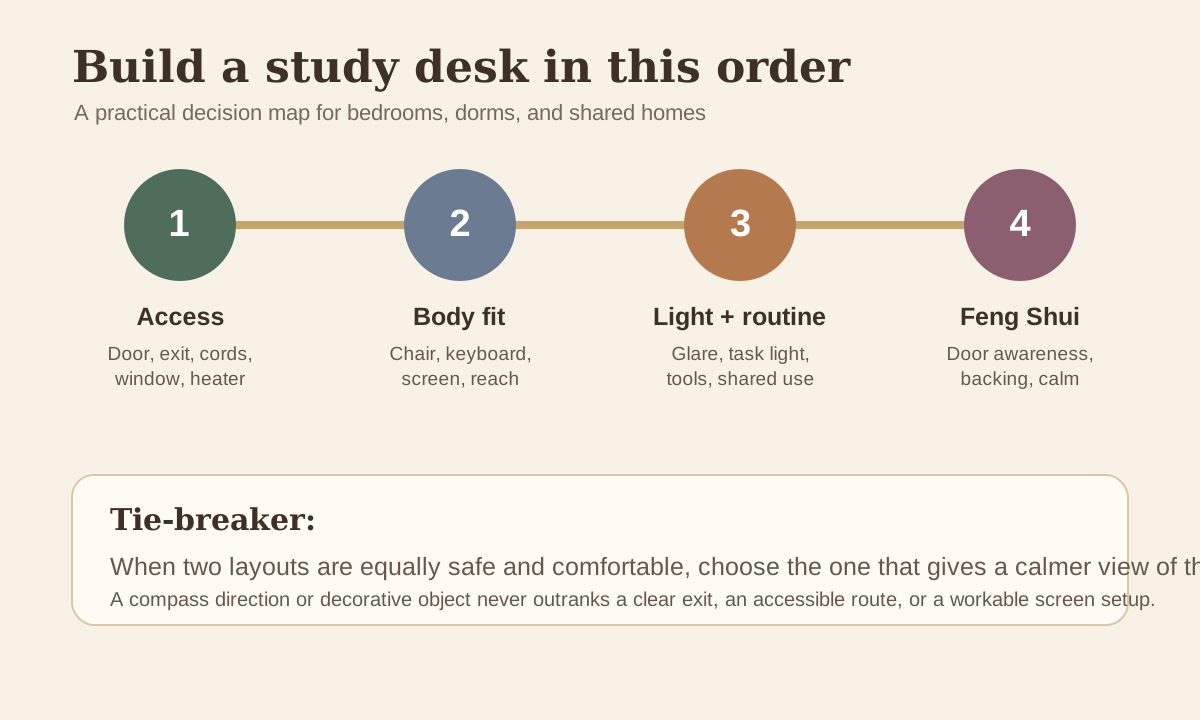
Put the desk where the chair and cords stay out of the nighttime route. Close the laptop and put visible work into one tray or drawer before bed. A folding screen can help only if it does not block light, heat, access, or cleaning. For compact-room options, use the student study-desk guide; it compares wall-facing and door-aware setups without making claims about grades or sleep.
When the room is not the whole problem
Contact a healthcare professional if you regularly have trouble sleeping, have loud snoring or breathing pauses, severe daytime sleepiness, unusual movements during sleep, or symptoms that affect safety. The CDC recommends speaking with a provider when sleep problems persist or signs of common sleep disorders appear. A better bedroom can support a routine, but it is not a substitute for assessment or treatment.
Also separate home-maintenance issues from decoration. Damaged electrical equipment, a blocked exit, repeated water intrusion, visible mould, a malfunctioning heater, or a smoke alarm problem needs an appropriate landlord, contractor, or authority. Do not hide the problem with a plant, crystal, scent, or curtain.
A seven-night, one-change experiment
Avoid changing the mattress, curtains, bed wall, lamp, and routine all at once. You will not know what helped. Pick one source of friction and test it for a week.
| Nights | Change | Track |
|---|---|---|
| 1–2 | Observe without changing the layout | light, noise, temperature, route problems |
| 3–4 | Make one reversible adjustment | whether the adjustment is practical, not just attractive |
| 5–6 | Keep the change and repeat the usual routine | what wakes or distracts you |
| 7 | Decide: keep, modify, or undo | whether it improved the room without a new problem |
Use plain notes: “streetlight at 5:20,” “fan too cold,” “tripped on bag,” “phone stayed on desk.” A reader does not need to measure qi to see patterns in a bedroom.
Choose the next change with a simple trade-off card
Bedroom advice becomes expensive when every annoyance is treated as a shopping problem. Before buying a headboard, curtain, fan, organizer, or sound machine, write the change down and ask what it solves, what it might make worse, and whether it is reversible. That matters in rentals, shared homes, small rooms, and households with children or pets.
| Proposed change | The problem it should solve | Check before keeping it | A common trade-off |
|---|---|---|---|
| Move the bed | Door sightline, noise, or a blocked route | Door, closet, window, and outlet still work | A better view may create glare or reduce access |
| Add blackout coverage | Streetlight or early sun | Window remains usable; cord and heater safety | The room may become too warm or difficult to air out |
| Add a fan or change airflow | Stuffy or warm sleep surface | Fan is stable and not aimed uncomfortably | More sound, dry eyes, or a cold-sensitive partner |
| Add closed storage | Work or laundry in the bed sightline | It does not narrow the route or hide a damp problem | Furniture can crowd a small room |
| Use a mirror cover or move it | Reflected light or motion | The mirror is secure and still available when needed | Another object to manage each morning |
| Add a divider near a desk | Screens and work are visible from bed | Light, heat, exit, and cleaning remain clear | The room can feel tighter and trap clutter |
The best change has a specific problem, a simple test, and no new safety cost. A traditional preference may help decide between two equally good options. It should not persuade you to keep a change that makes a room hotter, darker at the wrong time, harder to clean, or less accessible.
A worked example: the bed beside the radiator
Imagine a small apartment bedroom with three realistic choices. The bed can stay near the radiator, move under a window, or sit closer to the door. The radiator option keeps the headboard on a stable wall, but the sleeper wakes hot and cannot comfortably reach the window. The window option is cooler but introduces early light. The door-side option creates a narrow route to the closet.
Start with the non-symbolic facts. A bed against heating equipment may conflict with manufacturer clearance and makes temperature harder to control. The door-side option interferes with the nighttime route. That leaves the window wall as the plan worth testing. Add a safe, light-blocking window treatment, keep the operating hardware accessible, and use a stable headboard that does not press into the glass. If the room feels calm and the route works, it is a good outcome - even though it is not the textbook command position.
This is what a sleep-supportive Feng Shui decision looks like: you preserve the traditional wish for backing where possible, but you make the final choice from comfort, access, and conditions you can observe.
Sources and what to read next
- NHLBI: healthy sleep habits - quiet, cool, dark room guidance and shift-work considerations.
- CDC: about sleep - sleep habits and when to talk with a healthcare provider.
- NHLBI: insomnia treatment - sleep-friendly room guidance and clinical treatment context.
- Sleep Foundation: bedroom environment - practical discussion of light, sound, bedding, and temperature.
What to read next: If the room is shared, use the couples bedroom layout guide to compare two bed plans around real access, light, storage, and sleep needs. Start with the route to the door tonight; it is the simplest check that a beautiful room sometimes fails.