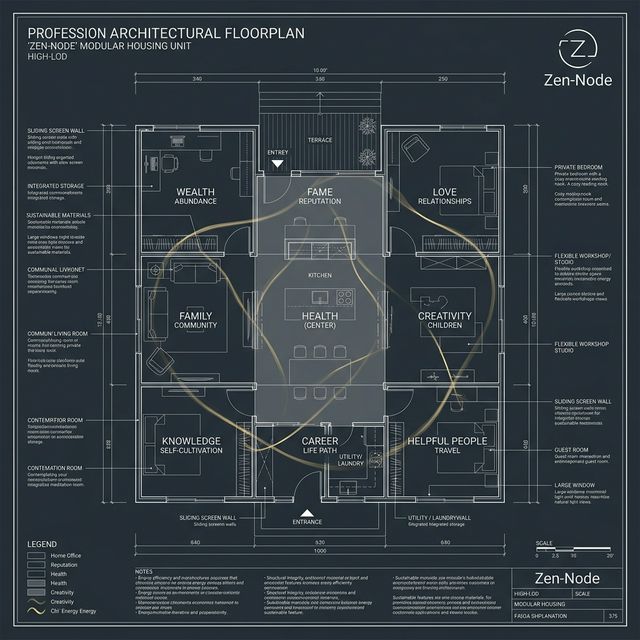
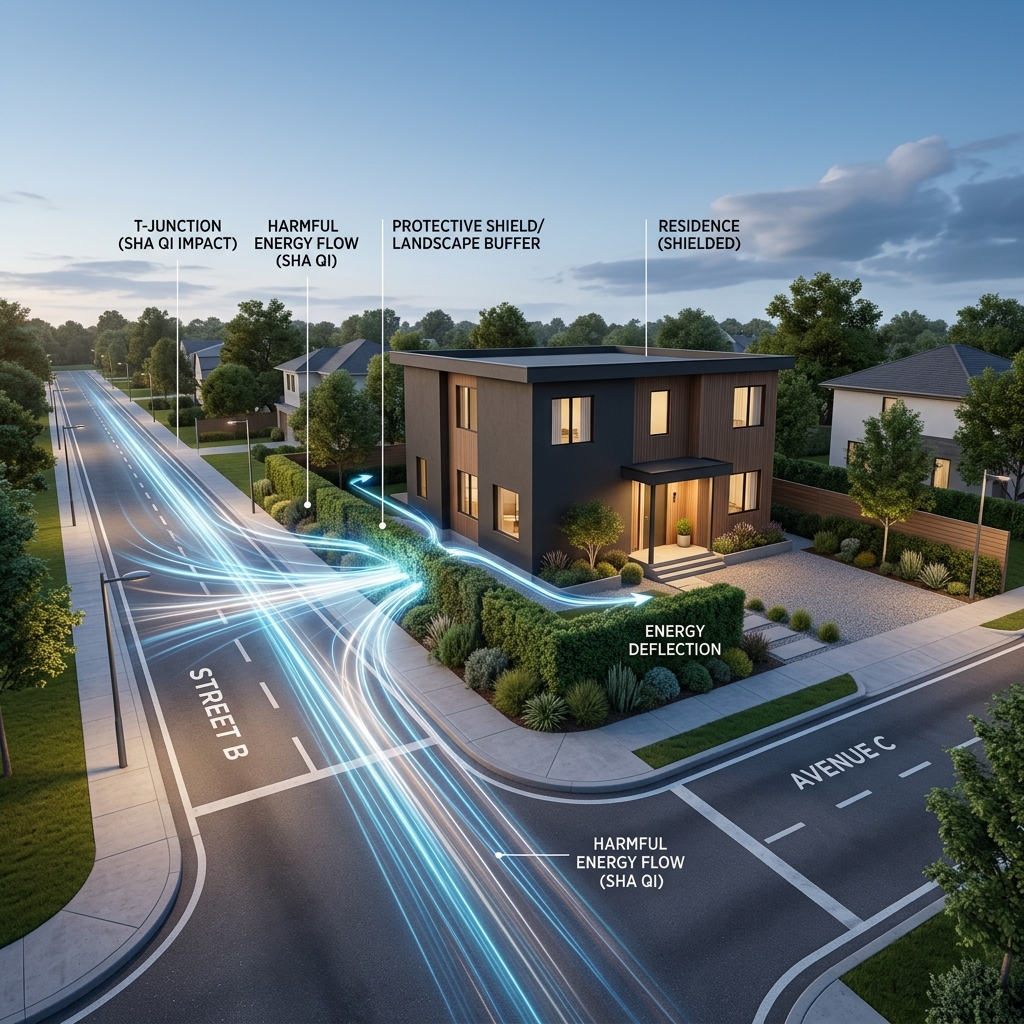
Short answer
A Feng Shui house-buying checklist is most useful when it helps you notice a property clearly, not when it promises to predict your future. Walk the real approach, test the entrance and daily routes, observe light, noise, water, layout, and surrounding forms, then verify concerns through records and qualified advice. Use Feng Shui as a cultural design lens for fit and feeling; use inspection, legal, financial, insurance, and safety due diligence to decide whether to buy.
The most reliable question is not “Is this house lucky?” It is: Can I explain, with evidence, how this property will work on an ordinary Tuesday in rain, after dark, with groceries, visitors, bills, repairs, and the people who live here?
Why most Feng Shui homebuying checklists are too thin
Many checklists are a string of bans: no staircase facing the door, no T-junction, no irregular lot, no bathroom near a kitchen, no mirror here, no missing corner there. That format creates anxiety without helping someone compare two real homes. It also hides the important distinction between a traditional preference and a condition that needs professional attention.
For example:
- A road pointed toward a home may be described as direct or fast-moving in Form School Feng Shui. The practical checks are traffic speed, headlight glare, driveway visibility, sound, drainage, and permissible screening.
- An irregular lot may feel visually unsettled on a diagram. The practical checks are boundary accuracy, setbacks, easements, usable outdoor area, grade, water, privacy, and maintenance.
- A bed in line with a door may not fit a traditional command-position preference. The practical checks are clear exit, door swing, light, noise, temperature, mobility, and whether the room works for its occupants.
The symbolic question can be worth asking. It just comes after the observable one. This guide is built for that order.
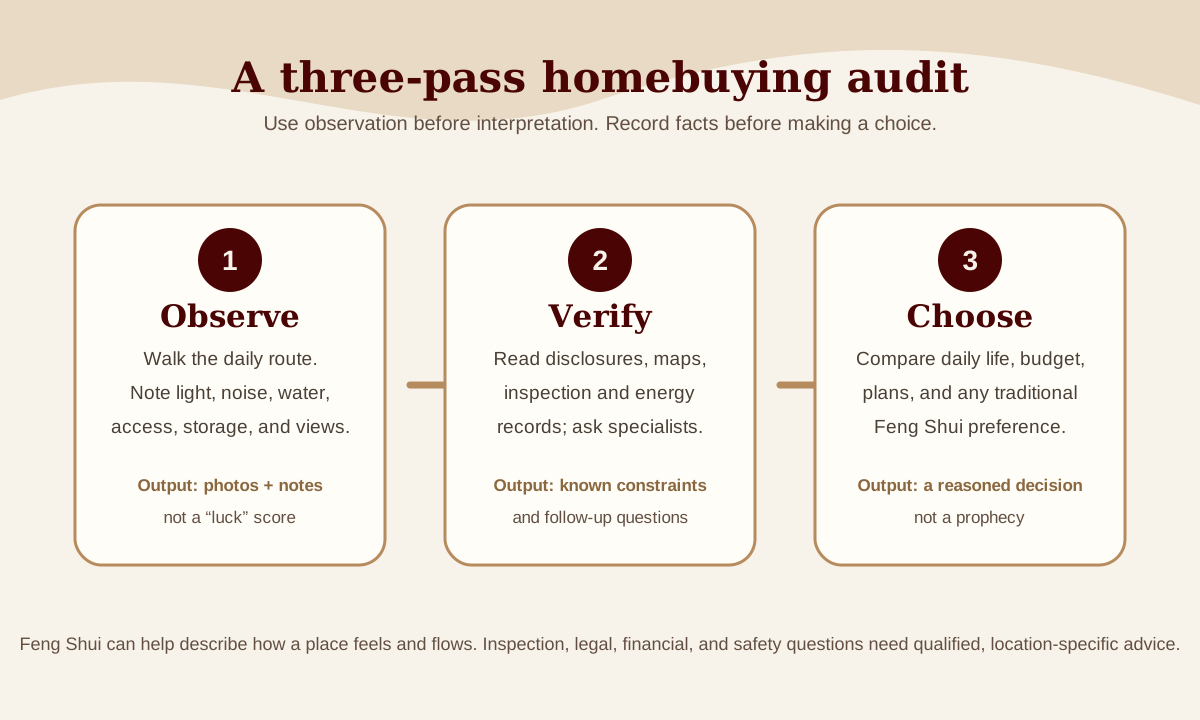
The Lucky Properties three-pass viewing method
Do not try to decide everything on a five-minute showing. Make three passes, each with a different job. The method is deliberately not a scorecard: a home can have a trade-off you accept, a condition you need to price, or a deal-breaker that no decorative change should disguise.
| Pass | Main question | What you collect | What it prevents |
|---|---|---|---|
| 1. Observe | What does the property actually feel and do? | Photos, a rough plan, times, sounds, routes, questions | Choosing from listing photos or a single traditional label |
| 2. Verify | Which conditions need documents, testing, or a specialist? | Disclosures, maps, inspection findings, quotes, rules | Treating assumptions as facts |
| 3. Choose | Does this specific home support your life, budget, and non-negotiables? | A comparison with alternatives and explicit trade-offs | Chasing a “perfect” property while ignoring fit |
Bring a phone, a notebook, a tape measure if the showing permits it, and someone who notices different things than you do. Do not trespass, climb on structures, enter hazardous areas, or use an open house as a substitute for an inspection. Record what you can see and hear. Mark uncertainty as uncertainty.
Pass 1: observe the approach before you enter
In Feng Shui, the main entrance is often called the Mouth of Qi. A useful, non-mystical reading is simple: this is where people, deliveries, attention, weather, and ordinary life arrive. Start at the point you would normally come from, not only at the staged front door. That might be a sidewalk, parking space, garage, elevator, transit stop, or shared lane.
Arrival and access questions
- Can you find the address and the entrance without the agent pointing it out?
- Is the path stable, clear, and usable while carrying a bag or using a stroller, cane, cart, or mobility aid?
- Does the door open without colliding with storage, steps, furniture, or a person standing outside?
- Where do wet shoes, mail, bags, bicycles, bins, and deliveries go?
- Can a guest, child, older relative, or courier understand the route without special instructions?
The Home Arrival Audit turns these into a saveable checklist. For a house purchase, add one more layer: ask whether you control the route. A condo corridor, shared drive, strata planting bed, private road, right-of-way, or rental-like common area may look changeable but not be yours to alter.
Observe at the times a listing hides
An open house is optimized for daylight and quiet. A property has other versions. If the purchase is serious, revisit—or ask for information—at the times that matter to your routine:
| Time or condition | What to notice | Why it changes the decision |
|---|---|---|
| Morning departure | Queueing, school traffic, sun in the driver’s eyes, where bins sit | The daily route can feel very different from a midday viewing |
| Late afternoon | Glare on screens, hottest rooms, driveway shadows, street activity | Light and heat affect work, rest, and maintenance |
| Evening | Headlights, streetlight spill, parking, noise, visible privacy | A calm daytime street can become a different place after dark |
| Rain or snowmelt | Puddles, downspout discharge, icy routes, road splash, drainage direction | Water behavior is difficult to infer from polished landscaping |
| A normal weekend | Neighbour use, shared walls, deliveries, recreation, garage and yard noise | The home includes its surroundings, not only its rooms |
Do not manufacture a test by blocking a drain or entering a road. A short, lawful observation and a good question to the seller, agent, inspector, or relevant authority are more useful than a dramatic ritual.
Read landform as a prompt, not a verdict
Form School Feng Shui pays attention to the relation between building, approach, land, water, enclosure, and visible movement. That makes it a strong way to frame a viewing: where does the land rise or fall? What meets the eye on approach? Is there a calm place to pause near the door? Does the rear or side yard have a use you can actually maintain? Are views open, exposed, or screened?
It does not make a triangle, a cul-de-sac, a road, a slope, or a nearby structure a prophecy.
Lot, road, and water
Make a quick sketch that includes the street, house footprint, usual entrance, drive, walkway, known low points, visible drains, retaining walls, mature trees, and any obvious shared lane. Then write what you know beside what you merely assume.
| Observation | A weak conclusion | A better follow-up |
|---|---|---|
| A tapering rear lot | “A missing corner will damage family life.” | Measure usable space; review survey, setback, privacy, drainage, and future plans. |
| Road appears to point toward the façade | “The house is cursed by a poison arrow.” | Observe speed, turning traffic, glare, driveway visibility, noise, grade, and permitted screening. |
| Low point near the entrance | “Water means wealth is leaving.” | Ask where runoff goes; inspect staining, erosion, drains, grading, and any repair history. |
| Tall building beside a small house | “The neighbour’s building overwhelms the home.” | Check daylight, wind, privacy, maintenance access, and the time of year you need sun. |
| Straight path to the door | “Qi moves too fast.” | Check whether the path is safe, readable, accessible, and suitable for the lot before changing it. |
The lot-shape practical parcel review explains how to examine regular, triangular, pie-shaped, and irregular sites without treating an aerial image as a diagnosis. If the concern is a street directly aligned with the property, use the T-junction field audit instead of a generic “cure.”
Flood maps and water records
Flood risk is location-specific and can change with mapping, weather, infrastructure, and development. In the United States, the FEMA Map Service Center is the official source for flood hazard products; it lets a user search an address and locate available map products. Outside the United States, use the relevant national, regional, or municipal hazard mapping and insurance sources.
A map is a starting point, not a complete diagnosis of a building. Ask about actual water events, insurance, drainage improvements, sump systems, foundation work, grading, and local requirements. An inspector, engineer, insurer, or local authority may be appropriate depending on the question. Do not let a lovely pond, a lucky-water story, or a dry day substitute for records and qualified assessment.
Advertisement
Pass 1 inside: map the daily life, not a perfect diagram
Once inside, walk the home in the order you would use it. A floor plan can look harmonious while the lived sequence is frustrating: the grocery route crosses a tight stair, a bedroom door hits a desk chair, a bathroom exhausts into a noisy hall, or the only workspace faces afternoon glare.
The five room questions
For each room, ask:
- Purpose: What happens here on a normal day? Sleep, cooking, work, caregiving, storage, play, hosting, recovery?
- Route: Can people reach doors, windows, closets, and key controls without collision or clutter?
- Light and sound: What enters at the times the room is used? Can you control it?
- Services: Where are outlets, ventilation, heating, cooling, plumbing, and internet? Are they usable for the planned layout?
- Adaptation: What would need to change for this room to suit you, and is that change permitted, affordable, and maintainable? If a purchase depends on a remodel, use the renovation planning guide to turn the idea into questions about structure, services, ventilation, dust, approvals, and scope.
These questions are compatible with traditional Feng Shui preferences but do not depend on them. A command position, for example, often means seeing a door with solid backing. That may feel comfortable in an office or bedroom. But if the only way to achieve it blocks an egress path, creates screen glare, makes a chair impossible to use, or puts a bed against a radiator, the practical conflict comes first.
The entrance, kitchen, bedroom, and work zone
These spaces influence daily friction, so give them extra time.
Entrance: Stand just inside with a bag. Can the door close? Is there a clear, dry place to pause? Does the route to the kitchen, stairs, bathroom, or bedrooms make sense? The front-yard and entry guide is useful if the issue begins outside the façade.
Kitchen and bathroom: Test the range hood or bathroom fan, check beneath sinks and at shower or cabinet edges for moisture, and picture a normal meal or night-time bathroom route. Treat a visible leak, persistent odour, failed exhaust, awkward hot-pan route, or blocked door as a due-diligence item rather than a Feng Shui omen. The kitchen layout guide and bathroom layout guide provide room-specific checks to record during a showing.
Kitchen: Open the refrigerator, dishwasher, drawers, and oven one at a time where permitted. Check whether there is a safe route behind the cook, enough landing space, ventilation, lighting, and a believable place for everyday groceries. Do not assume an attractive countertop answers a layout question.
Bedroom: Test the door, closet, windows, light, noise, heating or cooling, and two-sided access if the room will be shared. The couples bedroom layout guide uses floor-plan trade-offs instead of promises about romance or sleep.
Work or study zone: Identify where a desk can sit without blocking a door or making a room permanently feel like work. Check outlets, Wi-Fi or wired options, screen glare, acoustic privacy, and an end-of-day storage plan. The home-office desk placement guide has five layouts that work through those conflicts. For a unit with extensive glazing, add the glass-condo viewing framework so privacy, solar heat, air, and building rules do not get lost in a pretty view.
Pass 2: turn concerns into questions that can be verified
The second pass is where an appealing viewing becomes a responsible purchase process. Different countries, cities, buildings, contracts, and property types have different requirements, so this is not legal, financial, engineering, inspection, or real-estate advice. It is a list of prompts for the right local people.
Keep the inspection independent
The U.S. Consumer Financial Protection Bureau advises buyers to schedule an independent home inspection promptly, attend if they can, and understand that an inspection is different from an appraisal. An appraisal is not a full condition check. Read the CFPB’s current home-inspection guidance and use the rules, contract terms, and qualified professionals that apply where you are buying.
Bring your first-pass notes. Instead of asking, “Is the house bad Feng Shui?” ask the question that can be answered:
- “There is staining under this downspout. What should we determine about drainage or foundation conditions?”
- “The driveway view is partly screened by planting. What visibility or local-rule question should we check?”
- “This bedroom is warm and noisy at 5 p.m. What should I test or price before deciding?”
- “This side yard appears narrow. What do the boundary documents and local setbacks allow?”
- “The staircase landing feels tight. Is there a code, safety, or usability concern that needs a qualified opinion?”
Good questions do not prejudge the answer. They make the next action clear.
Radon, air, and energy are not symbolic issues
Radon is a health and testing question, not a Feng Shui one. The U.S. Environmental Protection Agency’s revised 2024 Home Buyer’s and Seller’s Guide to Radon recommends testing when buying or selling and explains why prior results, test location, later alterations, and lower-level living plans matter. Requirements and relevant hazards vary by location; use the appropriate local public-health and qualified testing resources.
Energy performance is also visible in daily comfort and costs. The U.S. Department of Energy describes its Home Energy Score as a standard assessment intended to give buyers, sellers, and renters comparable information about a home’s energy use. It is not available everywhere and does not replace your own cost review, but it is a useful model: ask what evidence exists for insulation, heating, cooling, windows, ventilation, recent utility use, and planned replacement cycles.
If a room feels stuffy, too hot, damp, cold, or loud, write that down. Do not relabel the condition as “stagnant energy” and move on.
A buyer’s evidence log
Use one page per property. The purpose is to make comparison possible after several showings blur together.
| Category | What I observed | Evidence or source | Question / next action | My importance |
|---|---|---|---|---|
| Daily arrival | Photo, second visit, common-area rules | Must-have / trade-off / unknown | ||
| Traffic, light, noise | Time-stamped notes, seller answer, local information | Must-have / trade-off / unknown | ||
| Land and water | Map, disclosure, inspection, drainage observation | Must-have / trade-off / unknown | ||
| Layout and room use | Rough plan, dimensions, test walk-through | Must-have / trade-off / unknown | ||
| Condition and systems | Inspection, service records, specialist opinion | Must-have / trade-off / unknown | ||
| Cost and constraints | Taxes, insurance, fees, utilities, rules, repair quotes | Must-have / trade-off / unknown | ||
| Traditional preference | Your own measured notes and reflection | Preference / meaningful concern / not relevant |
The final column matters. A buyer who needs a step-free route should not let a preferred compass direction outrank access. A buyer who cannot tolerate road noise should not call it a minor Feng Shui issue. A buyer who strongly values a traditional entry orientation can name that honestly as a preference and compare homes that satisfy it without pretending it is market evidence. Sellers can use the practical Feng Shui staging guide to prepare the same evidence without turning a buyer’s real questions into a decorative ritual.
For a simple monthly-payment scenario, you can compare price, down payment, term, and interest-rate assumptions with CalculatorVillage’s mortgage payment calculator. It is only one part of affordability: taxes, insurance, fees, utilities, repairs, transportation, and local lending terms still need their own current research and qualified advice.
Worked example: comparing two imperfect homes
Imagine two homes at similar prices.
Home A has a regular lot, a north-facing formal door, and a staged entry that looks calm online. On a weekday evening, the buyer notices glare from a nearby road and a narrow drive. The rear yard is large but slopes toward a low point near the foundation. The bedroom layout works, but the office gets strong late-afternoon screen glare.
Home B sits on a slightly irregular parcel with a side entrance used every day. The formal front door faces a direction the buyer does not prefer. The daily route is bright, the drive has a clear view, the rooms support work and sleep, and the yard is smaller but level. A shared fence and an easement need document review.
A superstition-only checklist might reject Home B for the irregular outline or door label. A staged-photo checklist might prefer Home A. The three-pass method produces a better decision record:
| Question | Home A | Home B |
|---|---|---|
| Does the usual arrival route work? | Needs a night glare and driveway review | Yes, subject to common-area rules |
| Does water need follow-up? | Yes: low point and grading evidence needed | No obvious concern at viewing; still verify disclosures |
| Can the rooms support daily life? | Bedroom yes; office requires glare plan | Yes, with smaller-yard trade-off |
| Is there a meaningful traditional preference? | Formal direction preferred | Formal direction less preferred; daily side entrance feels better |
| What must be verified before an offer? | Drainage, traffic/glare, driveway visibility | Easement, fence responsibility, common-area authority |
Neither home has been “scored lucky.” The buyer has identified what needs inspection, documentation, pricing, and personal reflection. That is a stronger foundation for an offer or a decision to walk away.
When a Feng Shui preference should change the choice
It is reasonable to prefer a home whose approach, orientation, layout, or landscape fits a tradition that matters to you. A home is intimate; people should not have to buy a place they will resent every time they enter it. The key is to keep the preference proportionate and explicit.
Use it as a meaningful selection criterion when:
- the property also meets your safety, legal, condition, budget, and life requirements;
- you understand the method you are using and are not mixing incompatible charts without explanation;
- the preference is yours or belongs to the people who will live there, rather than a pressure tactic from someone else;
- you can state the trade-off plainly: “We prefer the brighter, calmer entry even though the yard is smaller.”
Pause when a traditional label is being used to override an unresolved material issue, pressure a partner or family member, or promise a financial, health, fertility, or relationship outcome. Those are moments for evidence, conversation, and, if needed, qualified support—not certainty from a diagram.
What to read next
- Lot-shape practical parcel review: use it when a triangle, taper, cul-de-sac, or “missing corner” is worrying you; it maps the property questions that actually vary by site.
- T-junction house field audit: use it when a road appears to aim at the home; it helps you observe traffic, headlights, sound, sightlines, drainage, and permitted landscape responses.
- Home Arrival Audit: save a checklist for the approach and entry before a viewing fades from memory.
Editorial note: Lucky Properties presents Feng Shui as a cultural and design-oriented way to observe a home. This guide is educational, not property inspection, engineering, legal, financial, insurance, appraisal, accessibility, medical, or real-estate advice. Requirements and risks vary by location and building; use qualified local professionals and official sources for a specific purchase.