Short answer
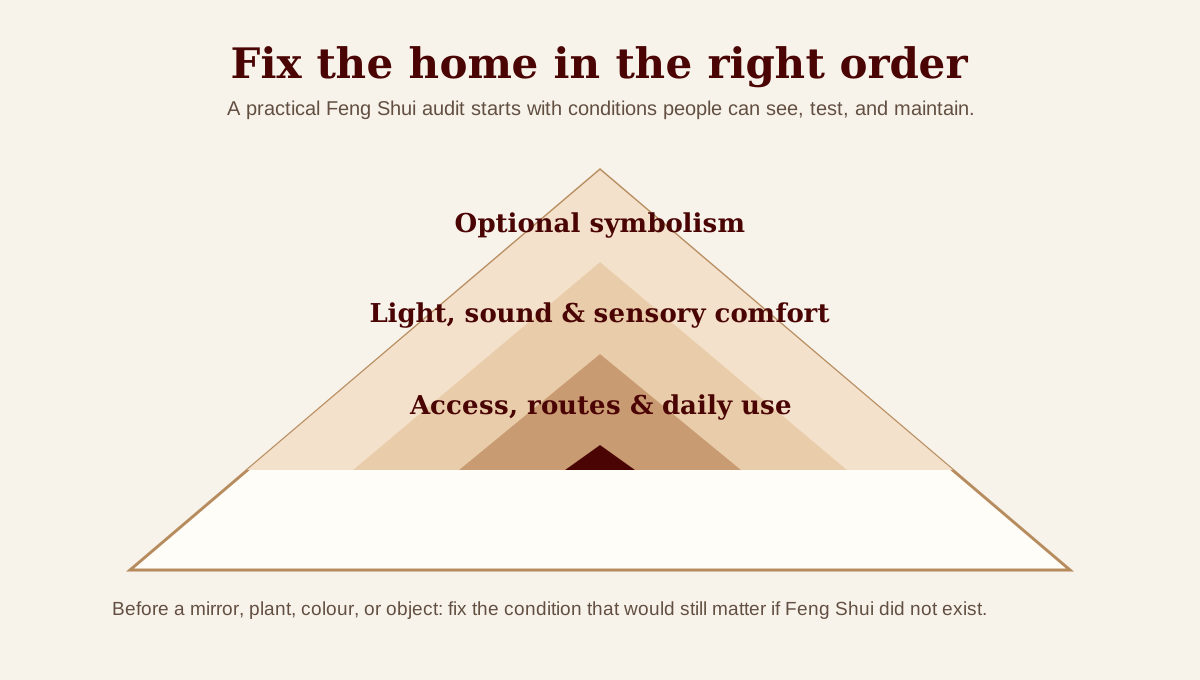
In the Chinese lunar calendar, 2026 is the Year of the Fire Horse, beginning on February 17. The animal-and-element label is cultural context, not a forecast about your money, health, relationships, safety, or the value of a property. A useful Feng Shui 2026 reset is practical: make the entrance easy to use, reduce clutter where it interrupts daily life, test light and room function, and address maintenance problems before adding any symbolic colour, object, or annual practice.
This matters because the most common annual guides turn a calendar change into a shopping list of urgent cures. A better question is: what single change would make this home work more calmly and clearly for the people who use it now?
2026 calendar context, stated accurately
The Hong Kong Observatory’s 2026 Gregorian–lunar conversion table identifies 2026 as the Bing-wu (Fire Horse) year. The Smithsonian’s Year of the Horse resource notes that the Chinese Lunar New Year began on February 17, 2026, opening the Spring Festival period.
Different practices can mark an annual change differently. A lunar festival date, a solar-term calculation, a personal birth chart, and a building-oriented Feng Shui method are not interchangeable inputs. If you choose to follow one tradition, name the method and use it consistently. Do not combine disconnected charts to create a frightening conclusion about a room or a person.
The Fire Horse label is often described with themes such as movement, visibility, or activity. Treat those as reflective prompts. They can inspire a household to review a neglected entry, decide whether a work area supports attention, or reduce an overfilled room. They cannot establish that a renovation will succeed, a relationship will change, or a particular direction is dangerous.
Use the four-zone home reset
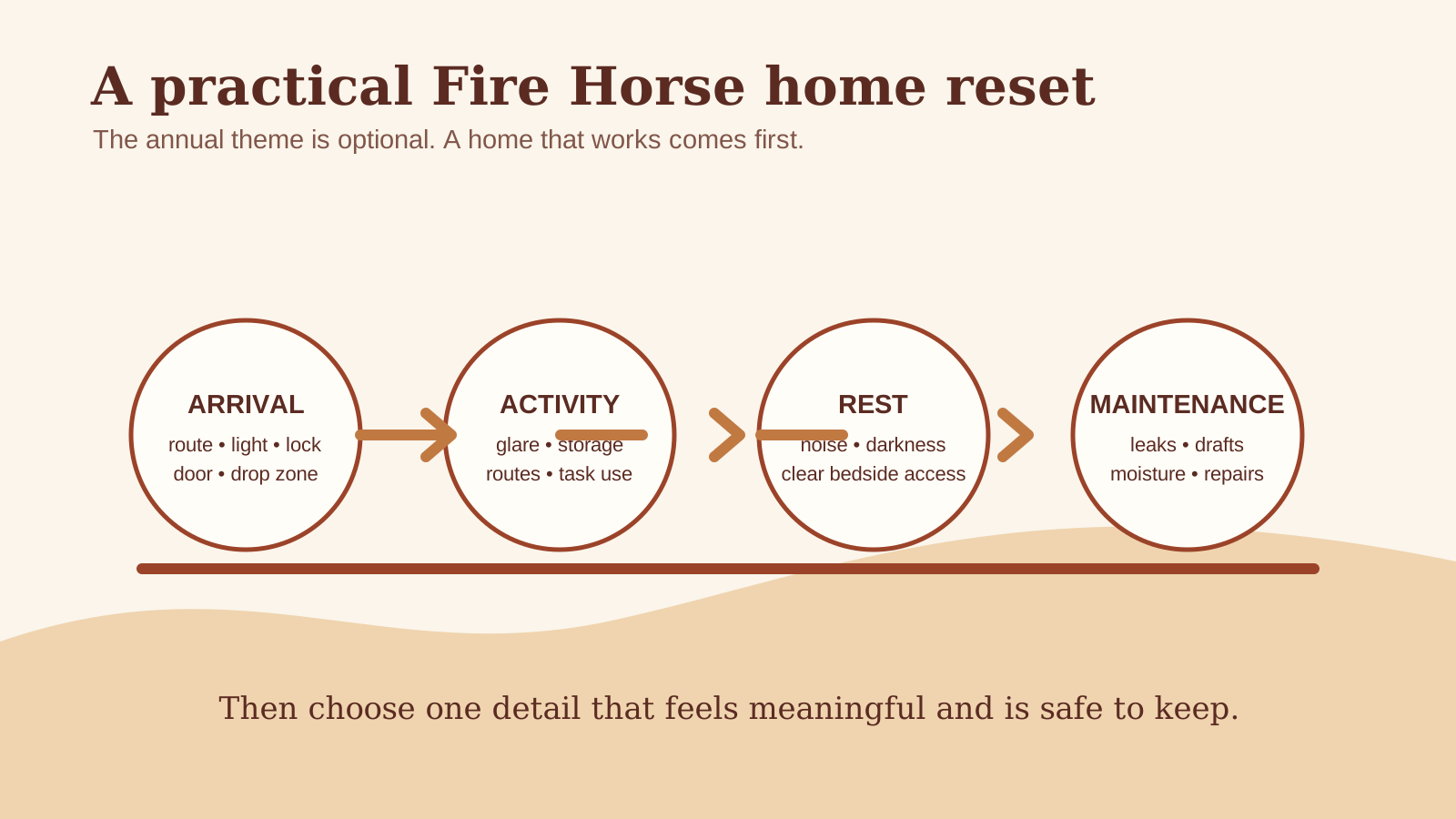
The four zones below are deliberately ordinary. They make a cultural new-year ritual useful even for readers who do not use annual Feng Shui at all.
| Zone | Five-minute question | Practical first action | Optional symbolic layer |
|---|---|---|---|
| Arrival | Can someone arrive, find the door, set down a bag, and leave safely? | Clear the path, check the lock, lighting, address, mat, and door swing. | Add a colour or object that makes the threshold feel welcoming. |
| Daily activity | Does the room support the task people actually do there? | Move furniture that blocks a route, creates glare, or hides needed storage. | Use light, material, or artwork to give the room a clearer focus. |
| Rest and recovery | Is the bedroom or quiet corner easy to make dark, calm, and usable? | Reduce noise, light intrusion, clutter, trip hazards, and awkward bedside access. | Choose soft texture or an element palette that feels settled to the household. |
| Care and maintenance | Is there an unresolved leak, draft, condensation mark, loose fixture, or unsafe surface? | Document it and follow the appropriate repair, landlord, condo, or professional process. | Do not use a symbolic object to conceal the condition. |
Start with one zone. A reset that is too ambitious often creates a pile of displaced belongings and a new source of stress.
Advertisement
1. Make the arrival route legible
Feng Shui often describes the main entrance as the Mouth of Qi. In day-to-day terms, it is where keys, shoes, packages, guests, wet weather, mobility aids, and decisions about leaving meet. A good reset makes the first few steps easier.
Walk the route from the street, parking space, garage, elevator, or transit stop while carrying a bag. Can you see the address? Is the route clear after dark? Does water collect near the door? Can the door open fully? Is there a place for wet shoes that does not narrow the path?
Fix the first real obstruction. A good front-door colour or meaningful object is the last layer, not the repair plan. Use the home-arrival audit for a saveable checklist, then read the front-door direction guide only if you want a traditional palette after the basic route works.
2. Test activity rooms at the hour they are used
A room can look orderly at noon and be unusable at 4 p.m. because the screen is full of glare, the dining chair blocks a kitchen route, or the only lamp is behind the person reading. Instead of declaring a room “bad energy,” test the conditions.
Work and study
Put a task on the desk and sit down. Is the screen readable without strain? Is there a clear route to the door? Can a person store the materials needed for the next session? Are cables, heaters, and drinks separated from one another? The student desk guide provides a repeatable setup for a bedroom, dorm, or shared table without promising grades or focus.
Shared living space
Stand at the entry and identify the first thing your eye meets. A clear focal point can help an open room feel understandable, but it must not become a barrier. Define dining, working, resting, and circulation with lighting, a rug, furniture orientation, or storage—not a giant “cure” in the middle of a walking path. The open-floor-plan guide explains how to do this without closing off a small home.
Kitchen and bathroom
These rooms benefit more from cleaning, ventilation, working hardware, dry surfaces, and accessible storage than from an annual chart. Use exhaust ventilation as intended, keep walking surfaces dry, and do not postpone a leak, loose outlet, failed fan, or damaged cabinet because a traditional calendar says a sector is sensitive. For room-by-room checks, use the kitchen layout guide and bathroom layout guide.
3. Treat light, heat, and moisture as building questions
The Fire Horse label can make people reach for red paint, bright lights, and candles. Do not add heat, flame, wiring, or visual intensity just to match a theme. Begin with the real light and comfort conditions.
The U.S. Department of Energy’s daylighting guidance explains that window orientation, placement, and interior design affect daylight and temperature. The right response to a dark room may be a different lamp or furniture move; the response to glare or overheating may be shading, a window treatment, or a building-level solution. It is not automatically more “Fire.”
If you notice condensation, mould, a wet sill, or a musty smell, treat it as a moisture issue. The U.S. Environmental Protection Agency says moisture control is the key to mould control. Photograph the condition, note the weather and time, and use the property’s maintenance process or qualified local help. Do not cover the evidence with a plant, fabric, paint, incense, or decorative screen.
4. Choose an annual detail only after the room works
When a room is safe, clear, and maintainable, a cultural detail can be pleasurable. Here are low-stakes ways to mark a new cycle without treating the object as a guarantee:
- hang artwork or a calligraphic phrase that the household genuinely likes;
- add a warm, dimmable lamp where it improves visibility without glare;
- choose a durable textile or cushion in a warm tone that already suits the room;
- place a healthy plant only where its light, pot weight, pet safety, and care routine work;
- schedule a quiet meal, cleaning session, or family conversation about how the space should serve everyone.
If a proposed item blocks a corridor, requires an unapproved hole in a wall, creates an open flame risk, adds standing water, conflicts with a lease, scares a neighbour, or replaces a needed repair, skip it.
A decision tree for annual advice
When you encounter a 2026 prediction or remedy, sort it before acting.
| The advice says… | Ask… | Sensible response |
|---|---|---|
| “Buy this cure urgently or a bad event will happen.” | Is there an observable property problem it solves? | Do not buy under pressure. Address actual safety, repair, or access needs with the appropriate evidence. |
| “Use a colour in this sector.” | Does it work with light, materials, rules, and personal taste? | Treat it as an optional palette suggestion; sample it or use a reversible accent. |
| “Do not renovate here this year.” | Is urgent maintenance, accessibility, or safety work involved? | Do not delay essential work. Follow code, permits, warranties, and qualified advice. |
| “Your sign will have a difficult year.” | Is this being presented as a prediction or a cultural reflection? | Keep agency. Use it as a prompt to plan, communicate, and seek relevant professional support when needed. |
This is not a dismissal of tradition. It is a boundary that keeps an interpretive practice from being used to frighten someone into a purchase or a harmful delay.
A realistic 2026 reset plan
Choose one small action in each week rather than doing everything at once.
| Week | Action | Completion test |
|---|---|---|
| 1 | Photograph and clear the arrival route | The door, address, route, and shoe/drop zone are usable after dark. |
| 2 | Test one activity room during real use | One glare, storage, route, or cable problem has a defined practical fix. |
| 3 | Inspect moisture, drafts, and loose hardware | Conditions are documented and the right repair path is started. |
| 4 | Choose one cultural or visual detail | It is safe, maintainable, welcome, and does not create a new obstruction. |
Readers considering a move should take this checklist to a viewing, but they should not substitute it for financial, legal, inspection, insurance, accessibility, or building due diligence. The home-buying checklist gives the broader property questions that direction and yearly symbolism cannot answer.
What to read next
- Feng Shui common mistakes: separate useful layout observations from urgency, fear, and expensive “cure” claims.
- Bedroom sleep-environment audit: make a bedroom darker, quieter, and easier to use without medical promises.
- Five Elements practical guide: use colour, shape, texture, and material as a room-design language after function is in place.
Editorial note: Lucky Properties presents Feng Shui and Chinese metaphysical traditions as cultural and interpretive practices. This guide is educational, not medical, financial, legal, property-valuation, structural, electrical, drainage, accessibility, safety, or mental-health advice. Use qualified local professionals and official sources for decisions about a specific person or property.