Short answer
A “healing home” is not a room that promises to cure illness, repair a relationship, or change someone’s fate. It is a home that is easier to breathe in, move through, sleep in, clean, and come back to after a difficult day. Feng Shui can be a meaningful cultural lens for noticing flow, welcome, balance, and the way a room makes you feel. It works best when it sits beside practical basics: address leaks and mold, keep ventilation paths open, reduce trip hazards, manage glare and noise, and make daily routines less effortful.
If you have one hour, begin at the entrance and bedroom. Remove items that obstruct a safe arrival; check whether the room feels stuffy, damp, too bright at night, or hard to navigate; then make one modest change you can maintain. A dramatic purchase is rarely the first answer.
A useful boundary: This is a home-design and cultural-practice guide, not medical advice. A persistent musty smell, visible mold, water damage, unsafe wiring, pests, serious sleep difficulty, or a health concern calls for the appropriate building professional, landlord, or healthcare professional—not a Feng Shui remedy.
Why “healing home” searches need a better answer
Many online Feng Shui pages answer a health question with a single object, a compass sector, or a claim that a decoration will protect the body. That may be a personally meaningful ritual, but it skips the conditions that have a direct effect on comfort and safety. A blocked return vent, a bathroom leak, a bright streetlight, a noisy hallway, or an entry piled with bags can change how a home works every day.
The stronger approach is to use two lenses at once:
- The cultural lens: In many Feng Shui traditions, a home is read through welcome, circulation, the Five Elements, and the relationship between quiet/restorative (yin) and active/expressive (yang) areas. Treat these as prompts for observation, not as a diagnostic system.
- The practical lens: Air quality, moisture, thermal comfort, light, sound, accessibility, and maintenance have real consequences for a home’s livability. The U.S. Environmental Protection Agency (EPA) emphasizes source control first for indoor-air problems, with ventilation and air cleaning as supporting measures. EPA’s indoor-air-quality guidance is a better starting point than trying to cover a problem with fragrance or plants.
This combination is especially helpful in apartments, condos, shared homes, and compact houses. You may not control the building envelope, the corridor, mechanical equipment, or every window. You can still make the unit clearer to use, document building concerns, and focus your budget where it changes the daily experience.
The healing-home priority ladder
Do not work from “most photogenic” to “least photogenic.” Work from the bottom of this ladder upward. A vase, mirror, or altar can be a beautiful finishing touch; it should not compete with fixing a moisture problem or a blocked exit.
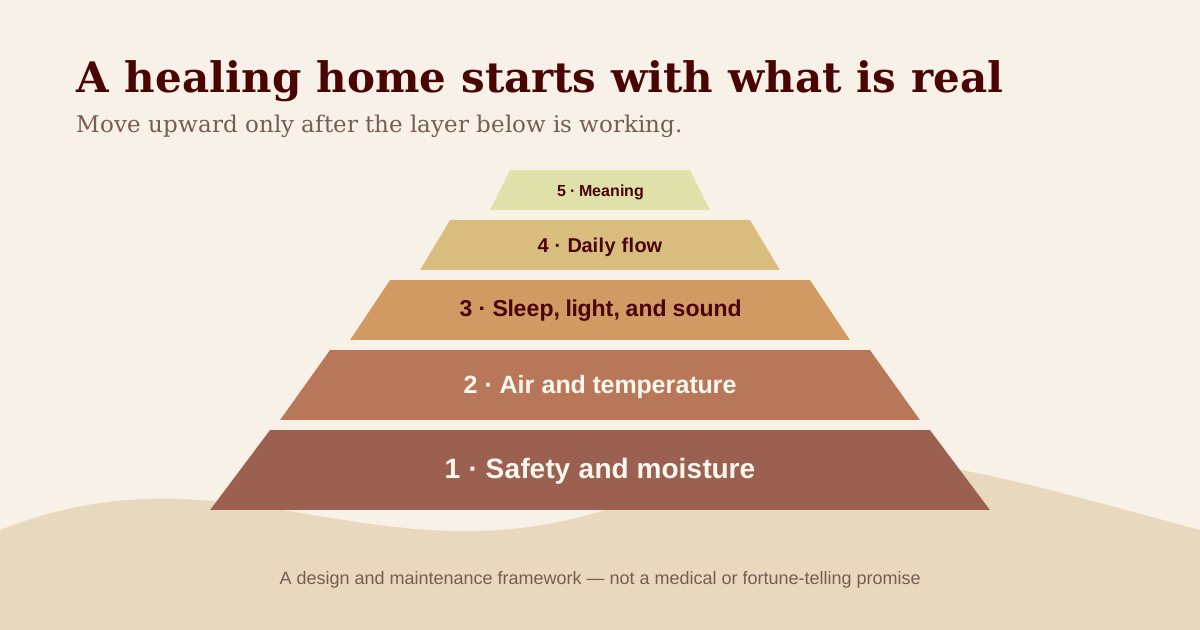
| Priority | Ask this first | A small, realistic next step | Do not substitute |
|---|---|---|---|
| 1. Safety and moisture | Is there a leak, visible mold, musty smell, damaged outlet, blocked exit, or unstable furniture? | Photograph and report the issue; clear an exit; arrange qualified repair when needed. | Candles, fragrance, or a “cure” object. |
| 2. Air and temperature | Does the room feel stale, smoky, humid, or overheated? | Find and reduce the source; unblock supplied vents; use the building’s intended ventilation. | A houseplant as an air-cleaning system. |
| 3. Sleep, light, and sound | Can the bedroom become dark, quiet, and easy to settle into? | Add a reversible light-control or sound-softening change. | A perfect compass direction. |
| 4. Daily flow | Can you arrive, cook, wash, work, and leave without moving piles? | Give the next action a visible home: keys, laundry basket, recycling, charger. | Buying more storage before reducing excess. |
| 5. Meaning and ritual | Does the home reflect your values and cultural practice? | Add one maintained object, material, or ritual that helps you pause. | A promise of health, luck, or guaranteed outcomes. |
The ladder is also a decision tool for renters. If the issue belongs to a building system—water intrusion, ventilation failure, pests, unsafe heat, or an inaccessible exit—write it down, date it, and use the building’s maintenance process. EPA notes that apartment residents can often remove a source or unblock an air supply, but some problems can only be remedied by the owner or manager. Its apartment guidance explains the difference.
A 20-minute home wellbeing walk-through
Walk the route you actually take, not an idealized floor plan: entrance, main room, kitchen, bathroom, bedroom, and the path back out. Keep a note on your phone. For each stop, mark keep, change this week, or escalate. “Escalate” means a landlord, condo manager, qualified contractor, or clinician is the right next step.
1. The entrance: make arrival legible
In Feng Shui, the entry is often called the “mouth of qi,” a metaphor for how a home receives people and activity. The practical question is simpler: can you enter safely and put down what you carry without creating a new obstacle?
Check for shoes that create a trip risk, a bicycle blocking the path, packages that never get opened, and a door that cannot open fully. Then create a three-part landing zone: one hook or tray for keys, one container for outgoing items, and one defined place for footwear or bags. Use a light that makes the lock, floor, and threshold easy to see. If you share the entry, agree on the maximum number of items that can live there.
This is not about enforcing minimalism. It is about removing the repeated friction between outside obligations and inside rest. A small stool, a shallow tray, or a wall hook may do more for daily flow than a large furniture purchase.
2. The living area: choose one restorative sightline
A small room can feel crowded because every view ends at a task, a cable, an unfinished pile, or a bright screen. Sit where you normally rest and identify the first thing your eyes meet. Improve that one sightline with an act of editing: move a charging station out of view, use a lidded basket for a recurring category, relocate a broken item, or leave one surface mostly clear.
This is where a Five Elements practice can be helpful as a vocabulary rather than a rulebook:
- Wood can suggest growth and upward movement: a well-kept plant if its light and watering needs suit the room, a timber frame, or a green textile.
- Fire can suggest visibility and warmth: a controllable lamp rather than harsh glare.
- Earth can suggest steadiness: durable ceramics, woven fibers, and grounded colors that you actually like.
- Metal can suggest clarity: a simple tray, a clean-edged shelf, or a useful white/neutral surface.
- Water can suggest quiet and depth: a dark blue accent, a reflective image, or a calmer visual rhythm—not an indoor fountain that adds unwanted moisture.
The object is not to “activate” a life outcome. It is to make a room feel intentional without creating cleaning, watering, or storage work you do not want.
3. The kitchen: reduce heat, moisture, and decision fatigue
The kitchen is active (yang) by nature: heat, sharp tools, food decisions, and cleanup all happen quickly. A healing kitchen is not always spotless; it has a workable reset point. Keep the main prep zone available, make the range hood or intended exhaust easy to use, and put frequently used tools within reach. Do not block vents with furniture, bags, or decorative panels.
After cooking, pay attention to lingering steam, grease, smoke, or odor. EPA identifies indoor sources and inadequate ventilation as important drivers of indoor-air problems. Start by reducing the source and using proper local exhaust if available; opening a window may help in suitable outdoor conditions, but it does not solve every building issue. Avoid relying on scented sprays to mask an odor you have not located.
For a Feng Shui-inspired reset, separate the “active” zone from the eating or resting zone if the layout allows. It can be as modest as putting away the cutting board before you sit down. That visual boundary tells your attention that the task has ended.
4. The bathroom: treat dampness as maintenance, not bad energy
Bathrooms need special honesty. A dark, damp bathroom is not a symbolic problem first; it is a moisture-management problem. Look under the sink, around the toilet base, at caulk lines, and near the fan grille. Notice a persistent musty smell, peeling paint, slow leak, recurring condensation, or water that remains where it should drain.
The Centers for Disease Control and Prevention (CDC) says that if mold is growing in a home, it should be cleaned up and the moisture problem fixed; it does not recommend routine mold testing. CDC’s mold guidance also explains that people with certain conditions should take extra care around moldy environments. Document concerns in writing when you rent or live in a managed building.
A practical reset is to remove empty containers, store only what you use weekly, hang towels so they can dry, and make the fan switch or window routine part of your shower habit. If a plant belongs in a bathroom, choose it for the actual light and care conditions—not because it is meant to absorb a building problem.
5. The bedroom: protect the transition to sleep
Feng Shui advice often emphasizes bed placement. It is reasonable to prefer a bed position that feels supported, lets you see the room entrance without being directly in its path, and leaves enough clearance to make the bed and move safely. But no placement can compensate for a room that is noisy, overly bright, hot, damp, or used as a storage unit.
Start with the controllable signals:
- Remove urgent work materials and active notifications from the immediate bedside area when possible.
- Make the route to the bathroom clear and low-risk in the dark.
- Use a lamp with a warm, lower setting for the period before sleep; reserve bright task light for reading or getting dressed.
- Try a reversible window treatment, eye mask, or white-noise approach before expensive changes if outdoor light or sound is the problem.
- Keep the bed surface and one bedside surface clear enough that the room has a visible resting function.
If you share a bedroom, discuss the problem as a room condition rather than a personal failing: “The phone light wakes me,” “the laundry pile blocks the closet,” or “the air feels stale.” This makes the next experiment concrete and easier to revisit.
Advertisement
The high-density apartment version
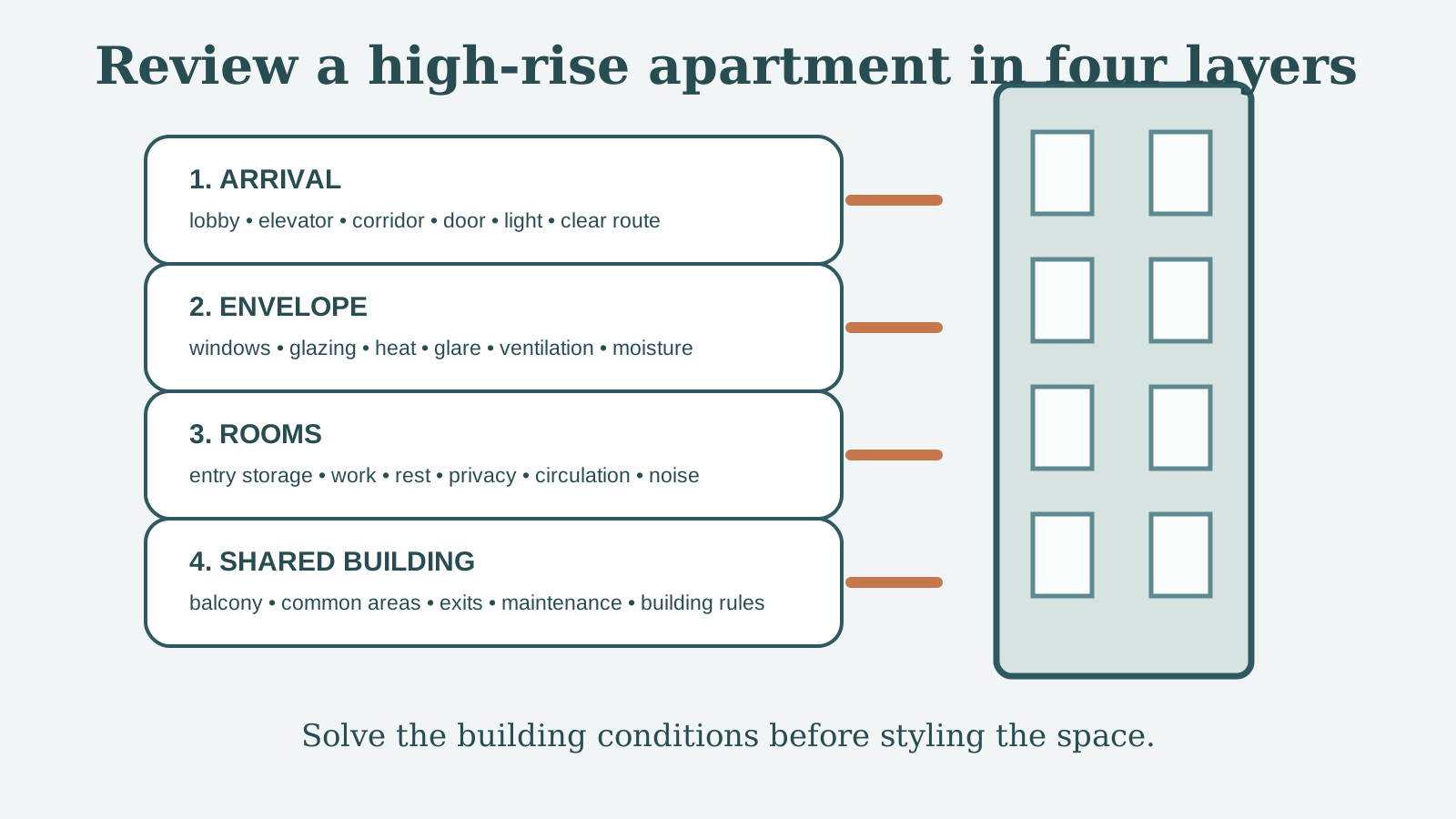
High-rise and compact living creates a specific set of trade-offs. The façade may be fixed, balconies may have rules, windows may barely open, and shared corridors can transmit sound or cooking odors. Rather than trying to “correct” the entire building with a single interior object, separate what is within the unit from what requires management action.
| If you notice… | First check | A renter/owner action | When to escalate |
|---|---|---|---|
| Stuffy air | Covered or blocked vents; recent cleaning, cooking, or smoke source | Clear supply and return paths; use intended kitchen/bath ventilation | Ventilation does not operate, odor enters from another unit, or symptoms persist |
| Condensation or musty odor | Window frames, bathroom, closets, exterior walls, under sinks | Photograph, ventilate as appropriate, avoid drying wet items in a closed room | Recurring moisture, visible mold, leaking, or damaged finishes |
| Afternoon glare/overheating | Which window and time of day; blind or shade use | Use allowed shades; relocate a work/resting seat; use a fan as appropriate | Heat cannot be controlled or building systems are not functioning |
| Corridor noise | Door gaps, timing, and whether sound is internal or building-wide | Add a removable draft/sound seal only if it does not affect egress or building rules | Unsafe door, ongoing disruptive building issue, or breach of rules |
| Visual crowding | One overfull zone rather than the whole apartment | Edit a single category and give it a home | Storage changes require unsafe furniture or block exits |
For a fuller unit-by-unit process, see our high-rise apartment Feng Shui guide. It treats symbolic entry and layout questions alongside glazing, ventilation, moisture, privacy, and shared-building constraints.
A seven-day reset that does not require a shopping spree
Use one 15- to 30-minute task a day. Stop when the day’s task is complete. The goal is a maintained baseline, not an exhausting makeover.
Day 1 — Photograph and flag. Walk through the home and photograph leaks, damage, blocked vents, or unsafe paths. Put maintenance concerns in one dated note. Clear the most immediate exit or walking path.
Day 2 — Rebuild the entry. Remove the items that do not belong there. Add one landing spot for keys and one for outgoing items. Test whether a visitor or tired future-you can get through the door comfortably.
Day 3 — Reset the air path. Locate the kitchen and bathroom exhaust, visible vents, and windows. Clear obstructions. Identify one source of persistent odor or smoke rather than masking it.
Day 4 — Do the moisture check. Look under sinks, around toilets, near windows, and behind furniture on exterior walls. Dry what is wet; report what you cannot safely correct.
Day 5 — Make one restorative sightline. Choose the view from the seat or bed you use most. Remove, repair, relocate, or contain one distracting category. Add nothing unless it solves a real need.
Day 6 — Make the bedroom easier to settle into. Clear the walking route, set up a low-light option, and move one work or storage item away from the bed. If you enjoy a symbolic object, choose one that is calming and easy to maintain.
Day 7 — Keep only the rituals that work. Set a five-minute evening reset: dishes handled, wet towels hung, one surface cleared, next-day items placed at the entry. The best ritual is the one you will still use next month.
Common mistakes to avoid
Using fragrance to cover a problem. A scent can be enjoyable, but it does not fix moisture, smoke, garbage, or a ventilation issue. Locate the source first.
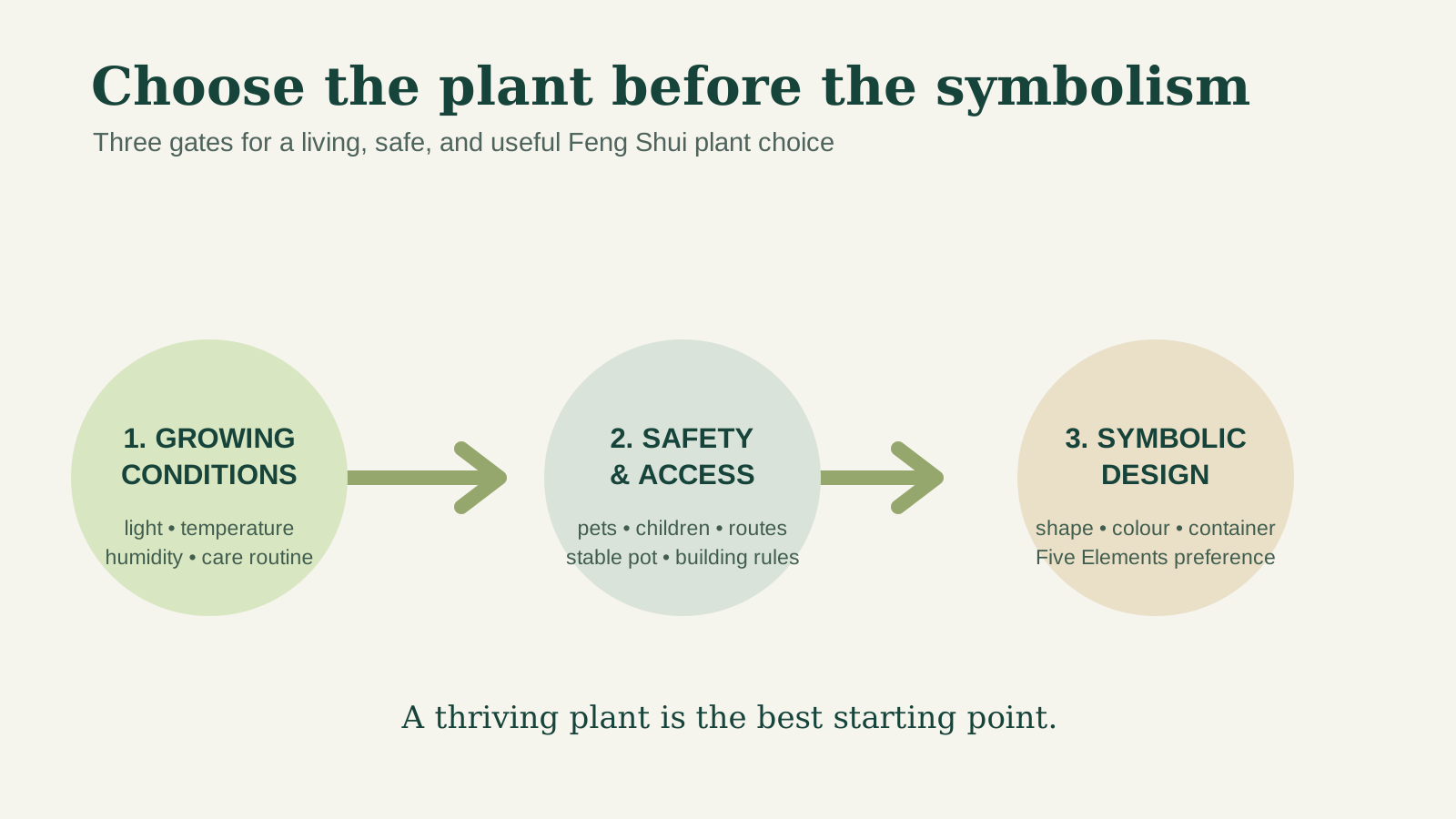
Treating plants as air-cleaning equipment. Plants can bring care, color, and a sense of growth to a room. They also need correct light and watering, and overwatered soil can add a moisture concern. Choose them for the conditions and for your enjoyment. Our plant-selection guide starts with light, safety, and care before symbolism.
Buying a cure. A mirror, crystal, figurine, or fountain may have personal or cultural value. It should not take the budget intended for a dehumidifier, repair, blackout solution, professional assessment, or accessible storage.
Forcing a single map onto every room. Different Feng Shui schools use different frameworks. Let your lived experience decide whether a suggestion is useful: Can you clean it? Does it work with the people who live there? Does it make the room easier to use? If not, do not force it.
Ignoring building rules and safety. Never obstruct a corridor, vent, sprinkler, exit, or required access route for a layout idea. Check rental, condo, and local requirements before modifying doors, balcony screens, wiring, or plumbing.
Frequently asked questions
What is the best Feng Shui direction for health?
There is no universal direction that guarantees health. Traditional schools may use directions differently, depending on the method and the home. Start with the conditions you can observe: a safe walking route, fresh air where possible, moisture under control, useful light, and a sleep-friendly bedroom. If a directional practice has cultural meaning for you, use it as a reflective design choice rather than a health promise.
Can Feng Shui cure anxiety, insomnia, or illness?
No. A more comfortable room may support a calmer routine, but Feng Shui does not diagnose, treat, or cure a medical condition. Talk with a qualified healthcare professional about symptoms, and address obvious environmental problems through the appropriate building or repair channel.
What should I do if I smell mold in an apartment?
Look for obvious moisture sources without disturbing a large affected area, photograph the condition, and notify the landlord or property manager in writing. CDC advises cleaning up mold and fixing the moisture problem rather than relying on routine testing. If you have a relevant health condition or the area is extensive, seek advice appropriate to your situation before handling it yourself.
Do I need to buy special Feng Shui products?
No. Start with maintenance, lighting, a clear path, and a routine you can sustain. A meaningful object is optional. The strongest result is a home that functions better for the people who actually use it.
The standard to keep
Use this simple test after any change: Does it make the home safer, easier to maintain, easier to rest in, or more personally meaningful without creating a new problem? If yes, keep it. If it merely adds pressure, clutter, cost, or a promise it cannot support, let it go.
That is a grounded way to practice a healing home: respect the cultural language of Feng Shui, take real building conditions seriously, and shape the space around ordinary care.