Short answer
In Feng Shui, a healthy living plant is commonly used as a Wood-element expression. It can also carry a visual cue through its leaf shape, flower colour, pot, or placement. That does not make a particular plant a reliable cure for money, health, relationships, or a difficult year. Choose the plant that fits the real light, temperature, care routine, pets, children, and circulation first; use the Five Elements as a second, optional design language.
This is more useful than the familiar “put this plant in your wealth corner” formula. A plant that is scorched, overwatered, inaccessible to a cleaner, toxic to a curious pet, or blocking a fire route is not a good choice no matter what an online chart calls it. If you are comparing the front-door and compass versions of that idea, use the two-method wealth-corner guide before choosing a location.
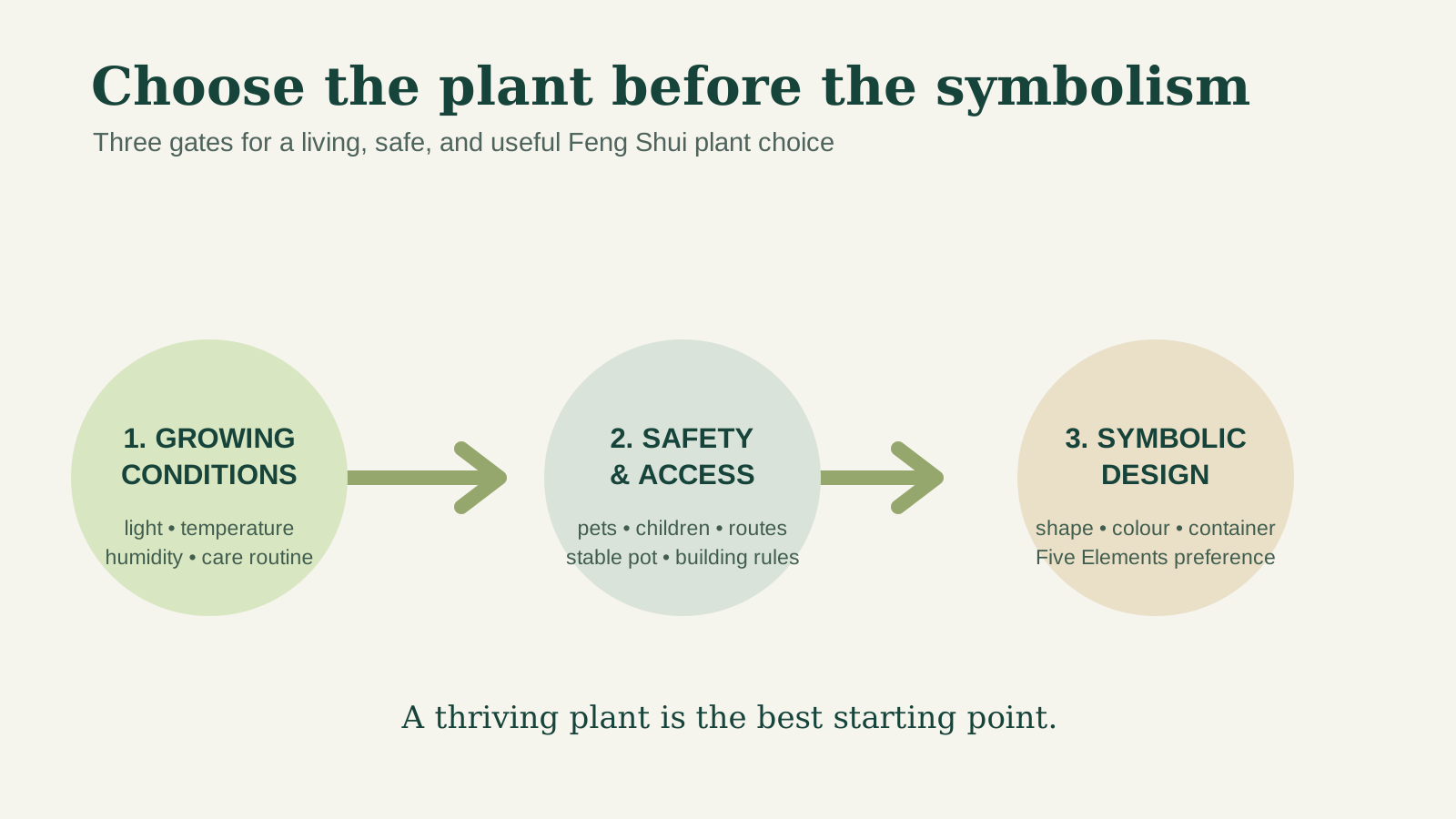
Use the three-gate choice method
Pass a plant through all three gates, in order. If it fails an earlier gate, do not fix that by adding a more “auspicious” pot or moving it to a named sector.
| Gate | Questions to answer | What a good answer looks like |
|---|---|---|
| 1. Growing conditions | How much natural light reaches this exact spot? Is it hot, cold, dry, humid, or draughty? Who will water and repot it? | The species suits the location and the household can maintain it without struggle. |
| 2. Safety and access | Can a child or pet reach it? Will it narrow a path, exit, door swing, or window? Is the pot stable and manageable when wet? | The plant is safe, allowed, easy to clean around, and does not turn an everyday route into an obstacle. |
| 3. Symbolic design | Do you want a Wood, Fire, Earth, Metal, or Water visual note? Does its scale, shape, and colour feel calm in this room? | Symbolism helps the room feel intentional without overriding the first two gates. |
The Royal Horticultural Society’s houseplant guidance makes the practical point clearly: light, humidity, and temperature vary substantially from one room and season to another. Start there. A hallway that looks bright to a person may still be too dim for a plant set back from the window.
What “plants by element” can mean without false precision
Traditional Five Elements practice is a system of relationships and qualities, not a scientific plant classification. Treat the table as a visual vocabulary. A single plant can appear in more than one row depending on the choice of container, flower, backdrop, and room.
| Design cue | Traditional association | How to use it in a room | Reality check |
|---|---|---|---|
| Upright green growth, timber, branching forms | Wood | Bring a vertical, growing feel to a work or living area with a plant that actually receives enough light. | All live plants are often read primarily as Wood; do not force a species into poor conditions to satisfy a sector. |
| Warm flowers, red or coral details, a warm lamp near foliage | Fire | Add a small warm focal point in a social room or near an entry where light and clearance already work. | Flowers are seasonal; do not use a high-maintenance flowering plant as a permanent colour requirement. |
| Terracotta, stone, low broad forms, warm neutral containers | Earth | Use a stable, low planter to soften a seated zone or create a clear landing place for keys. | Heavy pots and wet soil can be a real load, trip, and leak issue—especially on balconies. |
| Rounded leaves, white or grey containers, metal hardware | Metal | Use a restrained round-leaf plant or clean container where you want visual clarity. | A white pot does not change the plant’s care needs, and reflective metal can create glare. |
| Dark blue-black container, wavy art nearby, trailing line used safely | Water | Use a dark or fluid-looking accent for a quieter visual mood. | Do not add standing water indoors as a symbolic shortcut; spills, humidity, and mosquito risk are practical concerns. |
The useful question is not “Which exact plant brings wealth?” It is “What living material can this room support, and what visual quality would make the room easier to inhabit?” That question has an answer you can observe over time.
Advertisement
Start with the room, not the plant name
Before shopping, make a one-minute site note. Stand where the pot will sit at the time of day the room is normally used.
- Light: identify direct sun, bright indirect light, or low natural light. Note whether a nearby building, tree, blind, or seasonal sun angle changes it.
- Temperature and drafts: check radiator heat, air-conditioning, cold glazing, exterior doors, and a kitchen’s cooking heat. A hallway can be especially changeable.
- Humidity and water: bathrooms and kitchens may be more humid; centrally heated living rooms can be dry. Look for a nearby sink and a surface that can tolerate a drip tray.
- Route and scale: open the door, carry a bag through the route, and sit in the adjacent chair. A pot should not force people to sidestep it or block a cleaner, vent, window, or outlet.
- Care owner: name the person who will notice dry soil, pests, brown leaves, and a pot that needs turning. “Low maintenance” still means some maintenance.
The RHS notes that direct summer sun can scorch many plants, while the same window can be useful in winter. It also warns that ordinary household lighting is not suitable plant light. Those are better reasons to move a plant than a generic sector rule.
A plant palette for real homes
These are design scenarios, not prescriptions. Confirm the exact species’ light and toxicity information with a reputable grower or veterinary source before purchasing.
Bright living area: make Wood visible without crowding the room
If a living room has strong indirect light, one medium plant with a stable base can provide the Wood cue people usually seek from a “Feng Shui plant.” Choose it for mature width, not nursery size. Leave enough room to operate curtains, open windows, and walk around seating.
Use the pot and surrounding materials to add other cues: warm terracotta for Earth, a simple white cylinder for Metal, or a dark-blue saucer for Water. This is gentler than trying to place five different plants in five theoretical zones.
Dark or fluctuating hallway: treat plant survival as the test
Hallways often have low daylight, changing temperatures, and a narrow route. A plant that merely tolerates a difficult location may still decline over months. Check the actual distance from daylight, the path width, and any building rule before adding one.
If the space cannot support a plant, use a Wood cue that does not pretend to be alive: a wood tray, framed botanical print, green textile, or durable timber detail. In a cultural design practice, choosing a fitting material is more honest than buying a plant to watch it fail.
Bedroom: prioritize comfort, allergies, and clear surfaces
Plants do not create medical sleep benefits, and a bedroom does not need a special “romance plant.” If a plant makes the room feel cared for and it can live there, keep it modest in scale and out of the route to the bed. Avoid an unstable high shelf or a pot that drops leaves and soil beside bedding.
The U.S. Environmental Protection Agency advises that a reasonable number of houseplants should not be treated as a way to remove significant indoor pollutants. If indoor air is a concern, focus on the source, appropriate ventilation, and filtration; do not overwater soil, which the EPA notes can promote microorganisms that affect allergic people.
Work area: use a plant as a visual pause, not a productivity promise
On a desk, a small plant can mark the edge of a work zone and give the eye a softer place to rest. It should not shade the task light, interfere with a laptop vent, crowd a mouse area, or turn cable management into a watering hazard. A high-light plant belongs near appropriate daylight, not automatically beside the desk.
For a fuller layout check, see the home-office desk-placement guide. It treats daylight, glare, posture, storage, and circulation as the first decisions.
Balcony or outdoor threshold: respect the building and the weather
Balconies add wind, sun, drainage, weight, falling-object risk, and condominium or landlord rules. Never rely on a generic garden page to decide what a particular balcony can carry. Use local building guidance, management rules, and a qualified professional where needed. Keep planters inside safe boundaries and clear of drains and exits.
The front-yard entry guide and backyard energy-flow guide show how to assess access, sightlines, drainage, and maintenance before turning an outdoor area into a symbolic project.
Pet, child, and allergy checks are not optional
Do not assume a plant is safe because it is common, sold in a big-box store, or called “lucky.” Common decorative plants can be a problem if eaten. The ASPCA’s toxic and non-toxic plant database lets U.S. readers check a plant by its scientific or common name; the organization cautions that eating any plant material may still cause gastrointestinal upset.
Use this compact checklist before bringing a plant home:
- Identify the exact species, not only a marketing label such as “palm,” “ivy,” or “lily.”
- Check current advice relevant to the animals in the home; a plant’s status can differ for cats, dogs, and horses.
- Plan for real behaviour: a plant on a low table may be accessible even if it is technically “out of reach.”
- Keep soil, fertilizer, decorative stones, and water trays in the safety plan too.
- If ingestion is suspected, contact a veterinarian or the applicable poison-control service promptly rather than waiting for a Feng Shui remedy.
This does not make plant selection joyless. It makes it suitable for the people and animals who actually live there.
Common Feng Shui plant questions, reframed
Are pointed leaves “poison arrows”?
Some Feng Shui traditions treat sharp forms as visually active, especially when they point toward a person seated or sleeping nearby. That is a design observation, not a diagnosis. Look at the actual line of sight and experience: does the plant feel harsh, crowd a route, or catch clothing? If yes, move it, change its height, or choose another form. If no, there is no need for alarm.
Does a dying plant create bad energy?
A struggling plant is useful feedback: it may need different light, water, temperature, soil, or pest care. Remove dead material for ordinary horticultural and visual reasons, and compost or dispose of it appropriately. Do not interpret a plant’s decline as a forecast about the household.
Can I use artificial plants?
Artificial plants do not carry the living Wood quality that a real plant represents in many Feng Shui readings. They can still be a deliberate decorative object where a live plant would fail, such as a very dark shelf or an inaccessible high ledge. Keep them clean, choose an honest material, and do not use them to avoid fixing a damp, dark, or unsafe space.
What about a “money plant”?
“Money plant” is a marketing or common name used for more than one species. It may have a cultural association or make a pleasant gift, but it does not change a budget, a lease, property condition, or an investment decision. Select the actual species based on its care needs and your household.
A five-minute plant audit
Once a month, stand at the room entrance and ask:
| Check | Pass condition |
|---|---|
| Health | Leaves, soil, and pot show that the plant suits its location; problems are addressed rather than hidden. |
| Route | Doors, exits, windows, vents, and everyday movement remain clear. |
| Safety | The pot is stable, pet/child risk is managed, and there is no leak or standing water. |
| Scale | The plant still fits at its current size, not just at the size it was bought. |
| Meaning | The foliage, container, and location still feel welcome to the household. |
If the answer fails on health, route, or safety, solve that first. Symbolism is the final layer, not the repair plan.
Sources and what to read next
- Royal Horticultural Society: choosing houseplants — light, humidity, temperature, and location matching.
- U.S. EPA: improving indoor air quality — source control, ventilation, filtration, and the limits of ordinary houseplants for air cleaning.
- ASPCA toxic and non-toxic plants — species-specific safety lookup for pets.
Continue with the Five Elements balancing guide to use colour, materials, light, and room function without reducing a home to a plant list. For outdoor planting, open the garden water-feature guide only after drainage, electricity, maintenance, and local conditions are clear.
Editorial note: Lucky Properties presents Feng Shui as a cultural and design-oriented way to observe a home. This guide is educational, not horticultural, veterinary, medical, structural, accessibility, electrical, drainage, legal, or property-condition advice. Use qualified local advice for a specific plant, pet, or property.
