A Chinese house blessing is a moving-in ceremony, held on a chosen auspicious day, that cleanses the home, makes offerings and asks for protection and luck for the household. One documented version uses pomelo-leaf water, joss sticks, oranges and a first boil of water on the stove. Practice varies by region, family and religion.
Source rechecked on 23 November 2026.
What follows is a documented tradition, not a required ritual. The practical move-in jobs, from locks to smoke alarms, are in first 30 days in a new home, one of our real estate and home buying guides.
| Part of the ceremony | What the account says | Source |
|---|---|---|
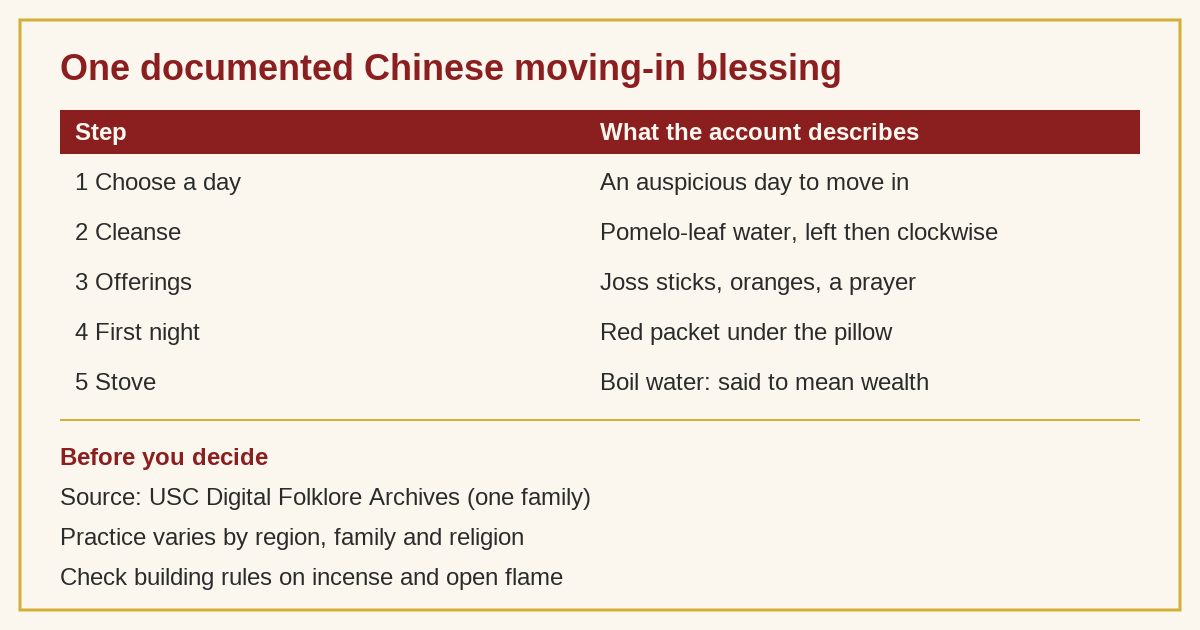
| Timing | An auspicious day is chosen for moving in; the informant's mother did this at every move | USC Digital Folklore Archives |
| Cleansing | Pomelo leaves soaked in water for a couple of hours, sprayed through the house from the left on entering, clockwise | USC Digital Folklore Archives |
| Offerings | Joss sticks (described as three at the living room's four corners and five in the middle), a whole chicken, oranges and wine | USC Digital Folklore Archives |
| First night | A red packet under the pillow | USC Digital Folklore Archives |
| Stove | The stove is turned on to boil water, said to signify wealth | USC Digital Folklore Archives |
| Origin | The archive says these traditions are native to Southeast Asia; the informant learned them from her mother, who learned them in Hong Kong | USC Digital Folklore Archives |
On this page
- What a house blessing is
- One documented ceremony, step by step
- How practice varies
- Practical and safety checks
- Planning table
- Worked example
- Where a blessing goes wrong
- FAQ
What a house blessing is
"House blessing" covers several customs. Some households hold a short family ceremony on the moving-in day, and some invite a priest, monk or feng shui practitioner. Others do a few small acts and leave it there.
Our source is an entry in the USC Digital Folklore Archives, which records one family's version. It gives peace of mind as the main motivation, along with warding off wandering spirits and bringing luck and safety. University of Southern California students gathered the archive's folklore from individual informants. So this is one woman's account of her family's custom, not a survey of Chinese households, and everything below is credited to her account rather than offered as the correct form.
Advertisement
One documented ceremony, step by step
From the account of a Chinese and Malaysian informant whose mother learned the customs in Hong Kong:
- Choose an auspicious day. Our auspicious date guide explains how almanacs are used, and the ghost month guide covers the month many families avoid.
- Cleanse. Soak pomelo leaves in water for a couple of hours, then spray the water through the house, starting on the left as you enter and moving clockwise, while a prayer asks spirits to leave. Bathing with pomelo leaves is said to wash away bad luck.
- Make offerings. Burn joss sticks, described as three at the living room's four corners and five in the middle, with a whole chicken, oranges and wine, and a prayer inviting three gods to bless the home.
- Closet. Hang a pair of men's trousers in the closet. The family says this brings prosperity to the head of the household.
- First night. Make the bed with a red packet under the pillow.
- Water and air. Turn the stove on to boil water, said to signify wealth, and switch on the fan to circulate good fortune.
How practice varies
The archive entry records one family. It also describes the traditions as native to Southeast Asia, so a household in mainland China, Taiwan, Canada or the US may do different things, or nothing at all. Religion changes the picture as well: Buddhist, Daoist, Christian and non-religious households each frame a blessing in their own way. Guests and buyers from another background should ask the family what they do.
Practical and safety checks
- Incense and open flame. Check your lease, condo bylaws or building rules on incense and candles before you light any. Never disable or cover a smoke alarm to keep it quiet. Open a window, or hold the ceremony where the air moves.
- Food offerings. Clear away the chicken and wine after the ceremony, as your tradition and ordinary food safety direct. They should not sit out for days.
- Neighbours. Smoke and smells travel in a condo, so let the neighbours know if you plan a ceremony with guests.
- Pets and children. Keep joss sticks and candles out of reach.
- Renters. Leave no residue or burn marks; your lease covers damage.
We give no fire incident figures here.
Planning table
| Step | Why families do it (as described) | Practical alternative |
|---|---|---|
| Chosen day | Auspicious timing | Pick a day that also works for movers and elevator booking |
| Pomelo-leaf water | Cleansing; the informant links pomelo to "blessing" | A bowl of fruit if you cannot get leaves |
| Joss sticks | To invite blessing | Check the rules, and skip them in a no-smoke building |
| Oranges, offerings | An auspicious offering | Fruit on a plate |
| Red packet under pillow | First-night custom in the account (no reason given) | The same; it costs only the money inside |
| Stove water, fan | Wealth and circulation | Only if the stove and fan are connected and safe |
Worked example
Say you buy a condo, close on a Friday and have a weekend before the movers arrive. The building bans open flame indoors, and your family follows no particular school.
Take the Saturday if your almanac or a family elder favours it. Mark the cleansing with a bowl of fruit and a prayer or a few words of thanks, and open the windows. Boil water on the stove for tea, tuck a red envelope under the pillow and invite close family for a meal. The joss sticks stay in the box. You keep the intent of the custom and stay within the building's rules.
Where a blessing goes wrong
- Copying one family's ritual as though every family did it.
- Lighting incense in a building that bans it, then disabling the alarm.
- Leaving food offerings out long after the ceremony.
- Forgetting the practical move-in jobs our move-in guide lists: changing the locks, checking the smoke alarms and finding the water shut-off.
FAQ
What is a Chinese house blessing ceremony?
It is a moving-in ceremony, often held on an auspicious day, that cleanses the home, makes offerings and asks for protection and luck. The USC Digital Folklore Archives records one family's version with pomelo-leaf water, joss sticks, oranges and a first boil of water. Forms vary by region, family and religion.
Do I need a priest or feng shui master?
Not for the household customs in the archive account, which the family performs itself. Some households do invite a priest, monk or practitioner, but that is a personal choice, and no source we consulted requires one.
When should the ceremony be held?
On a day the household considers auspicious, usually on or just before moving day; in the archive account the family picks an auspicious day to move in. Our guides explain almanac dates and the ghost month many families avoid.
Can I do a blessing in a rented apartment or condo?
Yes, with care. Check the lease or building rules on incense and open flame first, keep smoke alarms working, and avoid residue. A simple version with fruit, a prayer or words of thanks, and a red envelope under the pillow needs no flame.
What is the meaning of pomelo leaves?
In the archive account, soaking pomelo leaves in water and spraying it through the house cleanses it, and the informant says the Chinese word for pomelo means "blessing", which is why the fruit is used. This is that family's explanation, not a universal rule.
After the blessing
Once you have a date, work through the practical list in first 30 days in a new home. If you are a guest rather than the household, our housewarming gifts guide covers what to bring.
Sources
Checked November 2026.
We could not verify a second account of moving-in customs or a fire-safety source for this guide, so nothing from either is stated.
Editorial note: Lucky Properties presents feng shui as a cultural and design tradition. Religious and family practices vary and deserve respect; follow your building rules and a licensed professional's advice on safety.