Mastery • Ancient Wisdom, Modern Living

What is Feng Shui?

Discover the 3,000-year-old Chinese art of harmonizing individuals with their surrounding environment through energy flow, spatial arrangement, and elemental balance.

Last Updated: March 22, 2026

The Ancient Art of Wind and Water

Feng Shui (風水, pronounced "fung shway") literally translates to "wind-water" in Chinese. This ancient practice, dating back over 3,000 years, is a sophisticated system for arranging your environment to maximize the flow of beneficial energy, known as chi (氣) or qi.

At its core, Feng Shui teaches that the arrangement of objects in space affects the energy flow through that space, which in turn influences the health, wealth, relationships, and overall fortune of those who occupy it.

Think of your home as a living organism that breathes energy. Just as poor air circulation in a room makes you uncomfortable, poor chi circulation in your living space creates stagnation in your life - blocked opportunities, health issues, financial struggles, and relationship problems.

Command Position (2026 Guide & Data)

The most important spot in any room where you have the best view and support.

The Five Elements (2026 Guide & Data)

Wood, Fire, Earth, Metal, and Water - the building blocks of all energy.

Chi Flow

The movement of life force through paths, doors, and windows.

Yin and Yang

The balance of active and passive energies in a space.

Feng Shui FAQ

Common questions about the art of spatial harmony.

Related Articles in Feng Shui

Explore our latest deep-dives and insights in this area.
Feng Shui in Winter: How Tradition Reads the Water Season at Home
Feng Shui
2026-10-21 • 15 min

Feng Shui in Winter: How Tradition Reads the Water Season at Home

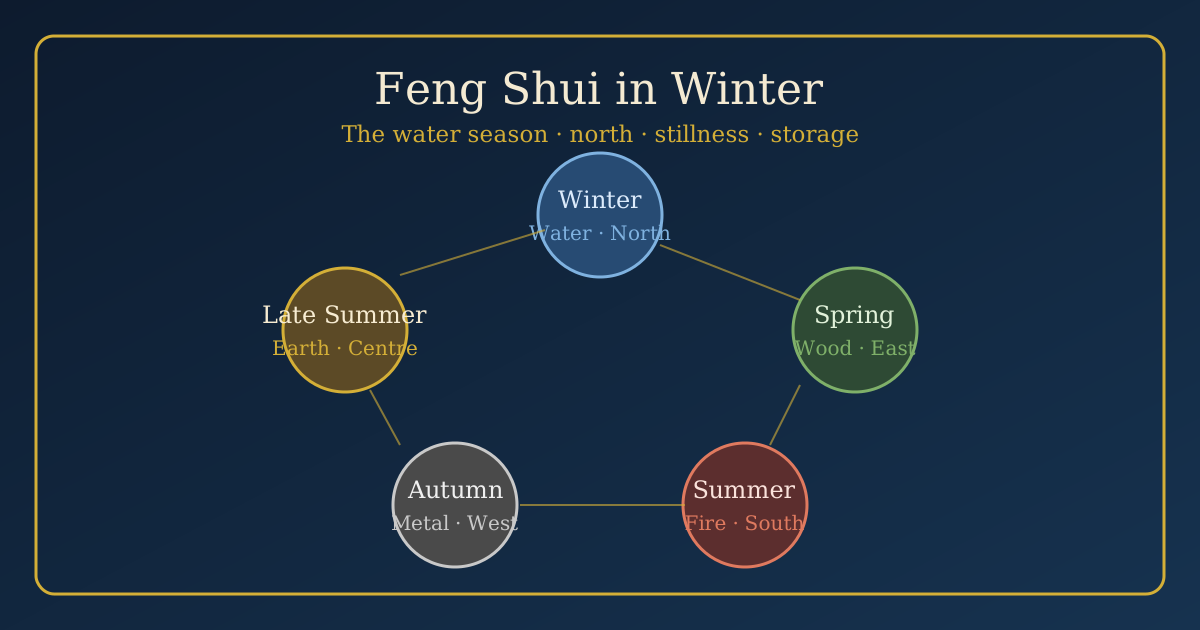
In the five-element system that feng shui shares with traditional Chinese medicine, winter belongs to water: the north, the colours blue and black, cold, stillness, and storage. Practitioners do not fight that reading. A winter home in this tradition is not a summer home with the heating on. It is a home rebalanced for a dark, cold season: fire and earth added in measured amounts through light, colour, and textiles, the north side of the home kept calm and uncluttered, the entry set up for boots, salt, and wet coats, and the long evenings used for the quiet the season is said to favour. This guide sets out the correspondence table as tradition states it, works room by room through a winter home, separates the symbolic layer from the building layer (drafts, condensation, safe candle and heater use), and closes with a month-by-month winter checklist and a labelled hypothetical worked example.

Read Article
The Four Celestial Animals in Feng Shui: Tortoise, Dragon, Tiger, and Phoenix Around Your Home
Feng Shui
2026-10-21 • 15 min

The Four Celestial Animals in Feng Shui: Tortoise, Dragon, Tiger, and Phoenix Around Your Home

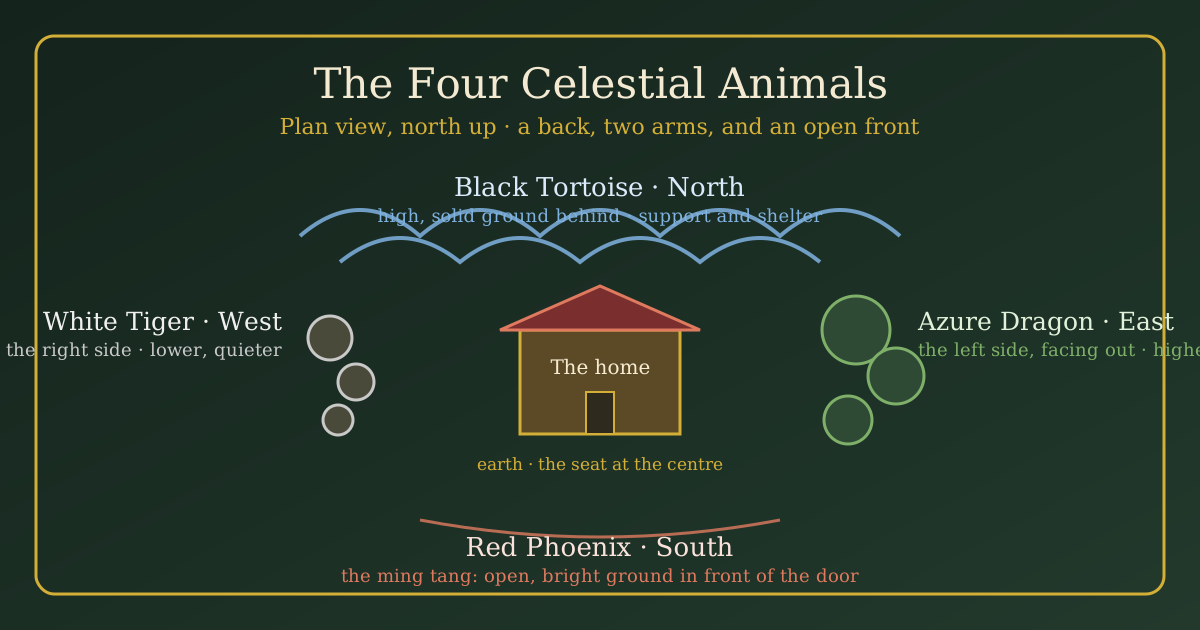
Before feng shui had compass charts, it had four animals. The Black Tortoise stands behind the home, the Azure Dragon on its left, the White Tiger on its right, and the Red Phoenix in front, and together they describe the ideal site: protected at the back, embraced on both sides, open at the front. The image comes from Chinese astronomy, where the four symbols divide the sky into four palaces, and it became the form school's oldest test of a plot of land. This guide sets out each animal and its direction, explains the armchair formation the four describe together, shows how the model is applied to a real lot, a street, and the inside of a flat, and separates the landform logic (shelter from wind, drainage, a clear approach) from the symbolism laid over it.

Read Article
Feng Shui Windows: Placement, Curtains, and Light, Room by Room
Feng Shui
2026-10-19 • 15 min

Feng Shui Windows: Placement, Curtains, and Light, Room by Room

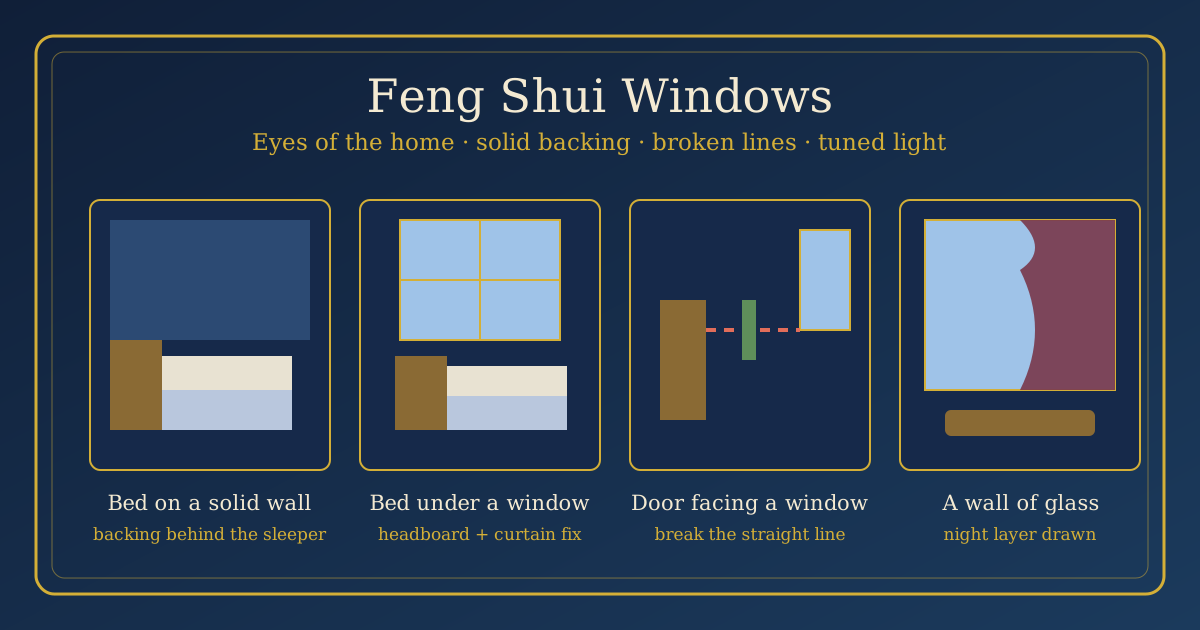
In feng shui tradition, windows are called the eyes of the home: they are the openings that take in light, air, view, and weather, second only to the front door in how much they change a room. Tradition asks for balance (enough glass to keep a room bright and aired, not so much that beds, desks, and sofas sit exposed with nothing solid behind them), keeps the wall behind a bed solid where the plan allows it, breaks up a straight door-to-window line, and treats curtains and blinds as the working controls that tune a window by time of day. This guide sets out those rules as tradition states them, puts the checkable layer beside them (the IRC R310 bedroom egress numbers, why a window behind a sleeper also means drafts, light, and noise, and why glass turns into a mirror at night), and closes with a room-by-room table and a window-by-window maintenance walk.

Read Article
Important: Educational Purposes OnlyThe Feng Shui insights, Bazi analyses, palm readings, and property evaluations provided on Lucky.properties are for entertainment, cultural, and educational purposes only. They do not constitute certified financial, real estate, legal, or investment advice. Always consult with registered real estate professionals and certified financial advisors before making property transactions or investment decisions.