Short answer
Your front door’s compass direction is a traditional design reference, not a prediction of wealth, health, relationships, or danger. Measure it carefully, distinguish the formal door from the entrance used every day, and prioritize a door that is safe, visible, weather-tight, accessible, and easy to use. If direction matters to you culturally, use it to guide colour, material, planting, or an entry ritual after those practical conditions are met.
Most competing guides jump from “northwest” or “south” to a promised outcome. That creates anxiety and overlooks the real work at an entry: a clear route, a working lock, good light, a dry threshold, a door that opens properly, and a home that visitors can find. The direction is one observation among many.
What does “front door direction” actually mean?
There are three different things people often call a home’s direction. Write down all three rather than assuming they are identical.
| Term | What it usually means | Why it matters |
|---|---|---|
| Door-facing direction | The direction you face while standing at the door and looking outward | The usual reference for a door-colour or entryway discussion |
| Façade direction | The side of the building that presents to the street or public approach | Can matter for sun, weather, curb appeal, and a traditional reading of the building |
| Everyday entrance | The door people actually use from parking, elevator, alley, garage, or transit | Often the most useful place to assess arrival, storage, lighting, and safety |
In a detached home, these can align. In a condo, they may not: a formal door may open to a corridor while the unit’s light and view face another direction. In a townhouse, the garage route may be the true daily arrival. Do not make an expensive design or buying decision from a single phone-compass reading.
How to measure the door without false precision
Use this simple recording method. It is enough for personal design decisions; specialist Compass School work can require a more detailed, site-specific method.
- Stand just inside the door, looking outward through the opening toward the usual approach.
- Move away from obvious metal, appliances, vehicles, speakers, and magnetic accessories before relying on a phone compass.
- Take several readings on separate days or positions near the threshold. Record the range, not only the most flattering number.
- Photograph the door, street/approach, and any physical constraint that changes how the entry is used.
- Note the difference between the formal façade, the official address door, and the door used each day.
If readings conflict, treat the direction as uncertain. Do not repaint a door or rearrange a property around a borderline degree. The practical entry checks below remain useful regardless of compass accuracy.
If you are using direction as part of a wider Bagua study, keep the systems separate: an entrance-aligned nine-square grid and a compass-oriented map begin from different rules. The Bagua floor-plan guide shows how to label the method and avoid blending them into a false answer.
The entry field check that matters more than a direction
In Feng Shui, the entrance is often called the “mouth of qi.” A grounded reading is straightforward: it is where people, deliveries, weather, keys, bags, and attention arrive. Use the route a real person would take.
| Check | Ask this first | Direction is secondary because… |
|---|---|---|
| Access | Can a visitor reach, identify, unlock, and open the door safely? | An auspicious colour does not repair a blocked or unsafe route |
| Weather | Does wind, rain, snow, sun, or heat make the threshold uncomfortable or slippery? | Façade orientation affects climate exposure more directly than symbolism |
| Light | Can a guest see the address, step, lock, and threshold at night without glare? | A dark door may suit a palette but still need functional lighting |
| Security | Do the lock, door, hinges, viewer, and surrounding sightlines work? | No “cure” substitutes for a working entry system |
| Drainage | Does water move away from the threshold and foundation? | Never redirect water toward a door for an inward-flow image |
| Daily use | Is there a clear place for shoes, deliveries, bags, mobility aids, or wet gear? | The entrance people use shapes the lived experience of the home |
The Home Arrival Audit turns this into a saveable checklist. For outdoor approaches, use the front-yard and entry guide before choosing a colour or adding a feature near the path.
Advertisement
Traditional direction palettes, without outcome claims
Traditional Five Elements associations can be a useful way to create a coherent entry. They are optional design language, not a result guarantee. Let climate, heritage rules, door material, neighbourhood context, paint durability, and the home’s existing palette have equal weight.
| Direction family | Traditional association | Palette or material idea | Practical question before choosing |
|---|---|---|---|
| North | Water | blue-black, charcoal, deep navy, reflective accents | Will a very dark finish make the door too hot, hard to see, or difficult to maintain? |
| East / Southeast | Wood | greens, timber tones, planted texture | Does the plant choice suit the actual light, soil, and maintenance capacity? |
| South | Fire | warm red, coral, burgundy, warm light | Will sun exposure fade the finish or make the threshold uncomfortably hot? |
| Southwest / Northeast | Earth | clay, ochre, warm beige, stone | Is the entry dry, non-slippery, and accessible in wet or icy conditions? |
| West / Northwest | Metal | white, gray, bronze, muted metallic hardware | Does glare, corrosion, or a reflective finish create a problem for users or neighbours? |
The better choice is the one that feels intentional, works in local conditions, and can be maintained. A neutral door can be completely compatible with Feng Shui. A red door does not create success, and a northwest door does not create illness or financial loss.
Do not let annual predictions override home care
Some Flying Star and Compass School practices assign annual meanings to sectors. These may be meaningful cultural practices for a household. They cannot establish whether a door is safe, whether a repair should be delayed, or whether a family will experience a financial, medical, or relationship outcome.
Do not postpone an urgent weatherproofing repair, lock replacement, accessibility improvement, drainage correction, or safety work because a calendar says a sector is “challenging.” Conversely, do not buy a metal charm, wind chime, or special colour in place of fixing a door that sticks, leaks, lacks light, or has an unsafe step.
The U.S. Department of Energy’s exterior-door weatherstripping guidance is a useful starting point for understanding why weather-tightness is a real entry concern. Follow the requirements, warranty guidance, and qualified local advice that apply to the actual door and building.
Door direction for condos, rentals, and shared buildings
An individual unit may have limited control over a corridor, lobby, façade, common landscaping, or building entrance. Record which changes you can actually make before planning around a direction.
- Condo: distinguish the unit door, building entry, elevator path, balcony/view side, and condo rules for paint, hardware, mats, lighting, and décor.
- Rental: do not drill, paint, install film, replace hardware, or add exterior items without the required permission. A removable, safe, light-appropriate interior accent may be enough.
- Shared or multi-unit property: never add objects that obstruct a corridor, fire route, sign, door swing, cleaner access, or neighbour’s view.
For an apartment with extensive glazing or a confusing circulation route, see the glass-condo guide. It treats views, privacy, glare, ventilation, and layout as real conditions instead of “energy leaks.”
A two-pass example
Pass one — compass and preference: A homeowner records the formal door as roughly east-facing. They enjoy the traditional Wood association and prefer a muted green rather than a bright colour.
Pass two — property reality: The door receives harsh morning sun, a step collects runoff, and a hedge hides the address. The priority order is to correct drainage with suitable local advice, restore address visibility, ensure the step and light work, then choose a durable finish that can tolerate sun. Green is still a valid preference; it is just not the repair plan.
This is how a cultural lens adds value: it helps a household make a coherent final choice without pretending it has diagnosed the property or forecast the future.
Frequently asked questions
Which direction should a Feng Shui front door face?
There is no universally “best” direction that guarantees a life result. Traditional schools may use the door, façade, landform, inhabitants, and a more detailed method differently. For a home choice, start with site safety, climate exposure, access, daylight, noise, privacy, and daily use; treat direction as a personal preference afterward.
Is a northwest-facing front door bad in 2026?
No direction predicts illness, financial loss, accidents, or a bad year. If a northwest entry is windy, dark, icy, exposed, or awkward, those are observable conditions to address. Do not delay a needed repair or replace it with a symbolic object.
Should I use a compass app at my front door?
It can provide a rough personal reference, but phone sensors can be affected by nearby metal and equipment. Take several readings, note uncertainty, and avoid treating a borderline result as grounds for a major decision.
What colour should I paint my front door?
Choose a colour that suits the home, exposure, local rules, material, maintenance, and your taste. A Five Elements palette can help narrow options after those criteria work. The colour will not guarantee luck or property value.
What to read next
- Front-yard and entry audit: check the approach, path, light, visibility, planting, and drainage before adding décor.
- Feng Shui decluttering reset: start with the bags, shoes, and storage that make arrival harder, then test one sustainable change.
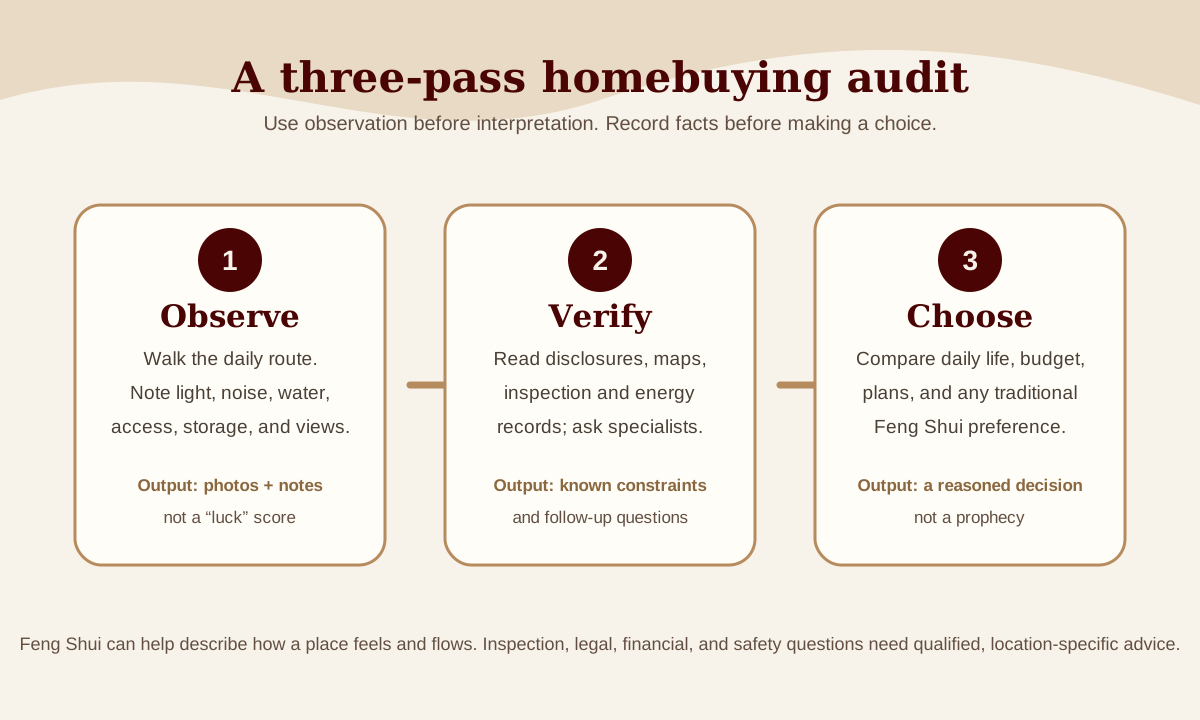
- Feng Shui home-buying checklist: compare a door direction with the actual due-diligence questions of a purchase.
- Water-feature placement guide: choose a fountain or pond only when drainage, electricity, safety, and maintenance work.
Editorial note: Lucky Properties presents Feng Shui as a cultural and design-oriented way to observe a home. This guide is educational, not architecture, building-code, accessibility, electrical, drainage, property-condition, legal, financial, insurance, security, or real-estate advice. Requirements and risks vary by location and building. Use qualified local professionals and official sources for a specific property.