Short answer
A water feature can add motion, sound, reflection, or a garden focal point. It cannot guarantee wealth, career progress, health, romance, or protection. Choose one only when its location is stable, visible, maintainable, and compatible with real drainage, electrical, child and pet safety, access, cleaning, and local requirements. Traditional Feng Shui can then help you choose a direction, colour, shape, or inward-looking view that feels meaningful to you.
The best feature is often the smallest one you can maintain well—or none at all.
What a water feature actually changes
In Feng Shui, water is an important environmental image: movement, gathering, reflection, and flow. Different schools use compass directions, forms, and timing differently, so a generic “wealth corner” instruction is incomplete. A small fountain near an entry may be a welcoming symbol for one household; another may find its pump noisy, its cable awkward, or its maintenance unrealistic.
The visible effects are easier to evaluate. A feature changes sound, humidity, reflection, the view from a seat or window, cleaning work, insects, electrical needs, and the route through a room or garden. Make the feature earn its place on those terms first.
The five-minute placement screen
Before buying anything, stand at the proposed spot and answer the questions below. A “no” means change the location, choose a different feature, or stop the project.
| Check | Question | Why it comes first |
|---|---|---|
| Stable base | Will the feature sit level and stay secure when full? | A heavy water container becomes a spill and tip hazard if its base moves |
| Route | Does it preserve a clear door, window, stair, path, gate, or service route? | Decoration must not create a trip or emergency-access problem |
| Water | Where does splash, rain, overflow, or cleaning water go? | Water should not enter a building or run toward another property |
| Power | Is power required, and can it be installed and protected appropriately? | Outdoor and wet-area electrical work needs the right solution for the setting |
| Care | Can someone fill, clean, winterize, repair, and inspect it? | A neglected feature is an expensive object, not a source of calm |
| People and animals | Could a child, pet, guest, or wildlife reach an unsafe edge or cord? | Size and placement change the supervision and safety needs |
| Sound and light | Will the pump, splash, lighting, or reflection help at the time the space is used? | A “calming” sound can be intrusive near sleep or neighbours |
This is the Lucky Properties water-feature screen. It is more useful than an exact compass instruction because it works for an apartment fountain, an aquarium, a small courtyard bowl, or a backyard pond.
Advertisement
Choose the type before choosing a direction
| Type | Good fit | Main constraint | Low-risk alternative |
|---|---|---|---|
| Tabletop fountain | A stable, wipeable surface away from electronics and sleeping areas | Pump sound, splash, cord, mineral deposits | A water-themed object or artwork |
| Wall or container fountain | A visible garden or patio focal point with planned power and cleaning access | Mounting, drainage, winter conditions, neighbour sound | Planting and a reflective glazed pot |
| Pond or rill | A designed garden project with appropriate edge, overflow, and care plan | Safety, algae, water quality, filtration, structural and drainage work | A planted bed with a dry stream visual |
| Aquarium | A maintained indoor habitat with appropriate animal care knowledge | Not a décor shortcut; needs full habitat and care commitments | No live animals; use a non-living visual focal point |
| Bird bath or shallow bowl | A small garden accent someone will clean and refill regularly | Hygiene, wildlife needs, freezing, mosquitoes, tip risk | A dry stone bowl or planted container |
Do not buy fish to complete a number formula or treat an animal’s illness or death as a supernatural event. An aquarium is an animal-care responsibility, not a Feng Shui accessory.
Where not to force one
Avoid a feature when it would block a required route, sit near unprotected electrical equipment, add moisture or noise to a room that needs quiet, create a child or pet hazard, trap water by a foundation, make a steep path harder to use, or depend on maintenance nobody will do. A bedroom, bathroom, staircase, south-facing room, or right side of an entry is not automatically cursed by water. Those labels vary by school and do not predict harm. The physical setting decides whether the project makes sense.
The CDC’s drowning-prevention guidance is a reminder that water deserves active safety planning wherever children may have access. Follow local requirements and seek appropriate qualified help for pools, ponds, electrical work, drainage, or structural installation.
Add symbolism after the project works
If the practical checks pass, use symbolism gently:
- Flow toward a shared view: an inward-looking stream or bowl can feel welcoming from the door or seat you use most.
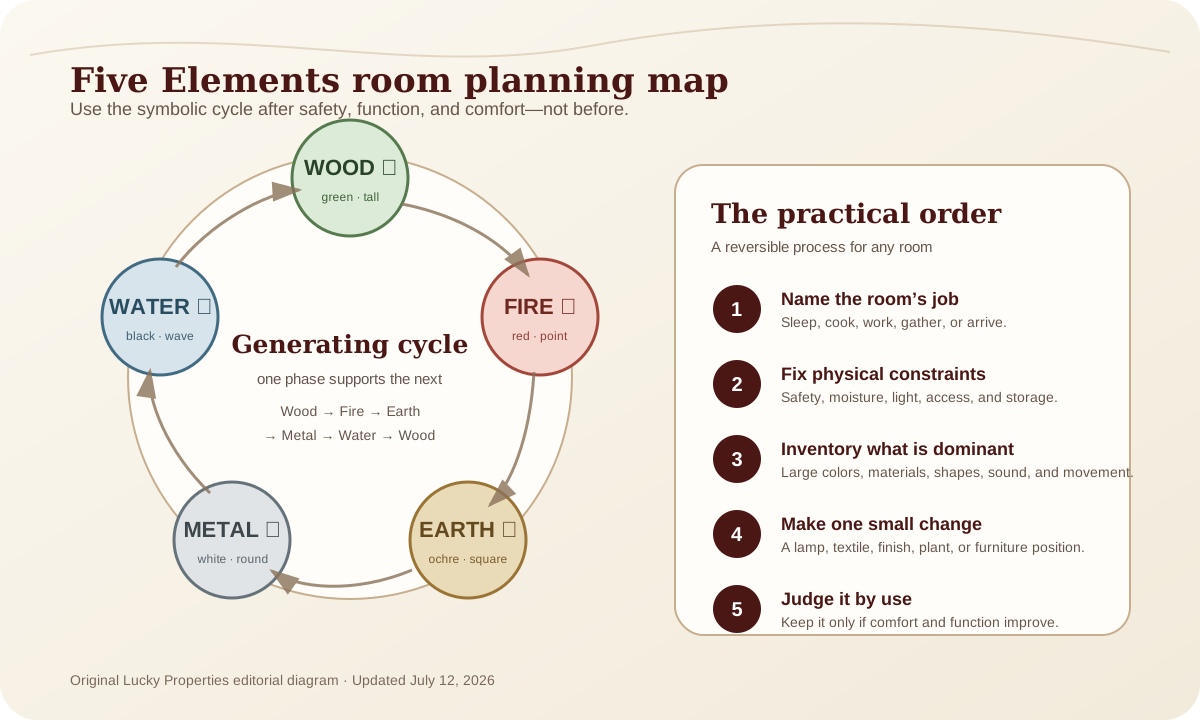
- Direction as a palette, not a promise: Water is traditionally linked with north and may support Wood-associated east or southeast design palettes. A dark blue, black, gray, metal, or planted accent can carry that reference without a pump.
- Shape for the setting: curved forms may suit a soft garden view; a simple rectangular trough may suit a modern patio. No shape guarantees a life result.
- Sound to match the room: choose quiet ripples for a small seating area; avoid a pump that competes with sleep, conversation, or neighbours.
The Five Elements balancing guide explains the traditional relationships among Water, Wood, Fire, Earth, and Metal. Use it as a design language after you solve the feature’s real-world demands.
A maintenance decision—not a placement ritual
Write a short plan before purchase: who cleans it, when it is checked, where supplies go, what happens in freezing weather, how the pump is switched off, and what you will do if it leaks. If there is no clear answer, choose a lower-maintenance design.
| Season or event | Check |
|---|---|
| Weekly in use | Water level, debris, sound, algae, stable edge, cord and pump condition |
| Before guests or children use the yard | Route and edge remain clear; no loose cable, slippery splash zone, or unsecured cover |
| Heavy rain or wind | Overflow route, blown debris, changed drainage, secure components |
| Freezing or seasonal shutdown | Follow manufacturer advice; remove or protect components as appropriate |
| Leak, odor, damaged cable, unstable wall, or unsafe edge | Turn off and address the physical problem before treating the feature as décor |
Three worked choices
Small condo entry: The only available surface is beside a door swing and a power strip. Do not put a fountain there. Use a durable tray, a plant suitable for the light, a blue-gray accent, or a water-themed image instead.
Backyard patio: A shallow container fountain can be seen from the table and kitchen, but the selected corner is under a deciduous tree and beside a low step. Move it to a stable, visible location with cleaning access and a clear route, or skip it. The backyard garden audit can help map sunlight, water, and daily use first.
Sloping yard: A pond at the low point seems symbolically appealing, but rain already gathers near the foundation. Do not excavate until drainage is assessed. A planted view or a dry stream may achieve the visual effect without adding standing water.
What to read next
- Backyard garden and slope audit: choose a location based on paths, water, activity, rest, and maintenance.
- Front-yard Feng Shui guide: make the approach welcoming without blocking access, drainage, or visibility.
- Lot-shape parcel review: check boundaries, grade, drainage, and constraints before a permanent outdoor project.
- Front door direction guide: use a traditional colour palette once the threshold functions safely.
Editorial note: Lucky Properties presents Feng Shui as a cultural and design-oriented way to observe a home. This guide is educational, not electrical, drainage, structural, animal-care, legal, or safety advice. Consult appropriate qualified professionals and local authorities for a site-specific installation.