Short answer
A garden fountain, pond, rill, or bird bath can add sound, reflection, wildlife interest, and a focal point. It cannot create wealth, cure health problems, change a career, or make a household more fortunate. Choose a feature only after its safety, drainage, electricity, overflow, maintenance, mosquitoes, winter conditions, access, and local rules make sense. Traditional Feng Shui can then help you choose a view, shape, palette, or inward-looking flow that feels meaningful.
The common advice to put water in a particular compass sector and point it “toward wealth” misses the decision a homeowner must actually make: can this feature work safely in this garden, through rain, drought, leaves, children, pets, and winter? Start there.
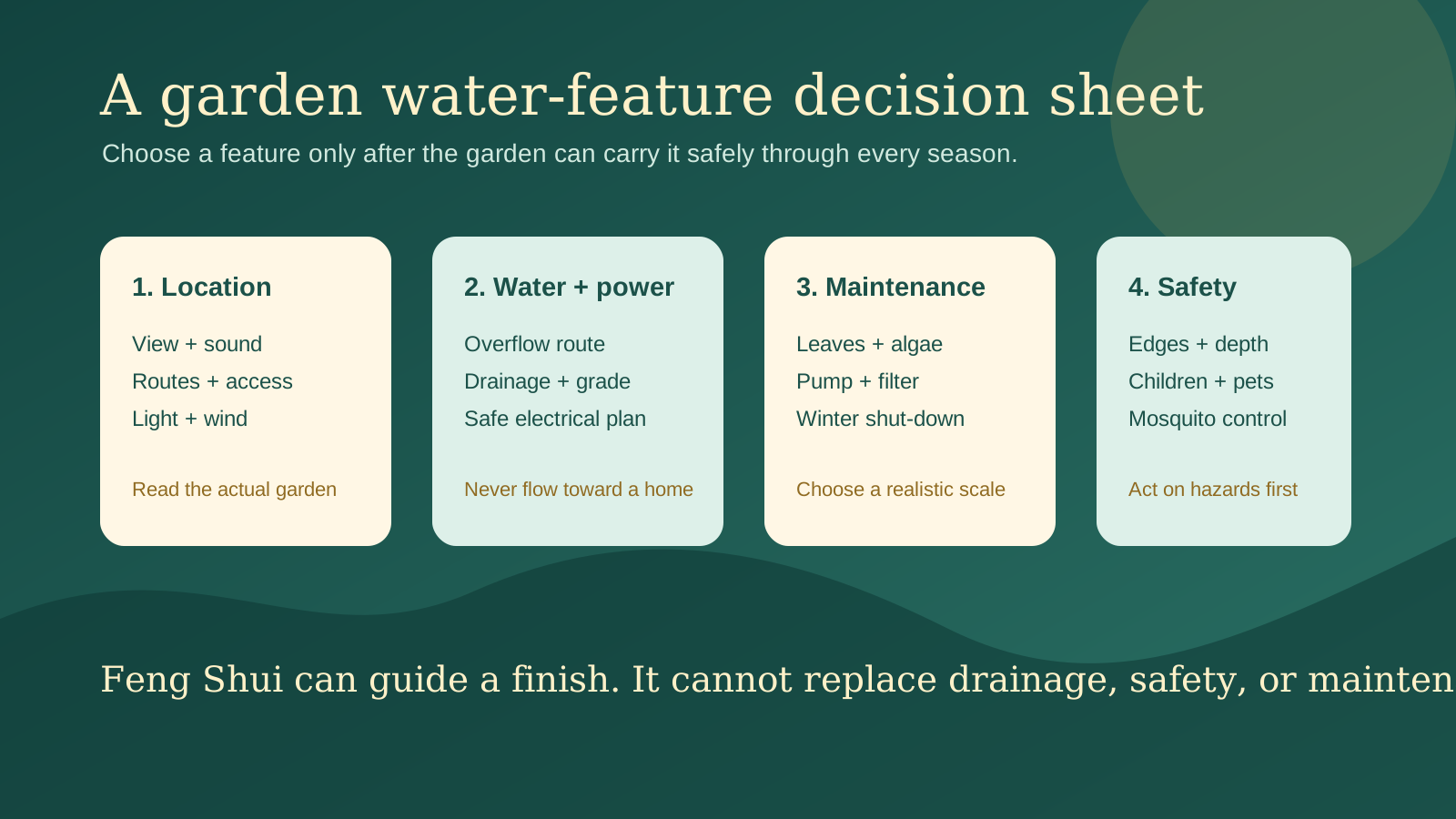
The outdoor water-feature decision sheet
| Question | Check before you buy | A better answer than a compass rule |
|---|---|---|
| Where will overflow go? | Grade, drains, downspouts, foundation, neighbouring property, irrigation | Water must never be directed toward a building simply for symbolism |
| How will power work? | Outdoor-rated equipment, protected outlet, cable route, qualified electrical work where needed | A short, protected, maintainable connection—not a hidden extension cord |
| Who will care for it? | Weekly cleaning, leaves, algae, pump inspection, seasonal opening and closing | Choose the smallest feature the household can genuinely maintain |
| Who can reach it? | Children, pets, guests, wildlife, slip and trip routes | Design edge, depth, cover, supervision, and access for the real users |
| What happens in severe weather? | Freeze-thaw, drought, wind, heavy rain, power loss | A written shut-down and overflow plan, not a ritual response |
This is the Lucky Properties outdoor-water screen. It is deliberately useful for a small bowl fountain, a bird bath, a patio trough, a rill, and a pond. A direction alone cannot answer any of these questions.
Choose the feature before the location
A small container fountain
A container fountain can work near a seating area when it has a stable base, clear path around it, water-resistant power arrangement, and easy access for cleaning. Its best contribution is sensory: a small moving sound, a reflected view, and a reason to sit in a part of the garden. If the pump is louder than conversation, throws spray onto a path, or needs a cable across a route, choose a still planter or a water-themed object instead.
A bird bath or shallow bowl
These are modest features, but their maintenance is not optional. The U.S. Centers for Disease Control and Prevention advises people to empty and scrub, turn over, cover, or remove containers that hold water at least weekly as part of mosquito control. Read the CDC’s home mosquito-control guidance and follow local wildlife and public-health guidance. A shallow feature can be lovely; a neglected one is not a harmless décor choice.
A pond, rill, or built waterfall
This is a landscape project, not an accessory. Plan the water source, excavation, edge and depth, overflow, filtration, cleaning, children and pet access, electrical work, winterization, municipal/strata rules, and future repair access before treating it as a visual feature. If the yard has a slope, existing puddling, foundation moisture, or a difficult route, get appropriate site and drainage advice first. A dry stream, planted swale, or reflective glazed pot may give the garden the desired visual pause without standing water.
Advertisement
Read the garden in rain before placing water
Feng Shui’s attention to landform can be useful here: look at the actual approach, slope, boundaries, and places where water gathers. It should make a homeowner more observant, not more certain about a prediction.
Walk the garden in a normal rain if it is safe to do so, or look for staining, erosion, sediment, mossy slip zones, downspout discharge, and low points. Ask where cleaning water and overflow will go. A pond at the low point may sound symbolically appealing, but if rain already pools near a foundation it can compound a real problem. Never divert water toward the home because an inward stream is considered auspicious.
The backyard garden and slope audit has a fuller way to check routes, grade, drainage, activity, rest, and maintenance before starting a permanent exterior project. For a broad fountain or pond decision, use the practical water-feature guide alongside this garden-specific page.
Sound, reflection, and the neighbours
A water feature changes more than a view. Listen from the seating area, open window, bedroom, and adjacent property. A gentle fountain may soften road sound for one household and annoy another after dark. Lighting can make a feature beautiful at dusk, but it can also create glare, disturb neighbours, or expose a slippery edge. Check the garden at the hours it will be used rather than assuming that a daytime photo represents it.
From a Feng Shui point of view, a quiet inward-facing view can feel welcoming from a patio or entry. Treat that as an aesthetic decision. It does not turn a flow direction into a financial outcome. The safest and most attractive view is usually the one that preserves the path, helps you notice the feature’s condition, and does not send water or sound toward a problem.
Use traditional symbolism after the project works
Different Feng Shui schools use direction, timing, and form differently. A generic instruction that North, East, or Southeast is “always right” is incomplete. If a household values Water/Wood symbolism, it can use a dark-blue, black, gray, metal, stone, or planted palette; a curved bowl; or an inward-facing composition after the physical project is sound.
The following choices are preferences, not predictions:
| Preference | Traditional design reading | Practical test |
|---|---|---|
| Inward-looking bowl or rill | A welcoming/gathering image | Can people see, clean, and safely pass it? |
| Curved pond edge | A softer visual line | Is the edge stable, maintainable, and appropriate for the site? |
| Stone and planting around water | A balanced, grounded composition | Do the materials allow access, avoid trapping moisture, and suit the climate? |
| Quiet circulation | A calmer Water reference | Is the sound pleasant at the hours neighbours and sleepers are present? |
| East/north palette | A Five Elements reference | Does the chosen feature fit the light, soil, power, and water plan? |
If a direction or annual timing has cultural importance to you, use it to select between two equally safe, maintainable options. Do not use it to overrule drainage, a permit, building rules, a safety condition, or professional advice.
A realistic maintenance calendar
Water becomes a burden when a feature is designed for launch day and ignored afterward. Write down who does what before ordering it.
| Moment | Check |
|---|---|
| Weekly in season | Water level, visible debris, algae, pump sound, cable condition, edge, mosquitoes, and clear route |
| After heavy rain or wind | Overflow path, blown leaves, erosion, debris, electrical safety, and changed drainage |
| Monthly | Filter and pump care per manufacturer, fasteners, lights, surrounding planting, and any building/yard condition |
| Before freezing or seasonal closure | Manufacturer instructions, local climate needs, removal/protection of components, drain/cover plan, and safe storage |
| Any leak, odour, damaged cable, unstable edge, or unusual noise | Turn off equipment as appropriate, keep people away from a hazard, and arrange qualified help rather than treating it as a symbolic issue |
For water where children may have access, the CDC’s drowning-prevention guidance is a useful starting point. Local requirements and the specific feature determine what safeguards are needed. No garden feature is important enough to keep if it is unsafe or impossible to maintain.
Three garden choices, worked honestly
Tiny patio with an existing outlet: A compact recirculating fountain can be evaluated if the outlet, cable, surface, sound, cleaning route, and winter storage are all workable. If the outlet requires an unsafe cable crossing, choose a planted pot or dry stone feature instead.
Family yard with a slope: A pond is proposed at the lowest point. First determine drainage and overflow; do not excavate on the assumption that inward-looking water will correct a slope. A planted basin or dry stream may be the safer first design.
Front garden near a path: A bowl fountain looks welcoming from the street, but its splash crosses the path and its lighting causes glare. Move it farther from the route or choose a non-water focal point. The front-yard arrival guide helps keep access, sightlines, and door visibility ahead of décor.
Frequently asked questions
Where is the best place for a garden fountain in Feng Shui?
The best place is stable, visible, accessible for maintenance, compatible with drainage and electrical work, and safe for the people and animals who use the garden. Direction can be a personal design preference after those conditions are met; it does not guarantee wealth, health, or career outcomes.
Should garden water flow toward the house?
Inward flow is a common symbolic convention. Treat it as a view preference only. Physical water must follow safe drainage design; never direct it toward a building, entrance, foundation, neighbour, or path to satisfy a symbolic instruction.
Is a pond in the South bad during Period 9?
No compass sector or Period 9 label can establish that a pond will harm a person, relationship, career, or property. A pond may be a poor choice for a specific sunny, windy, constrained, or poorly drained south-facing yard, but that is a site-design question. Assess the actual conditions and local requirements.
How do I stop mosquitoes in a water feature?
Use the feature’s maintenance plan and local public-health guidance. The CDC advises regularly removing standing water from containers around a home; a permanent pond or feature may need a different, professionally appropriate plan. Do not add treatments or wildlife without understanding their effects and instructions.
What to read next
- Practical water-feature placement guide: compare fountain, pond, bird bath, aquarium, and indoor options before buying.
- Backyard garden and slope audit: map water, activity, rest, privacy, access, and maintenance in an outdoor space.
- Front-yard arrival guide: keep an entry visible and safe when a water feature is near the approach.
Editorial note: Lucky Properties presents Feng Shui as a cultural and design-oriented way to observe a home. This guide is educational, not landscape architecture, drainage, electrical, structural, pool/pond safety, wildlife, public-health, legal, or building-code advice. Requirements and risks vary by feature and location. Use qualified local professionals and official sources for a specific project.