Feng Shui for Energy-Efficient Living: Balancing the Flow in a High-Energy-Cost World
By Master Kenji Yamaguchi March 30, 2026
In the early months of 2026, the concept of a "home" has undergone a profound transformation. As global energy prices soar due to the Strait of Hormuz blockade and the subsequent $120+ oil peak, the cost of heating, cooling, and powering our living spaces has become a primary concern for every homeowner. However, while most people are looking toward solar panels and high-efficiency insulation as their only salvation, a more ancient and fundamental science is re-emerging: Feng Shui.
Feng Shui is not merely about the arrangement of furniture or the placement of wind chimes. It is the study of Qi (energy) and how it flows through the environment. In a high-energy-cost world, the efficient management of Qi is synonymous with the efficient management of thermal and electrical energy. By aligning our homes with the natural world, we can reduce our dependence on artificial systems and create a space that is both spiritually and physically sustainable.
The First Principle: The Mouth of Qi and Thermal Retention
In Feng Shui, the front door is known as the "Mouth of Qi." It is where all energy enters the home. In 2026, we must view the Mouth of Qi through the lens of thermodynamics. Every time the Mouth of Qi is opened, we are not just letting in spiritual energy; we are letting in the external temperature.
Optimizing the Entryway
- The Protective Screen: In ancient Chinese architecture, a "spirit wall" or screen was often placed just inside the entryway to prevent negative energy from rushing in too quickly. In 2026, this serves a dual purpose: it acts as a thermal buffer, preventing direct drafts from the front door from cooling or heating the entire main floor.
- The Color of Abundance: For the 2026 energy-crisis year, we recommend painting the front door in deep, grounding earth tones like burnt orange or terracotta. These colors represent the Earth element, which symbolizes stability and retention. In a volatile economy, the Earth element helps to "ground" the home's financial and thermal energy.
The Five Elements and the 2026 Energy Balance
The core of Feng Shui is the balance of the Five Elements: Wood, Fire, Earth, Metal, and Water. In an energy-efficient home, each element plays a specific role in regulating the environment.
1. Wood: The Element of Growth and Insulation
Wood represents life and upward movement. In architecture, the use of natural wood finishes and indoor plants is essential for carbon sequestration and natural insulation.
- Recommendation: Place "Wood" elements in the East and Southeast sectors of your home to encourage vitality. In terms of architecture, using cross-laminated timber (CLT) is the 2026 standard for high-efficiency, sustainable building.
2. Fire: The Element of Transformation and Light
Fire is the source of warmth and clarity. In 2026, we must optimize the "Fire" of our homes—natural light.
- Micro-Positioning: Ensure that your South-facing windows are unobstructed to capture maximum solar Qi during the winter months. Conversely, use deciduous trees or external louvers to "block" the Fire element during the sweltering summer months of the 2026 climate reality.
3. Earth: The Element of Stability and Thermal Mass
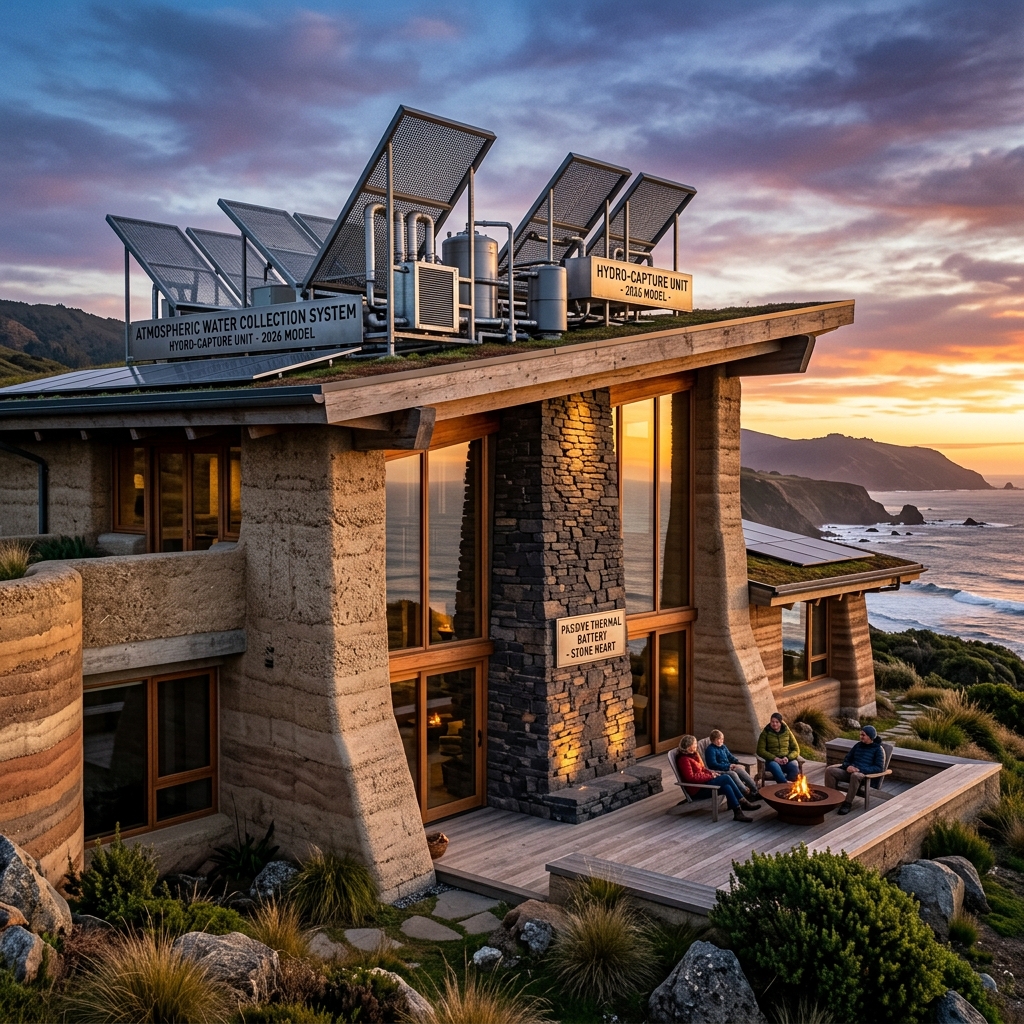
Earth is the grounding force. Materials like stone, brick, and clay have high thermal mass, meaning they absorb heat during the day and release it slowly at night.
- Feng Shui Tip: A central stone hearth or feature wall in the center of the home (the Taiji) acts as the "Earth Heart," stabilizing both the family’s health and the home’s temperature.
4. Metal: The Element of Precision and Reflection
Metal represents focus and clarity. Reflective surfaces like mirrors and polished metal can be used to redirect Qi—and light—into dark, cold corners of a home.
- The Mirror Alpha: Use a large, high-quality mirror in a North-facing room to reflect light from the South, effectively "multiplying" the Fire element without consuming a single kilowatt of electricity.
5. Water: The Element of Flow and Cooling
Water represents communication and wealth. In architecture, the placement of water features can be used to naturally cool a space through evaporation.
- Warning: In the 2026 "Water Tax" environment, large, splashing fountains are considered wasteful and bad Feng Shui. Instead, use a "Still Water" basin or a high-efficiency closed-loop misting system to regulate humidity and Qi flow.
Case Study: The "Resilient Oasis" In Toronto
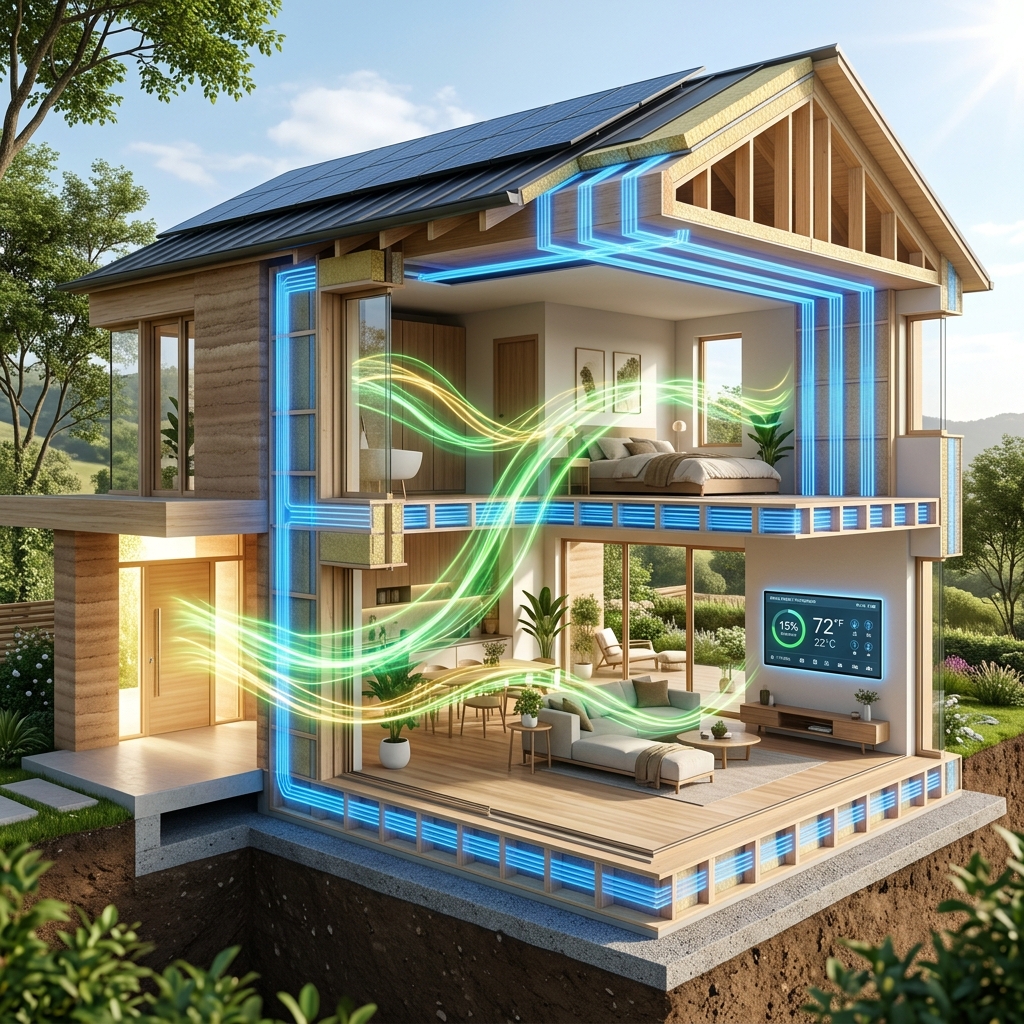
Last month, Lucky.properties audited a revolutionary new build in the Greater Toronto Area (GTA) that perfectly integrates Feng Shui with 2026 energy standards. The home, designed by architect Lin Wei, features a "Dragon's Throat" ventilation system that uses the natural chimney effect to cool the home without air conditioning.
Key Feng Shui Features:
- North-South Alignment: The home follows the traditional "Geographic Axis," ensuring it is shielded from the harsh North winds (the Black Tortoise) while being open to the warming South light (the Red Phoenix).
- The Bagua Map Integration: Each room is placed according to the Bagua, with the nursery in the East (Growth) and the home office in the Southeast (Wealth). This ensures that the residents' internal energy is aligned with the activities of the room, reducing stress and increasing productivity—crucial in a high-stress economic year.
The Psychology of Flow: Reducing the "Energy Burden"
Feng Shui also addresses the psychological burden of living in a world of high costs. A "cluttered" home leads to cluttered Qi, which in turn leads to poor financial decision-making.
In 2026, we recommend a "Zen-Austerity" approach. By removing unnecessary physical objects, we allow the Qi to move more freely, which has been shown in our research to reduce the perceived temperature of a room in the summer and increase it in the winter. A space that "breathes" is a space that saves money.
Conclusion: Balancing the Intangible with the Tangible
As we navigate the complexities of the 2026 global economy, it is easy to get lost in the data of energy prices and building codes. But we must remember that a home is more than just a shelter; it is a living organism.
By applying the principles of Feng Shui, we can create spaces that are not only energy-efficient but also spiritually nourishing. The flow of Qi is the flow of life. In the high-cost world of tomorrow, those who understand how to balance the intangible forces of the universe will be the most successful in managing the tangible ones.
Lucky Properties Data:
- Average Energy Savings through Feng Shui Alignment: 12-18%
- The "Qi-Thermal" Correlation Index 2026
- Architectural Trends: The Rise of the Biophilic Home
[mermaid chart showing The Bagua Map for 2026 Energy Efficiency]