Short answer
The most useful Feng Shui “mistakes” are often ordinary home problems in disguise: a blocked route, a leak, a dark step, a screen that catches glare, a room asked to do too many things, or furniture that is not safely secured. Fix those conditions first. Traditional ideas about a clear entry, a supportive bed wall, balanced objects, or a calmer bedroom can then help you make design choices that feel meaningful. They do not predict money, health, relationship, or career outcomes.
This guide uses a simple rule: solve the thing that would still matter if nobody called it Feng Shui. A leak needs a repair, not a wealth cure. A tight exit needs clear space, not a crystal. A distracting mirror needs a placement test, not a claim about the future.
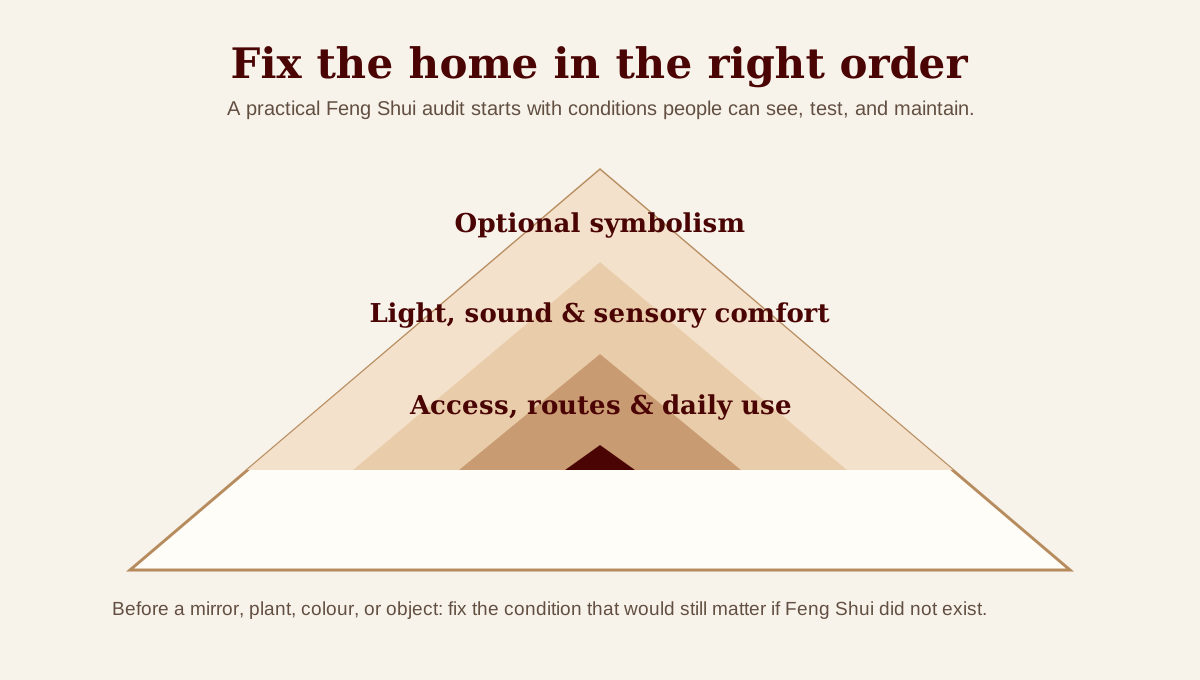
The order that keeps a “cure” from becoming another problem
Before changing a room, work down this order:
| Priority | First question | Example of a real fix | What Feng Shui can add afterward |
|---|---|---|---|
| Safety and building health | Is anyone at risk or is the building being damaged? | Repair a leak, secure tall furniture, clear an exit, seek qualified help | A calm, cared-for feeling at home |
| Access and daily use | Can people move, open, clean, store, and use the room? | Move a shoe rack from a door swing; test a bed and closet route | A clear “flow” or arrival sequence |
| Light, sound, and comfort | Does the room work at the time it is actually used? | Reduce monitor glare, add task light, control streetlight spill | A quieter Yin/Yang balance as a design language |
| Traditional preference | Does a symbol, direction, material, or arrangement matter to the household? | Choose a palette, artwork, or a balanced pair of lamps | Cultural continuity and personal meaning |
This is not a score. It is a way to avoid spending money on a symbolic object before identifying a damp wall, a tripping point, a poor route, or a layout that makes daily life harder.
1. Treating the entrance as storage overflow
The front door is often called the Mouth of Qi. In practice, it is where people arrive with bags, wet shoes, mail, mobility aids, pets, visitors, and deliveries. A crowded entry can feel chaotic because it makes the first task—getting inside—harder than it should be.
Test it: enter with a bag. Can the door open and close fully? Can you reach the lock, turn around, put something down, and walk to the next room without stepping over items? Repeat at night if the route changes after dark.
Fix the condition: keep the door swing, stairs, and path clear. Use hooks, a tray, closed storage, or a designated drop zone only if it does not narrow the route. A renter or condo resident should use reversible changes and respect common-area rules.
Traditional lens: a bright, readable threshold can feel welcoming. Add a mat, plant, colour, or light only after the route works. The Home Arrival Audit is a saveable version of this check.
2. Calling a water leak a “wealth leak” instead of fixing it
A dripping faucet, running toilet, damp cabinet, water mark, or recurring condensation is not evidence about a household’s fortune. It is a maintenance question. Ignoring it can waste water, damage finishes, and create a moisture problem.
The U.S. Environmental Protection Agency says moisture control is the key to mold control and advises promptly fixing leaks and drying wet surfaces. Read the current EPA moisture and mold guidance for its scope, and use an appropriate local professional when the source, extent, electrical safety, or water quality is uncertain.
Test it: look under sinks, behind toilets, near appliances, around windows, and at lower-level walls. Note what is wet, stained, musty, warped, or repeatedly repaired. Do not open finished walls or touch questionable electrical areas.
Fix the condition: document the issue, stop the source where safe to do so, and obtain qualified help when needed. A bathroom door or toilet lid is a personal habit, not a substitute for repairing plumbing or ventilation.
Advertisement
3. Forcing a bed into a symbolic position that fails the room
“Command position” usually means having a view of the door without lying directly in its path, ideally with a stable wall behind the headboard. It can be a useful preference. It is not a rule that outranks a clear exit, working window, safe heater clearance, a closet door, a mobility route, or two people’s sleep needs.
Test it: open every door and window. Walk from each side of the bed to the exit, closet, and bathroom. Notice drafts, noise, streetlight, radiator heat, and whether a person can get up without climbing over the other sleeper.
Fix the condition: choose the best workable wall, then use light control, a stable headboard, storage, or an agreed route to solve the remaining compromise. A bed under a window or near a door is not a failed bedroom; it is a layout choice that deserves honest testing. The sleep-supportive bedroom guide and shared-bedroom layout guide provide room-by-room trade-offs.
4. Assuming every mirror is a problem
Some Feng Shui traditions avoid a mirror directly opposite an entry or reflecting a bed. That symbolism can matter to a household. But mirrors also change light, sightlines, and the sense of size. The useful question is whether this mirror reflects glare, a bright doorway, a television, streetlights, unwanted movement, or a view you dislike.
Test it: stand at the door and sit or lie in the place where the mirror is seen. Check it in daylight and after dark. Is the reflection useful, neutral, or distracting?
Fix the condition: move, angle, cover, or retain the mirror according to what it does in the room. Do not place a mirror where it creates a blind spot, makes a narrow route feel confusing, or bounces a strong light into someone’s eyes. A mirror does not send opportunities away, cause infidelity, or diagnose sleep problems.
5. Trying to hide a beam, shelf, or heavy object rather than making it safe
The phrase “poison arrow” is often applied to a sharp corner, beam, or projecting shelf. It can be a visual way to describe something that feels pressing or abrupt. The non-symbolic question is more urgent: can someone hit it, pull it down, or get hurt by an unstable object?
Test it: look above beds, desks, children’s areas, and common routes. Check head clearance, whether a shelf is properly installed, and whether a tall cabinet, television, or appliance could tip. Do not assume a decorative plant or fabric is a safety measure.
The U.S. Consumer Product Safety Commission’s Anchor It! guidance explains why TVs and furniture should be secured where children live or visit. Follow manufacturer instructions and use an appropriate installer when the wall, fastening, or item is uncertain.
Fix the condition: move the bed or desk if an object is unstable or too low; secure furniture correctly; soften a visually harsh edge only after it is safe. Paint or fabric may change the look, but neither anchors a cabinet.
6. Making every room do every job without a reset
A studio, small condo, or family home may need a dining table to become a desk and a bedroom to hold a workout, nursery, or storage zone. The mistake is not multi-use. It is failing to give each mode a route, surface, storage plan, and way to end.
Test it: write the three most common activities in the room. For each one, ask where the body goes, where the objects go, what must stay clear, and how the room returns to its next function.
Fix the condition: assign a container, shelf, hook, foldable surface, cabinet, or timed reset. Use a rug, lamp, or colour shift to mark a zone if it helps, but do not introduce a divider that blocks daylight, vents, exits, or a door swing. The open-floor-plan layout guide shows how to create readable zones without filling the centre of a room.
7. Choosing a desk by compass direction while ignoring glare and posture
A desk with a view of the door may feel more settled for some people. Others need a compact wall-facing desk to preserve a route, use nearby power, or reduce distraction. Neither choice predicts a promotion, exam score, or anxiety level.
Test it: sit at the desk during the task you actually do. Can you see the screen without squinting? Does the chair move freely? Are cables and bags out of the walking line? Can you notice someone entering without turning the seat into a hazard?
The U.S. Occupational Safety and Health Administration recommends arranging a workstation to reduce glare and notes that bright windows and lights can make people adopt awkward positions. Its workstation environment guidance gives practical starting points for screen, window, and task-light placement.
Fix the condition: try the desk at right angles to a bright window, add light control, improve cable management, and choose a stable, comfortable chair position. Then use command position as a tie-breaker if two safe layouts work equally well. See the home-office desk placement guide for five real layouts.
8. Using plants as a universal remedy
Plants can make a room feel softer, frame a door, provide seasonal interest, and express Wood-element symbolism. They can also block a path, hide an address, collect standing water, trigger allergies, damage surfaces, or fail in the available light.
Test it: check the mature size, pot weight, watering route, light, pet and child safety, and the clearance around doors, stairs, drains, and sightlines.
Fix the condition: choose a plant you can care for, use a stable tray, and place it where it does not create a new route or moisture problem. If it dies repeatedly, change the plant, light, container, or expectation. A dead plant is not “bad energy”; it is useful feedback about care conditions.
9. Treating colour as a cure before testing it in real light
Five Elements colour associations are a rich design vocabulary. They are not a reason to paint a whole bedroom red, force a dark door colour that overheats or shows every mark, or choose a palette that conflicts with fixed flooring and daylight.
Test it: put sample colours on more than one wall and view them in morning, afternoon, and evening light. Check the finish beside trim, flooring, window coverings, and the lamps you actually use.
Fix the condition: select a main colour that suits light and function; use an element-associated accent through textiles, art, a planter, hardware, or a lamp when a stronger colour would not work. The room-colours-by-light guide has a practical test sequence for owners and renters.
10. Buying an object to avoid a conversation or a repair
This is the mistake behind many expensive “cures.” A Bagua mirror cannot resolve a dangerous driveway sightline. A crystal cannot make a shared room fair. A fountain cannot stop a basement leak. A pair of lamps cannot repair a relationship. Objects can carry beauty, memory, ritual, and cultural meaning; they should not be sold as replacements for a repair, a boundary, a professional opinion, or a difficult discussion.
When you are tempted to buy a remedy, pause and ask:
- What physical condition am I trying to change?
- What evidence would show that condition exists?
- Is there a safety, repair, permission, or relationship action before decor?
- If I still want the object afterward, will it be safe, maintainable, and genuinely welcome in the room?
That pause respects tradition more than making a promise tradition cannot keep.
A 20-minute whole-home reset
Use this sequence when the home feels “off” but you cannot tell why.
| Five minutes | Five minutes | Five minutes | Five minutes |
|---|---|---|---|
| Walk the entry and clear only the route | Check for new leaks, dampness, hot smells, or loose items | Open and close the doors you use most | Choose one light, sound, storage, or glare fix for tonight |
Write down the specific observation: “shoe rack blocks door,” “bathroom fan leaves mirror wet,” “desk screen catches sun at 4 p.m.,” “dresser feels loose,” or “bedroom lamp is too bright.” The observation produces a next action. “Bad energy” does not.
What to read next
- Home Arrival Audit: use a saveable checklist for the exterior route, doorway, light, drainage, and permission questions.
- Feng Shui house-buying checklist: compare a property’s layout and landform with inspection, flood, radon, access, energy, and daily-fit questions.
- Five Elements room-planning guide: add colour, material, and balance choices after the room is safe and usable.
Editorial note: Lucky Properties presents Feng Shui as a cultural and design-oriented way to observe a home. This guide is educational and not medical, building, electrical, legal, accessibility, or safety advice. Use qualified local help for a specific repair, hazard, health concern, or property decision.