Short answer
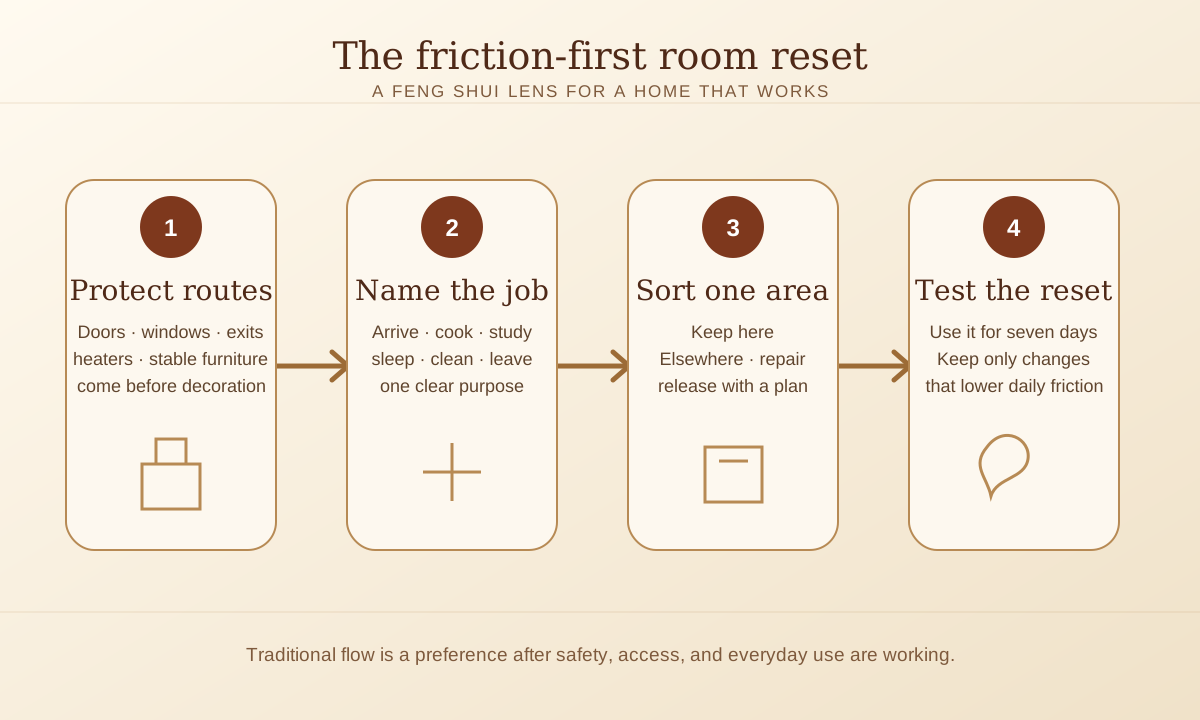
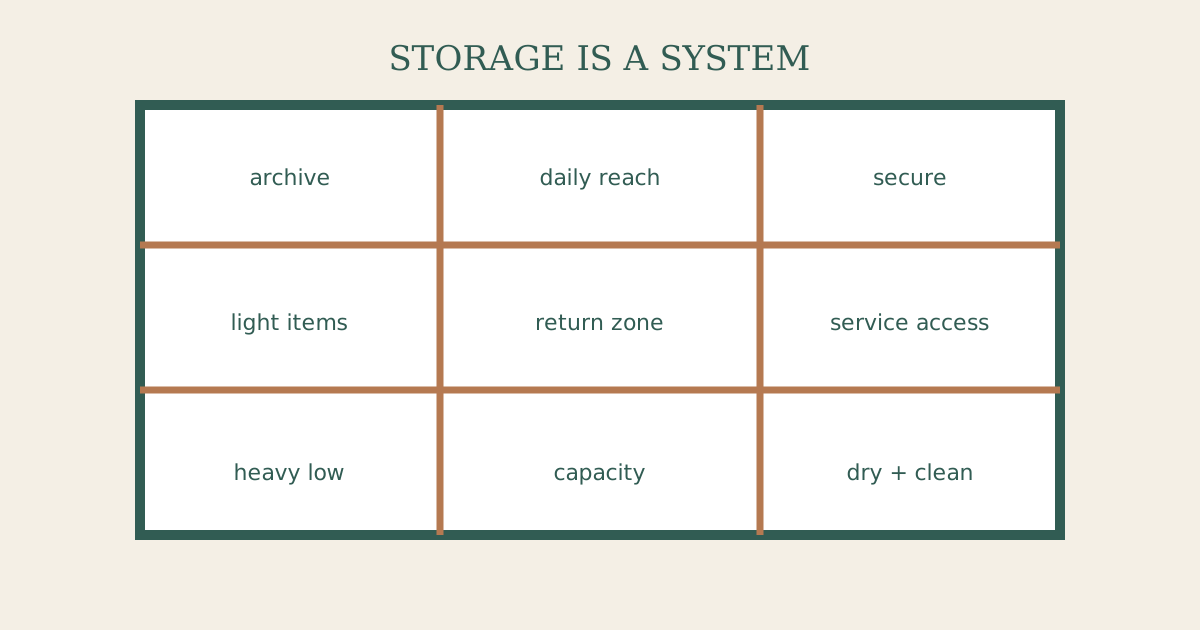
Closed storage is not automatically stagnant, and open shelving is not automatically energetic. Good storage keeps the right item reachable, supported, dry, visible enough to manage, and out of routes, heat, vents, and service access. Inventory before buying bins. Put daily items in the easiest reach, heavy items on stable lower support, hazardous or private items in suitable secure locations, and leave capacity for return and cleaning. Declutter by use and responsibility - not by fear that possessions block money or luck.
This guide does not promise wealth, health, romance, or protection. It uses Feng Shui as an interpretive design tradition and then checks the ordinary conditions that determine whether a home works: clear movement, stable furniture, usable light, ventilation, moisture control, privacy, maintenance, permissions, and the needs of the people who live there.
The question this guide answers
How should a household organize closets, pantries, entry cabinets, storage rooms, and under-bed space so the system remains usable after the initial tidy-up?
Online advice often treats a plan as a collection of forbidden alignments. Real homes are more complicated. A door can face a stair but still have a generous landing. A symbolically preferred position can produce glare, a pinched route, or an unusable cabinet. A renter may have one sensible furniture wall and no permission to drill. A household may include children, older adults, mobility devices, pets, shift workers, or two people with different aesthetic and cultural priorities.
The goal is therefore not to earn a perfect score. It is to identify the highest-consequence condition, make the smallest effective change, and observe the result. Traditional language can help a household describe threshold, support, exposure, activity, or rest. It should not be used to frighten someone into a renovation or to dismiss a practical defect.
Cultural lens: what the Feng Shui idea is doing
Clutter is often described as blocked Qi, a metaphor that can capture delayed decisions and obstructed movement. It becomes harmful when it moralizes poverty, disability, grief, collecting, culture, or caregiving. A home can contain many meaningful objects and still function; a minimalist photograph can hide inaccessible systems. Feng Shui is most constructive when it asks whether possessions support present life, can be cared for, and have an intentional relationship to the room.
Feng Shui is not one universal checklist. Form School pays close attention to visible landform, enclosure, approach, and movement. Compass methods add orientation, time, and calculation. Contemporary practitioners may translate older ideas into interior-design language. Those approaches can produce different recommendations because they begin with different questions. Label the method you are using, and do not present a personal convention as an ancient fact.
Three distinctions keep the limits visible:
- Symbol is not mechanism. A traditional association may be meaningful without proving a physical cause.
- Preference is not prediction. A household can prefer a layout or colour without claiming that it determines an outcome.
- A remedy is not a repair. A screen, rug, plant, mirror, crystal, colour, or Five Elements association cannot repair a leak, failed fan, loose handrail, unsafe outlet, damaged door, or blocked exit.
Use a four-level priority ladder
Level 1: life safety, access, and building defects
Address smoke and carbon-monoxide alarms, exits, stairs and guards, trip hazards, electrical or combustion concerns, active water, visible damage, and access needs through the proper channel. Feng Shui choices wait. If you do not own the property, document the issue and notify the responsible owner or manager. If the condition may be urgent, follow local emergency and professional guidance.
Level 2: moisture, air, light, heat, and noise
These conditions shape daily comfort and can damage a building. Look for condensation, musty odour, staining, inadequate exhaust, cooking pollutants, uncomfortable glare, overheating, drafts, and recurring noise. Use source control, ventilation, shading, maintenance, and appropriate repair before adding decoration. The U.S. Environmental Protection Agency's indoor-air guidance emphasizes source control, ventilation, filtration as a supplement, and moisture management; it does not recommend symbolic objects as building interventions.
Level 3: circulation, storage, privacy, and task fit
Now examine whether people can open doors, pull chairs, reach storage, carry laundry, prepare food, work, rest, and clean. A layout that looks calm but makes ordinary routines harder is not resolved. Define zones with furniture orientation, light, or storage while preserving door swings and usable paths.
Level 4: cultural expression and atmosphere
Once the first three levels are sound, use colour, material, plants, artwork, family objects, a Bagua reflection, or Five Elements symbolism if it is meaningful to the household. Choose items that can be cleaned, maintained, and safely supported. One deliberate cue is usually clearer than a collection of products sold as cures.
A one-page field audit
| Check | What to record | First experiment |
|---|---|---|
| Inventory and purpose | List categories, owners, frequency, volume, expiry, and the room where each item is used. | Remove obvious waste and assign a location before buying containers. |
| Reach and accessibility | Observe bending, lifting, vision, labels, doors, and daily users. | Put daily items in the easiest safe reach and use clear naming. |
| Weight and support | Check shelves, anchors, stacks, heavy objects, and what sits overhead. | Keep heavy and breakable items low on suitable support. |
| Moisture and air | Inspect exterior closets, basements, bathrooms, under sinks, and packed walls for odour or staining. | Reduce packing against problem areas and address moisture sources. |
| Doors and routes | Open closet, cabinet, room, appliance, and entry doors together. | Move protruding bins and preserve the full needed route. |
| Private and hazardous items | Identify documents, medication, chemicals, tools, weapons, small objects, and valuables. | Use appropriate secure storage and disposal guidance. |
| Return routine | Time how long it takes to put away laundry, groceries, mail, toys, and work supplies. | Simplify labels, container lids, and locations until return is easy. |
| Capacity and acquisitions | Measure empty capacity, duplicates, seasonal rotation, donations, repairs, and incoming purchases. | Use a one-in review and a scheduled maintenance point. |
Take photographs only for your own comparison and protect household privacy. Add a rough plan with door swings, windows, fixed services, furniture, and dimensions. Mark where a person pauses, turns, carries something, or meets another person. A compass reading can be recorded separately; do not let it erase what the plan shows.
Detailed audit: condition by condition
1. Inventory and purpose
What to observe. List categories, owners, frequency, volume, expiry, and the room where each item is used. Record the actual condition at the time it matters instead of diagnosing the room from a listing photo or a compass label. Walk the route once slowly, then repeat it while carrying the things normally used there. Note what changes after dark, during a busy morning, and when a door, drawer, chair, or appliance is operating.
Start with a reversible move. Remove obvious waste and assign a location before buying containers. Keep the experiment in place long enough to experience ordinary weekdays and a cleaning cycle. A useful adjustment should make the space easier to enter, understand, use, and reset; it should not merely make the floor plan look more symmetrical.
If a project is justified. If the recorded condition persists, compare a maintain-and-monitor option with a properly designed project. Define the practical outcome, confirm permissions and applicable requirements, and obtain qualified input for structure, services, envelope, drainage, electrical, mechanical, or accessibility work as relevant to inventory and purpose. Treat this as a design or maintenance decision, not a metaphysical emergency. Confirm dimensions, permissions, product instructions, trades, budget, and local requirements before work begins. Photograph the original condition and define what success will look like.
Boundary. Do not discard another person’s possessions as an energy cure. No decorative object overrides a blocked route, loose component, leak, electrical concern, combustion concern, failed exhaust, or accessibility need. When those conditions exist, stop decorating and use the appropriate owner, manager, inspector, licensed trade, or local authority.
2. Reach and accessibility
What to observe. Observe bending, lifting, vision, labels, doors, and daily users. Record the actual condition at the time it matters instead of diagnosing the room from a listing photo or a compass label. Walk the route once slowly, then repeat it while carrying the things normally used there. Note what changes after dark, during a busy morning, and when a door, drawer, chair, or appliance is operating.
Start with a reversible move. Put daily items in the easiest safe reach and use clear naming. Keep the experiment in place long enough to experience ordinary weekdays and a cleaning cycle. A useful adjustment should make the space easier to enter, understand, use, and reset; it should not merely make the floor plan look more symmetrical.
If a project is justified. If the recorded condition persists, compare a maintain-and-monitor option with a properly designed project. Define the practical outcome, confirm permissions and applicable requirements, and obtain qualified input for structure, services, envelope, drainage, electrical, mechanical, or accessibility work as relevant to reach and accessibility. Treat this as a design or maintenance decision, not a metaphysical emergency. Confirm dimensions, permissions, product instructions, trades, budget, and local requirements before work begins. Photograph the original condition and define what success will look like.
Boundary. A symmetrical system may still exclude a user. No decorative object overrides a blocked route, loose component, leak, electrical concern, combustion concern, failed exhaust, or accessibility need. When those conditions exist, stop decorating and use the appropriate owner, manager, inspector, licensed trade, or local authority.
3. Weight and support
What to observe. Check shelves, anchors, stacks, heavy objects, and what sits overhead. Record the actual condition at the time it matters instead of diagnosing the room from a listing photo or a compass label. Walk the route once slowly, then repeat it while carrying the things normally used there. Note what changes after dark, during a busy morning, and when a door, drawer, chair, or appliance is operating.
Start with a reversible move. Keep heavy and breakable items low on suitable support. Keep the experiment in place long enough to experience ordinary weekdays and a cleaning cycle. A useful adjustment should make the space easier to enter, understand, use, and reset; it should not merely make the floor plan look more symmetrical.
If a project is justified. If the recorded condition persists, compare a maintain-and-monitor option with a properly designed project. Define the practical outcome, confirm permissions and applicable requirements, and obtain qualified input for structure, services, envelope, drainage, electrical, mechanical, or accessibility work as relevant to weight and support. Treat this as a design or maintenance decision, not a metaphysical emergency. Confirm dimensions, permissions, product instructions, trades, budget, and local requirements before work begins. Photograph the original condition and define what success will look like.
Boundary. Do not overload shelves or hang uncertain storage above beds and seats. No decorative object overrides a blocked route, loose component, leak, electrical concern, combustion concern, failed exhaust, or accessibility need. When those conditions exist, stop decorating and use the appropriate owner, manager, inspector, licensed trade, or local authority.
4. Moisture and air
What to observe. Inspect exterior closets, basements, bathrooms, under sinks, and packed walls for odour or staining. Record the actual condition at the time it matters instead of diagnosing the room from a listing photo or a compass label. Walk the route once slowly, then repeat it while carrying the things normally used there. Note what changes after dark, during a busy morning, and when a door, drawer, chair, or appliance is operating.
Start with a reversible move. Reduce packing against problem areas and address moisture sources. Keep the experiment in place long enough to experience ordinary weekdays and a cleaning cycle. A useful adjustment should make the space easier to enter, understand, use, and reset; it should not merely make the floor plan look more symmetrical.
If a project is justified. If the recorded condition persists, compare a maintain-and-monitor option with a properly designed project. Define the practical outcome, confirm permissions and applicable requirements, and obtain qualified input for structure, services, envelope, drainage, electrical, mechanical, or accessibility work as relevant to moisture and air. Treat this as a design or maintenance decision, not a metaphysical emergency. Confirm dimensions, permissions, product instructions, trades, budget, and local requirements before work begins. Photograph the original condition and define what success will look like.
Boundary. Fragrance and cedar do not repair water or ventilation problems. No decorative object overrides a blocked route, loose component, leak, electrical concern, combustion concern, failed exhaust, or accessibility need. When those conditions exist, stop decorating and use the appropriate owner, manager, inspector, licensed trade, or local authority.
5. Doors and routes
What to observe. Open closet, cabinet, room, appliance, and entry doors together. Record the actual condition at the time it matters instead of diagnosing the room from a listing photo or a compass label. Walk the route once slowly, then repeat it while carrying the things normally used there. Note what changes after dark, during a busy morning, and when a door, drawer, chair, or appliance is operating.
Start with a reversible move. Move protruding bins and preserve the full needed route. Keep the experiment in place long enough to experience ordinary weekdays and a cleaning cycle. A useful adjustment should make the space easier to enter, understand, use, and reset; it should not merely make the floor plan look more symmetrical.
If a project is justified. If the recorded condition persists, compare a maintain-and-monitor option with a properly designed project. Define the practical outcome, confirm permissions and applicable requirements, and obtain qualified input for structure, services, envelope, drainage, electrical, mechanical, or accessibility work as relevant to doors and routes. Treat this as a design or maintenance decision, not a metaphysical emergency. Confirm dimensions, permissions, product instructions, trades, budget, and local requirements before work begins. Photograph the original condition and define what success will look like.
Boundary. Behind-door storage must not impair closing, latching, or access. No decorative object overrides a blocked route, loose component, leak, electrical concern, combustion concern, failed exhaust, or accessibility need. When those conditions exist, stop decorating and use the appropriate owner, manager, inspector, licensed trade, or local authority.
6. Private and hazardous items
What to observe. Identify documents, medication, chemicals, tools, weapons, small objects, and valuables. Record the actual condition at the time it matters instead of diagnosing the room from a listing photo or a compass label. Walk the route once slowly, then repeat it while carrying the things normally used there. Note what changes after dark, during a busy morning, and when a door, drawer, chair, or appliance is operating.
Start with a reversible move. Use appropriate secure storage and disposal guidance. Keep the experiment in place long enough to experience ordinary weekdays and a cleaning cycle. A useful adjustment should make the space easier to enter, understand, use, and reset; it should not merely make the floor plan look more symmetrical.
If a project is justified. If the recorded condition persists, compare a maintain-and-monitor option with a properly designed project. Define the practical outcome, confirm permissions and applicable requirements, and obtain qualified input for structure, services, envelope, drainage, electrical, mechanical, or accessibility work as relevant to private and hazardous items. Treat this as a design or maintenance decision, not a metaphysical emergency. Confirm dimensions, permissions, product instructions, trades, budget, and local requirements before work begins. Photograph the original condition and define what success will look like.
Boundary. Decorative jars and open baskets are not secure systems. No decorative object overrides a blocked route, loose component, leak, electrical concern, combustion concern, failed exhaust, or accessibility need. When those conditions exist, stop decorating and use the appropriate owner, manager, inspector, licensed trade, or local authority.
7. Return routine
What to observe. Time how long it takes to put away laundry, groceries, mail, toys, and work supplies. Record the actual condition at the time it matters instead of diagnosing the room from a listing photo or a compass label. Walk the route once slowly, then repeat it while carrying the things normally used there. Note what changes after dark, during a busy morning, and when a door, drawer, chair, or appliance is operating.
Start with a reversible move. Simplify labels, container lids, and locations until return is easy. Keep the experiment in place long enough to experience ordinary weekdays and a cleaning cycle. A useful adjustment should make the space easier to enter, understand, use, and reset; it should not merely make the floor plan look more symmetrical.
If a project is justified. If the recorded condition persists, compare a maintain-and-monitor option with a properly designed project. Define the practical outcome, confirm permissions and applicable requirements, and obtain qualified input for structure, services, envelope, drainage, electrical, mechanical, or accessibility work as relevant to return routine. Treat this as a design or maintenance decision, not a metaphysical emergency. Confirm dimensions, permissions, product instructions, trades, budget, and local requirements before work begins. Photograph the original condition and define what success will look like.
Boundary. A complex colour-coded system can create more unfinished work. No decorative object overrides a blocked route, loose component, leak, electrical concern, combustion concern, failed exhaust, or accessibility need. When those conditions exist, stop decorating and use the appropriate owner, manager, inspector, licensed trade, or local authority.
8. Capacity and acquisitions
What to observe. Measure empty capacity, duplicates, seasonal rotation, donations, repairs, and incoming purchases. Record the actual condition at the time it matters instead of diagnosing the room from a listing photo or a compass label. Walk the route once slowly, then repeat it while carrying the things normally used there. Note what changes after dark, during a busy morning, and when a door, drawer, chair, or appliance is operating.
Start with a reversible move. Use a one-in review and a scheduled maintenance point. Keep the experiment in place long enough to experience ordinary weekdays and a cleaning cycle. A useful adjustment should make the space easier to enter, understand, use, and reset; it should not merely make the floor plan look more symmetrical.
If a project is justified. If the recorded condition persists, compare a maintain-and-monitor option with a properly designed project. Define the practical outcome, confirm permissions and applicable requirements, and obtain qualified input for structure, services, envelope, drainage, electrical, mechanical, or accessibility work as relevant to capacity and acquisitions. Treat this as a design or maintenance decision, not a metaphysical emergency. Confirm dimensions, permissions, product instructions, trades, budget, and local requirements before work begins. Photograph the original condition and define what success will look like.
Boundary. Do not buy organizing products to avoid deciding what belongs. No decorative object overrides a blocked route, loose component, leak, electrical concern, combustion concern, failed exhaust, or accessibility need. When those conditions exist, stop decorating and use the appropriate owner, manager, inspector, licensed trade, or local authority.
Advertisement
Compare realistic scenarios
Scenario 1: Tiny entry closet
Constraint: Coats, vacuum, shoes, and utility access compete.
A workable sequence: Prioritize daily outerwear and required service access; relocate rare items elsewhere. The sequence matters: remove the obvious friction first, make one legible zone, then decide whether colour, material, a plant, art, or another traditional cue still adds value. Buying an object first can hide the question without improving the room.
How to test it: Complete a wet-weather arrival and cleaning cycle. Compare the same routine before and after. Ask every regular user of the space what became easier and what became harder. Keep the change only if the practical result and the household's cultural preferences both make sense.
Scenario 2: Deep pantry
Constraint: Food expires unseen behind containers.
A workable sequence: Use zones by frequency and visible labels, with heavy items low and dates reviewed. The sequence matters: remove the obvious friction first, make one legible zone, then decide whether colour, material, a plant, art, or another traditional cue still adds value. Buying an object first can hide the question without improving the room.
How to test it: Prepare a normal week of meals from the system. Compare the same routine before and after. Ask every regular user of the space what became easier and what became harder. Keep the change only if the practical result and the household's cultural preferences both make sense.
Scenario 3: Under-bed storage
Constraint: The room lacks closets but condensation appears at an exterior wall.
A workable sequence: Use only dry maintainable containers with cleaning access and investigate moisture. The sequence matters: remove the obvious friction first, make one legible zone, then decide whether colour, material, a plant, art, or another traditional cue still adds value. Buying an object first can hide the question without improving the room.
How to test it: Inspect after a seasonal temperature change. Compare the same routine before and after. Ask every regular user of the space what became easier and what became harder. Keep the change only if the practical result and the household's cultural preferences both make sense.
Scenario 4: Inherited possessions
Constraint: Family objects fill a room and carry grief.
A workable sequence: Document stories, involve owners, choose respectful display and archive zones, and work slowly. The sequence matters: remove the obvious friction first, make one legible zone, then decide whether colour, material, a plant, art, or another traditional cue still adds value. Buying an object first can hide the question without improving the room.
How to test it: Review whether care is sustainable without imposing a discard quota. Compare the same routine before and after. Ask every regular user of the space what became easier and what became harder. Keep the change only if the practical result and the household's cultural preferences both make sense.
The renter track
Renters can usually do more than a generic “no renovation” list suggests, but less than a viral makeover implies. Start by reading the lease and building rules. Photograph pre-existing damage. Keep shared corridors, balconies, alarms, vents, doors, windows, and building equipment unobstructed. Obtain written permission before painting, drilling, replacing hardware, applying film, mounting heavy objects, or changing a fixture.
A useful renter kit is deliberately ordinary: a measured furniture plan, a stable lamp, removable cable management used as directed, trays or closed bins, a washable mat where permitted, a tension or freestanding solution that does not create a fall risk, and a log for maintenance requests. Avoid placing an object where it narrows an exit, interferes with a detector or sprinkler, blocks a return-air path, holds moisture against a surface, or can fall from a balcony.
The renter question is not “How do I cure a home I cannot change?” It is “Which friction belongs to my routine, which belongs to the building, and which can be improved reversibly?” That wording prevents the tenant from taking responsibility for a defect that the owner or manager must assess.
The owner and renovator track
Ownership increases options, not certainty. Before moving a door, stair, wall, sink, stove, window, or mechanical component, document the reason for the project. Is the problem a collision, darkness, noise, moisture, limited storage, poor visibility, or simply a disliked symbolic alignment? A clear problem statement helps a designer or trade propose more than one solution.
Measure first. Check structure and services. Ask how the change affects egress, guards, handrails, ventilation, combustion air, waterproofing, drainage, electrical work, accessibility, cleaning, and future maintenance. Obtain required permits and approvals. Where a condominium or homeowners' association controls common elements or exterior appearance, written approval may be needed even when the unit is owned.
Build a comparison table with at least three options: leave and manage, make a reversible change, or renovate. Include capital cost, disruption, maintenance, loss of storage, effect on other rooms, approvals, and the practical outcome. Keep traditional preference as one decision column, not the only column.
Measure before buying anything
Use a tape measure, painter's tape where appropriate, and a simple sketch. Record:
- clear width at the most constrained part of the route;
- full door, drawer, appliance, and chair movement;
- distance between the object of concern and the nearest threshold;
- window and task orientation at the time the room is used;
- outlet, switch, vent, detector, radiator, and service locations;
- where water, dirt, packages, shoes, bags, toys, or pet items accumulate;
- where two people pass or where someone needs support;
- what must remain reachable for cleaning, inspection, and repair.
Do not copy a clearance number from an international blog and assume it is your legal requirement. Codes, standards, leases, and product instructions vary. Use the measurements to describe the existing condition, then consult the applicable local source or qualified professional when compliance matters.
Run a seven-day experiment
Day 1: document
Photograph the condition, sketch the plan, and write one sentence about the actual problem. “The entry feels unlucky” is too broad. “Two people collide when one opens the closet while the other enters” can be tested.
Day 2: remove obstruction
Remove only items that do not belong in the route or zone. Do not begin by discarding meaningful possessions. Relocate deliveries, loose cords, unstable stools, excess shoes, and temporary piles. Confirm that doors, windows, vents, and service panels still work.
Day 3: test one layout
Use painter's tape or lightweight furniture to model the proposed zone. Keep heavy objects stable and do not create a new hazard. Run the actual routine: arrive with bags, prepare a meal, pull out a chair, open the bathroom door, or begin a work call.
Day 4: test light and privacy
Observe in daylight and after dark. Turn on adjacent rooms. Check reflections, screen glare, silhouettes, and views from doors or windows. A position that works at noon may feel exposed at night.
Day 5: check air, moisture, heat, and sound
Use existing fans and shading as intended. Note odour, condensation, hot spots, drafts, and intrusive sound. If a fan runs but does not appear to exhaust properly, or a stain grows, use the maintenance process rather than masking the condition.
Day 6: ask the household
Ask each regular user what improved and what became harder. Include the person who cleans, cooks, uses a mobility aid, wakes earliest, works latest, or cares for a child or pet. A single “master” preference should not make the home less usable for everyone else.
Day 7: keep, revise, or reverse
Keep the change if it improves the stated problem without creating a more important one. Revise it if the result is mixed. Reverse it if it reduces safety, access, comfort, maintenance, or household agreement. Only then decide whether an aesthetic or symbolic layer is still wanted.
Common mistakes to avoid
Buying a cure before defining the problem
A product may provide colour or personal meaning, but it cannot decide what the room needs. Begin with the route, task, light, air, water, and permissions. If the problem disappears after moving a basket or repairing a hinge, there was no reason to buy a special object.
Using a mirror as an automatic correction
Mirrors can add a useful view or light, and different Feng Shui schools treat them differently. They can also produce glare, show a private room, surprise someone at night, add weight to a door, or require secure mounting. Place a mirror for a defined visual purpose and evaluate the reflection from sitting, standing, and entering positions.
Blocking one line by creating another obstruction
Screens, tall plants, benches, consoles, and hanging objects are common recommendations. A barrier that narrows circulation, tips, catches clothing, interferes with a handrail, or hides a child at a stair is not an improvement. Use a change of light, a wall detail, or furniture orientation when floor space is limited.
Treating every household the same
The best arrangement depends on bodies, routines, tenure, climate, building type, and culture. A low bench may help one household and obstruct another. A plant may thrive in one exposure and fail in another. A quiet desk position may be impossible for a caregiver who needs visibility. State whose problem is being solved.
Confusing orientation with destiny
Direction can be a useful traditional or environmental input, but it does not guarantee an event. Record whether you mean the site, façade, active entrance, unit door, window exposure, bed head, or the direction a person faces. Then test daylight, wind, view, heat, and use. A label such as “north-facing” is not a complete property assessment.
A 30-day maintenance plan
Week one is the experiment above. In week two, set a reset point: a tray, closed cabinet, hook, hamper, document folder, or cleaning location that supports the routine. In week three, observe a busier condition - guests, deliveries, laundry day, meal preparation, remote work, or bad weather. In week four, review photographs and maintenance notes.
At day 30, answer five questions:
- Is the route clearer and easier to use?
- Did light, privacy, air, temperature, moisture, or noise improve?
- Can every necessary door, window, vent, alarm, appliance, and storage area operate?
- Can the household clean and reset the space without an elaborate ritual?
- Does the chosen traditional or aesthetic layer still feel meaningful without making a factual promise?
If the answer to the first four is no, revisit the practical design. If those answers are yes and the fifth is no, remove the symbolic item without fear. A home does not fail because a purchased cure was unnecessary.
Decision worksheet
| Question | Current condition | Proposed change | Evidence after seven days |
|---|---|---|---|
| What routine is difficult? | |||
| What is the highest-priority risk or defect? | |||
| Which reversible move will be tested? | |||
| What permission or professional input is needed? | |||
| What cultural preference matters to the household? | |||
| What new problem could the change create? | |||
| What result would justify keeping it? |
Print or copy the table before shopping. It turns a vague fear into a bounded design question and gives renters, owners, partners, and professionals a shared record.
Frequently asked questions
Are full closets bad Feng Shui?
Not automatically. The issue is whether items are supported, dry, reachable, known, and maintainable. A full archive can work; an obstructed damp closet cannot.
Is under-bed storage bad Feng Shui?
It may make cleaning or access harder, but it can be practical in a small home. Use clean dry suitable storage, avoid hazardous or very heavy items, and preserve the bed’s support and ventilation needs.
Should I keep closet doors closed?
Close them when that supports a clear room and the doors operate normally. Do not use closure to hide moisture, damage, or unsafe overloading.
Does decluttering attract wealth?
Decluttering can improve access, inventory, cleaning, and decision-making, but it does not guarantee money. Make financial decisions through appropriate evidence and advice.
Sources and practical references
The scholarship below supports the cultural distinction between Form and Compass approaches. The agency and professional sources support the specific safety, building, indoor-air, accessibility, or planning claims used in this guide. None of these sources validates deterministic claims about luck, wealth, health, relationships, or protection.
- Mak and Ng: The Art and Science of Feng Shui - A Study on Architects’ Perception - peer-reviewed background on Feng Shui practice and the distinction between Form and Compass schools
- U.S. CPSC: Childproofing Your Home - window, furniture tip-over, range, gate, and other household child-safety considerations
- U.S. EPA: Moisture Control in the Home - leaks, drainage, exhaust, condensation, and indoor moisture control
- U.S. Access Board: Guide to the ADA Accessibility Standards - a reference for understanding accessible routes and clear space; local residential rules may differ
What to read next
Use those guides as companion lenses, not as a stack of rules. A single home may need an entry check, a room layout, and a property-level review, but the priority ladder remains the same: defects and access first, comfort and function second, cultural expression after the space works.