Short answer
Put a mirror where it performs a clear job: checking your appearance, bringing useful daylight into a dim area, helping you see a doorway, or making a compact room feel less closed in. Before applying any Feng Shui rule, stand where people will actually sit, sleep, enter, and walk. Ask three questions: what does the mirror reflect, what does it do to light and movement, and is it securely installed? If two positions work equally well, traditional Feng Shui preferences can help you choose.
Some traditions avoid a mirror directly opposite an entry door or reflecting a sleeper in bed. Those are cultural design preferences, not evidence that a mirror sends away money, causes illness, predicts a breakup, or creates bad luck. A mirror that throws afternoon glare into someone’s eyes, startles a sleeper, blocks a door, or is insecurely mounted is a real problem. Solve the real problem first.
Why mirror advice feels contradictory
Search results often offer absolute rules: never put a mirror across from a door, never use one in a bedroom, always use one in a small entry, or use a Bagua mirror to correct an outside problem. The contradiction is not surprising. “A mirror opposite a door” can describe many completely different rooms: a wide bright foyer, a dark rental hallway, a bedroom closet, a glass condo lobby, or a cramped hallway where a door already hits a shoe bench.
Traditional schools also differ in how they use reflective surfaces. In common contemporary Feng Shui advice, a mirror opposite the main door is often treated as an image of Qi being bounced back outside. Other approaches emphasize the way a mirror expands light or visual space. Neither interpretation tells you whether the mirror is useful in your actual room.
The reader’s practical question is usually more specific:
| What a person asks | The decision underneath it |
|---|---|
| “Can this mirror face the front door?” | Will the entry still be calm, clear, bright enough, and easy to use? |
| “Is a mirror facing my bed bad?” | Will I see light, movement, or my reflection when I am trying to sleep? |
| “Where should I put a full-length mirror?” | Can I use it without blocking a door, creating glare, or giving up the only functional wall? |
| “Can a mirror make a room bigger?” | Does it improve the feeling of space without doubling visual clutter or a poor view? |
| “Do I need a Bagua mirror?” | Is there a genuine exterior safety, privacy, light, or view issue that needs a practical response instead? |
This guide answers the decision rather than assigning a universal verdict. It also gives traditional terms their proper place: a language for observing reflection, emphasis, and mood - not a promise about the future.
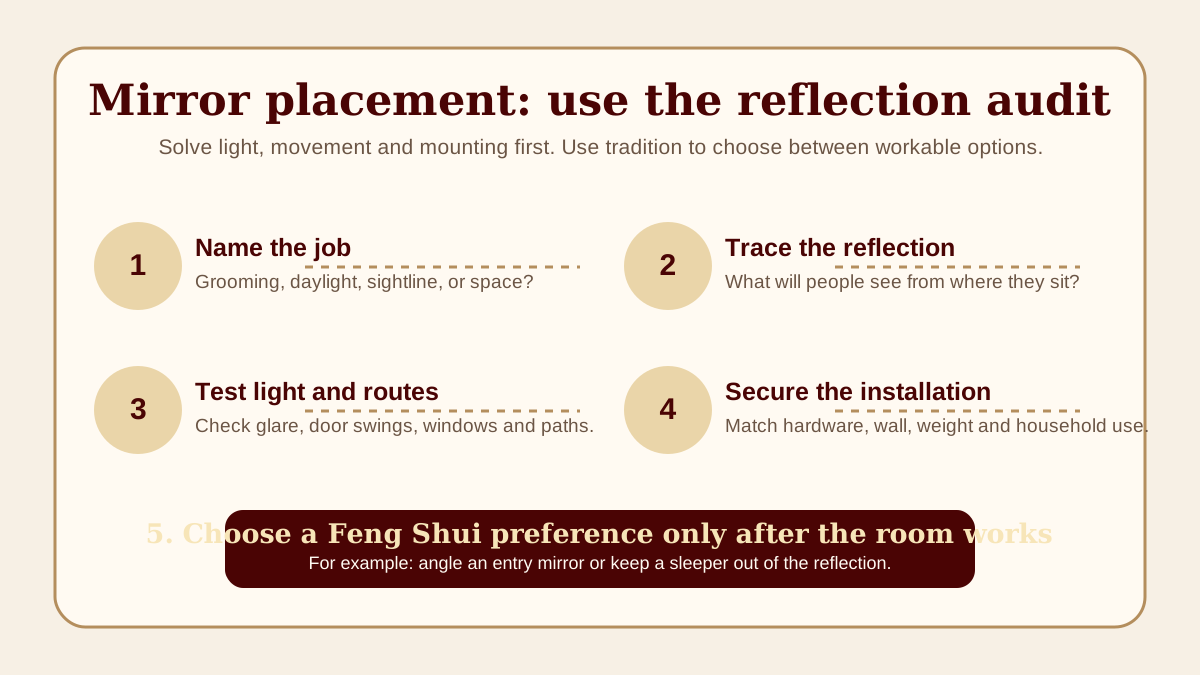
The five-minute reflection audit
Do this with painter’s tape, a hand mirror, or a helper holding a lightweight mirror before drilling. A large mirror is harder to relocate once it is mounted.
1. Name the job
Write one sentence: “This mirror is here to ___.” Useful answers include checking clothes before leaving, bouncing daylight toward a desk, helping someone see around a corner, or providing a grooming mirror at a usable height. “It is supposed to fix the energy” is not a job. If the mirror has no job, do not let it consume a wall that could hold storage, art, a light, or nothing at all.
2. Trace the reflection
Stand at the positions that matter: just inside the door, seated on the sofa, lying in bed, working at the desk, and walking toward the bathroom. Notice what appears in the glass. A good reflection might show daylight, an open room, an artwork you enjoy, a table set for a meal, or a calm exterior view. A poor reflection might show an unmade bed, an overloaded shelf, an open toilet, a glaring window, the brightest screen in the room, or a route people constantly cross.
This is the strongest version of the familiar Feng Shui idea that a mirror “doubles” something. It doubles what you visually experience. If it doubles a pleasant focal point, that may help the room feel intentional. If it doubles disorder, a hard light source, or an awkward corner, changing the reflection may be more effective than adding a symbolic cure.
3. Test light at the real time of day
Do not test only at noon. Look in the morning, at the hour direct sun reaches the room, after dark with lamps on, and at the time the room is normally used. A mirror can make a north-facing hallway brighter and can also direct late-afternoon sun into a television, computer screen, dining seat, or someone’s eyes.
Glare is a design problem, not an energetic punishment. Change the mirror angle, select a different wall, add appropriate window control, adjust a lamp, or choose a smaller surface. Never cover a required window or make a room darker just to follow a diagram.
4. Walk the route and operate every opening
Open the entry door, closet, cabinet, bathroom door, and window. Pull a chair back. Carry a laundry basket or bag through the room. A mirror on a door may be practical until the door swing puts it where someone can collide with it. A floor mirror may look elegant until it narrows the only route to the bathroom. A leaning mirror may be inappropriate in a home with small children, pets, a busy entry, or a route that is bumped often.
Do not place a mirror where it blocks switches, detectors, vents, a required access panel, an operating window, or a clear exit route. Feng Shui does not override building safety, accessibility, tenancy rules, or manufacturer instructions.
5. Mount it for the actual wall and mirror
The mirror’s weight, hardware, wall construction, frame, and location matter. Follow the manufacturer’s instructions. Use fixing hardware suitable for the wall and the mirror, keep it out of door-impact zones, and ask a qualified installer when the mirror is heavy, the wall is uncertain, or the location is over furniture or a high-use route. The U.S. Consumer Product Safety Commission’s Anchor It! program is a useful reminder that tall and heavy household items need secure anchoring; a decorative choice is not worth an injury risk.
Once a position passes these five checks, use Feng Shui as a preference among the workable options.
Advertisement
Entryway mirrors: first look, not a fear story
The entry is the most common mirror question. You want enough light to find shoes and keys, a quick appearance check before leaving, and a transition that does not feel cramped. In Feng Shui language, the entrance is often called the “mouth of Qi.” In ordinary design terms, it is where the home begins to make sense.
A mirror directly opposite the front door
Some schools avoid this configuration because the door appears immediately in the reflection. If this symbolic reading matters to you, take it as a reason to compare alternatives - not as a reason to panic, cover the mirror forever, or spend money on a cure. Test a side wall or a slightly angled position first.
The practical questions are just as important. Does the mirror reflect a bright exterior at night? Does it create a startling “second doorway”? Does it make a narrow hall look busier? Is there enough wall beside the door for a mirror without interfering with hooks, switches, storage, or the door swing? A side-wall mirror often solves those questions cleanly.
A narrow condo or apartment hall
In a compact entry, a tall vertical mirror can make a wall feel less blank and provide a last look before leaving. Choose the narrowest useful width. Keep it above a bench only if the bench does not turn the route into a pinch point. If the opposite wall contains mirrored closet doors you cannot change, do not treat the unit as doomed. Improve the arrival sequence instead: remove floor clutter, use one dependable light source, keep the door swing clear, and choose a landing place for keys.
The small-condo entryway guide provides a fuller arrival-zone audit. Use it before deciding that a mirror is the whole problem.
What to reflect near the entry
A mirror near the door can reflect art, a lamp, daylight from another room, or a useful slice of the home. Avoid aiming it at an exposed bin, a pile of bags, an open utility cupboard, or a view that makes you hurry past the entry. This is not because those things attract bad luck. It is because the first visual impression of home should make daily arrival easier, not make another chore feel urgent.
Bedroom mirrors: test from the pillow
Bedroom mirror advice becomes dramatic quickly. Common claims say that a mirror facing a bed causes insomnia, attracts a third party, or predicts relationship problems. There is no reason to make those claims. A person’s rest and relationship deserve better evidence and more direct attention than a reflection rule.
There is, however, a useful observation behind the tradition. A mirror can reflect movement, streetlights, a screen, an open doorway, or your own half-awake image. Any of those may be distracting for some sleepers. Whether it bothers you is a room-specific question.
The pillow test
Lie down at your normal sleep time. Keep the lights in their normal state. Ask:
- Can I see myself in the mirror from the pillow?
- Does it catch a phone screen, TV, window, hallway light, headlight, or bathroom door?
- Does someone entering the room appear in it before I am ready to see them?
- Would a blind, curtain, wardrobe door, different angle, or a cover at night improve the room without making it less usable?
If the answer is no to the first three, there may be nothing to fix. If the reflection feels active or intrusive, try a reversible solution. Turn a free-standing mirror, use a wardrobe door, cover a fixed mirror at night, change a lamp angle, or relocate the mirror to a dressing area. Test the change for a week rather than deciding from one anxious bedtime.
When a mirror is fixed
Rentals and condos often include mirrored closet doors. Do not create a new access or ventilation problem by permanently covering them. First try reducing the disruptive reflection: close the closet door, move the bed a little if a clear route remains, change window treatment so headlights do not bounce through the room, or use a removable cover only when sleeping. The sleep-supportive bedroom guide helps you test light, noise, temperature, and routines alongside traditional room preferences.
Dressing mirrors and partners
In a shared bedroom, one person may need a mirror for getting ready while another needs darkness or a less visually busy room. Name the actual conflict: time, light, storage, sightline, or privacy. A wardrobe mirror that closes may be a better solution than a debate about whether mirrors are “good” or “bad.” The bedroom layout guide for couples offers a trade-off worksheet for this kind of shared-room decision.
Living-room and dining-room mirrors: amplify the right thing
Living rooms and dining spaces usually tolerate mirrors more easily because they are active, social rooms. A mirror can spread daylight, extend a view, or make a compact seating area feel less boxed in. It can also make a television wall feel louder, double a cluttered console, or show every person moving through a busy corridor.
The sofa sightline
Sit in the main seat. A mirror behind or opposite the sofa is worth keeping only if it improves something that matters: perhaps it helps you see the room entry without turning around, reflects a window without glare, or opens a pleasant view. If it makes the primary seat feel exposed or constantly captures a screen, try another wall.
Traditional Feng Shui often values a main seat with a view of the entrance and stable visual backing. A mirror can sometimes assist with a view, but it is not a substitute for a sofa position that leaves doors, windows, and circulation usable. Start with the actual furniture plan in the living-room layout guide, then use a mirror as a finishing choice.
Dining tables
Some traditions like a dining-room mirror because it reflects a table, food, or gathering and is said to symbolically multiply abundance. Keep the symbolic reading if it is meaningful, but do not mistake it for a financial strategy. A mirror can be useful here when it adds light and reflects the part of the room you want to emphasize. It is less useful when it reflects a messy kitchen worktop, a harsh pendant light, or every person eating.
Small rooms and open plans
Mirrors can create a visual extension, but they cannot add usable floor area. Do not use one to disguise a sofa that blocks a balcony door, a desk that traps a chair, or a poorly lit route. In an open plan, use the mirror after the zones work: arrival, conversation, dining, work, and passage. The open-floor-plan guide walks through that order.
Bathroom mirrors: practical first, symbolism second
A bathroom needs a mirror for grooming, good light, a secure mount, and a surface that works with moisture and cleaning. That is the job. Some readers dislike a reflection of the toilet from a bedroom or hall; others do not notice it. If that sightline bothers you, change the angle, use a cabinet mirror, close a door, or adjust the approach to the room.
Do not describe a bathroom mirror as causing financial loss, health problems, or relationship harm. If there is moisture damage, poor ventilation, an outlet issue, or a loose fixture, address it directly. The bathroom layout guide separates these maintenance concerns from optional symbolic choices.
Bagua mirrors and exterior concerns
A Bagua mirror is a traditional object with specific cultural and school-based uses. It is not a general-purpose home improvement tool, and it should not be used to “fight” a neighbour, road, building, or another household’s luck. Before mounting anything outside, identify the tangible concern:
| Concern | Useful first response | Do not assume |
|---|---|---|
| Headlights or glare | Test curtains, shade, landscaping allowed by rules, or a different interior layout | A decorative mirror will control a dangerous light source |
| Direct view into a room | Review window treatment, privacy film where permitted, planting, and furniture orientation | An exterior object solves privacy without consequences |
| Road noise or traffic risk | Consider local traffic, fencing, site design, and professional advice where appropriate | A mirror makes a road condition safe |
| A sharp architectural view | Decide whether it is actually uncomfortable, glaring, or simply visually busy; use art, a blind, or furniture placement | The view predicts harm |
| A neighbour conflict | Speak respectfully, check property rules, and avoid objects aimed at another home | Feng Shui authorizes retaliation |
Exterior mirrors can affect neighbours, drivers, animals, and building rules. Never install a reflective object where it could create glare or a safety problem. If the concern is structural, drainage-related, electrical, legal, or traffic-related, get the appropriate local professional or authority involved.
A room-by-room decision table
Use this table when you are choosing between real options.
| Room | First practical priority | Traditional preference, if useful | Low-risk adjustment |
|---|---|---|---|
| Entry | Clear door swing, keys, lighting, and route | Prefer a side-wall or non-direct reflection of the door | Test a narrower mirror or change its angle |
| Bedroom | Darkness, quiet, access, and a calm pillow view | Avoid a direct reflection of the sleeper if it feels disruptive | Close wardrobe doors or cover a fixed mirror at night |
| Living room | Conversation, glare control, and circulation | Reflect a pleasant or useful focal point | Move the mirror away from a TV or busy route |
| Dining room | Comfortable light and a usable table | Reflect gathering or a pleasant view | Check that the pendant light does not glare in the mirror |
| Bathroom | Grooming light, moisture-resistant use, secure mounting | Choose a reflection the household finds comfortable | Angle it away from an unwanted hall or bedroom sightline |
| Home office | Screen glare, task light, and chair route | Use a mirror only if it gives a useful view without distraction | Position it outside the monitor’s reflection |
A worked example: the fixed entry closet mirror
Imagine a condo where the front door opens to a mirrored closet across a three-foot hall. The resident has read that a mirror opposite the door sends opportunities away and wants to cover the whole closet. But the closet stores coats, the hall has no other light, and a permanent cover would interfere with the doors.
Run the audit. The mirror reflects the door and a bright lobby light at night. It does not block the route and is securely built in. The actual friction is the glare and the pile of bags below it, not the existence of the mirror. A better first move is to clear the floor, add a shade or change the interior light so the hall is calmer, and use a small controlled landing zone for keys. If a temporary fabric panel at night makes the resident feel better and does not obstruct access, test it. If it is annoying and makes the closet unusable, remove it.
The result is more useful than a cure: the entry works better, the homeowner has honored a personal tradition where possible, and no one has been told that the home’s future depends on a reflective door.
Final checklist
- The mirror has a defined job.
- It reflects something useful, calming, or intentionally chosen.
- It does not create screen glare, headlight glare, or a distracting sleep sightline.
- Doors, windows, switches, vents, and routes still operate clearly.
- The size, location, and hardware are appropriate for the wall and household.
- A traditional preference is used only after the practical checks pass.
- No mirror is being used instead of fixing moisture, lighting, privacy, safety, or maintenance issues.
- Exterior reflective objects do not create glare, conflict, or a hazard.
Sources and next steps
- U.S. Consumer Product Safety Commission: Anchor It! - practical context for securing tall or heavy household items.
- Ideal Home’s bedroom-mirror overview - a useful example of the common “mirror reflecting the bed” question; this guide adds a room-use and light test.
- Small-condo entryway guide - use this next when the mirror question is really an arrival and storage question.
- Bedroom layout guide for couples - compare sleep, access, light, and shared preferences before moving furniture.
Editorial note: Lucky Properties presents Feng Shui as a cultural and design-oriented way to observe a home. This guide is educational. It does not predict health, wealth, sleep, relationships, or property outcomes, and it does not replace medical, safety, electrical, legal, building, tenancy, or design advice.