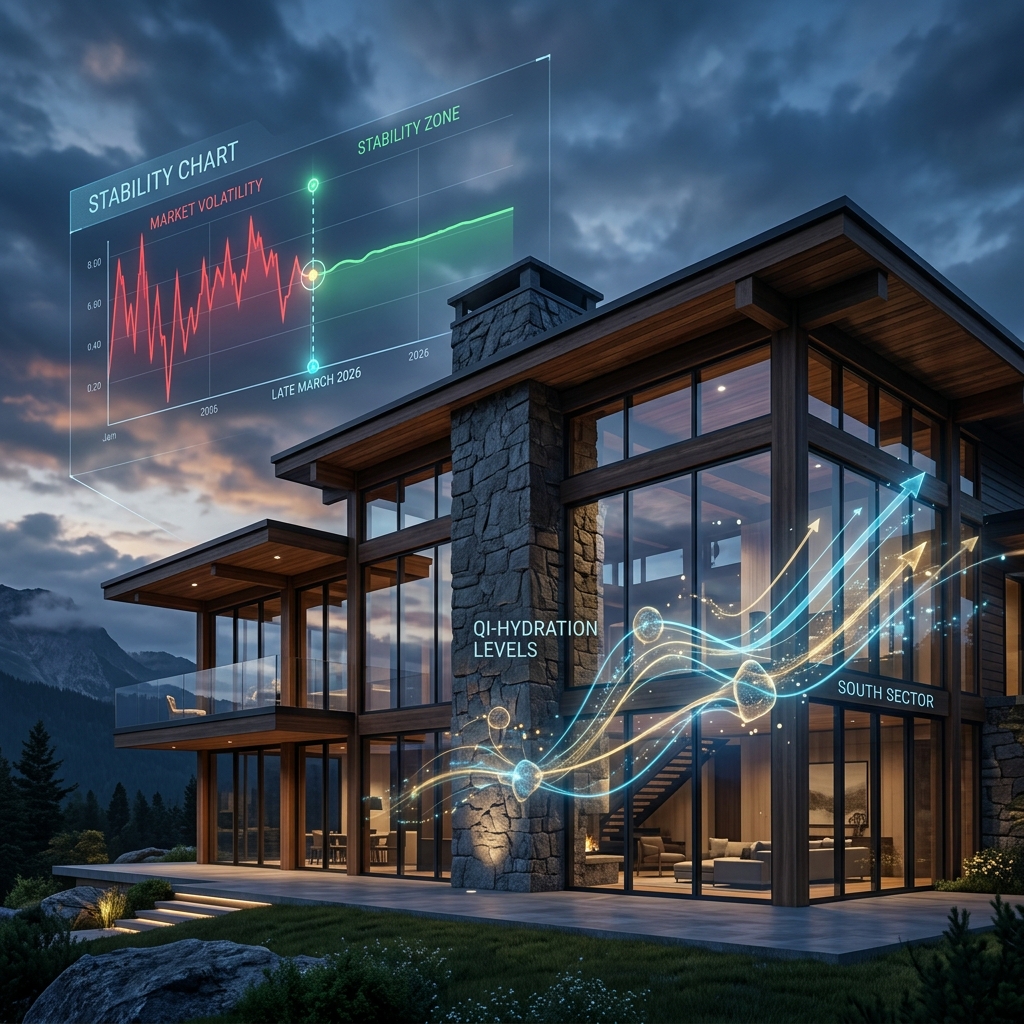
Biophilic Architecture 2026: The Intersection of Wellness and High-Density Living
March 29, 2026 | By Elena Sterling, Design Lead, LuckyProperties
As we move deeper into the Year of the Fire Horse, the architectural world is witnessing a profound shift. The "Concrete Jungle" is no longer an acceptable paradigm for the global citizen. Instead, we are seeing the rise of Biophilic Architecture 2026—a design philosophy that treats buildings not as static machines, but as living, breathing ecosystems.
In 2026, the integration of nature into high-density urban environments has transitioned from a "luxury aesthetic" to a "quantifiable wellness mandate." This report explores how vertical forestry, microbial indoor air filtration, and fractally-aligned geometries are redefining what it means to live well in the modern age.
The End of the 'Sterile Box' Era
For decades, urban development focused on efficiency, thermal insulation, and cost-per-square-foot. This resulted in the "Sterile Box" model: airtight, glass-heavy structures that disconnected inhabitants from their biological roots. In 2026, we are paying the price for this disconnection through a global "Wellness Deficit."
Biophilic architecture is the cure. It's the intentional design of spaces that tap into our innate biological affinity for nature. Research in 2026 has shown that inhabitants of biophilic-heavy buildings experience a 14% reduction in cortisol levels and a 20% increase in cognitive performance compared to those living in traditional contemporary structures.
Vertical Forestry: Beyond the Balcony Garden
In 2026, Vertical Forestry has evolved beyond the occasional potted plant on a balcony. We are seeing buildings like the "Lungs of Vancouver" (completed in late 2025) that feature integrated irrigation systems supporting over 20,000 native plants per floor.
These aren't just for show. They serve three critical structural functions:
- Thermal Regulation: The moisture-rich canopy reduces the building's heat-island effect by up to 4 degrees Celsius.
- Particulate Filtration: In an era of increasing urban pollution, the vertical forest acts as a multi-stage bio-filter for PM2.5 particles.
- Acoustical Damping: The varied leaf structure and soil substrate absorb urban noise, creating a truly quiet Qi environment.
Fractal Geometry: The Mathematics of Calm
One of the most exciting breakthroughs in 2026 is the application of Fractal Geometry in residential facades. Nature is rarely linear; it is fractal. From the branching of a tree to the structure of a snowflake, patterns repeat at different scales.
Architects in 2026 are using generative AI to design facades that mirror these natural fractals. When the human eye views a fractal surface, the brain processes the information more efficiently, inducing a state of "Soft Fascination." This is a key component of the 2026 Wellness Standard—designing buildings that lower the cognitive load of their inhabitants simply through visual rhythm.
The 'Wood-Fire' Synergy of 2026
In the context of the Year of the Fire Horse, the Wood Element (represented by plants and timber) is the primary balancer. Fire energy is about speed, visibility, and intensity. Without Wood to feed and stabilize it, Fire becomes volatile (Anxiety).
By integrating Wood-element architecture—such as mass-timber frames and lush interior atriums—developers are providing the energetic stability that 2026 buyers are desperate for. It's the difference between a house that feels "exhilarating" and a house that feels "resilient."
The Microbial Home: Living Air Systems
Indoor air quality in 2026 has moved beyond HEPA filters. We are now seeing the implementation of Probiotic Air Systems. These are integrated biophilic walls that use a specific cocktail of beneficial microbes to actively digest volatile organic compounds (VOCs) and pathogens.
Instead of a sterile environment, the 2026 home maintains a "Healthy Microbiome." This is the pinnacle of wellness-driven design. It recognizes that humans are part of a larger biological web, and that the health of the inhabitant is inseparable from the health of the building's ecosystem.
Sustainable Luxury: The Value Proposition
Critics of biophilic design often point to the "Green Premium"—the 10-15% increase in initial construction costs. However, in 2026, the market data is conclusive.
Properties that hold a Certified Biophilic Wellness Rating are commanding 22% higher resale values and 30% lower tenant turnover. Modern buyers, especially the "Resilience Generation" that came of age during the volatility of the mid-2020s, are willing to pay for health. They see a biophilic home not as an expense, but as a long-term investment in their biological capital.
Conclusion: The New Urban Frontier
The Biophilic Architecture of 2026 is the bridge between the ancient wisdom of nature and the technical prowess of modern engineering. It is the physical manifestation of our desire for a more harmonious world.
As we look toward the 2030s, the goal is "Regenerative Urbanism." Buildings that don't just "do less harm," but actually improve the air, water, and spirit of the city around them.
Here's the thing: in 2026, we don't just build homes anymore. We grow them. And that's why the biophilic wellness pivot matters. It's how we survive the intensity of the Fire Horse and build a future that actually feels like home.