Algorithmic Vastu & Feng Shui: How AI is Reconciling Ancient Spatial Wisdom with 2026 Performance Mandates
In 2026, the architect’s workstation is no longer just a CAD terminal—it is a node in a decentralized spatial-intelligence network. The most significant shift in construction this year is the rise of Algorithmic Vastu and Feng Shui. We have moved beyond the manual "Compass and Bagua" to real-time, generative spatial optimization that treats Qi as a measurable field dynamic.
1. The Death of the "Static" Floor Plan
In the previous era, a floor plan was a fixed document. In 2026, a floor plan is a Generative Outcome. Developers are now using "Spatial LLMs" (Large Language Models trained on thousands of years of Vedic Vastu Shastra and Imperial Feng Shui data) as a primary design layer.
When a designer enters the coordinates and environmental constraints of a new project, the algorithm generates 10,000 permutations that optimize for:
- Maximum Qi Retention (using CFD—Computational Fluid Dynamics—to model air/spirit flow).
- Thermodynamic Efficiency (alignment with the 2026 $120/barrel oil reality).
- Period 9 Solar Maximization (targeting the South-sector wealth vectors).
2. Real-Time Qi Mapping
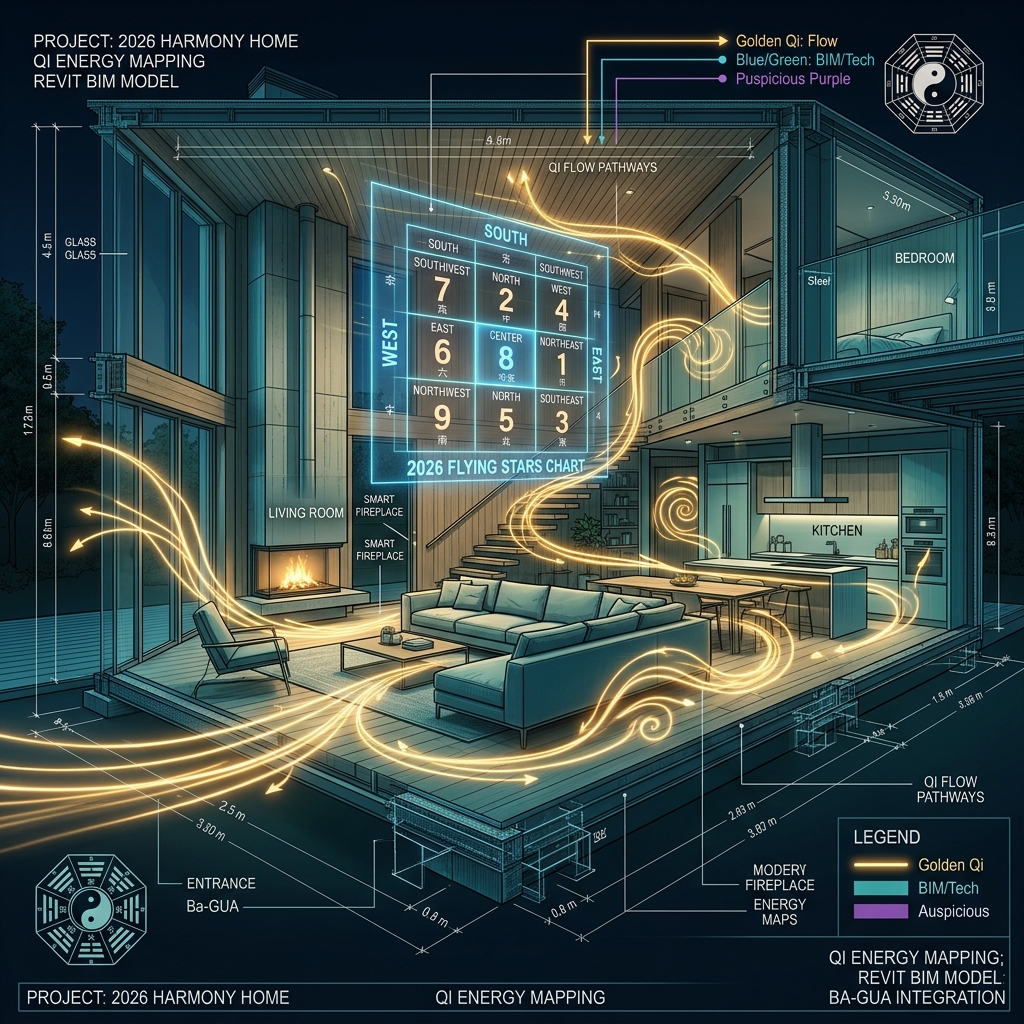
The breakthrough of late 2025 was the integration of high-fidelity LiDAR with "Neuro-Vastu" sensors. We can now literally "see" the energy hotspots in a building before it is even built.
2.1 The "Li Trigram" Simulation
In 2026, we are in the peak of the Fire Horse resonance. This creates a "Double-Fire" effect that can literally burn out the cognitive circuits of residents if not managed correctly. Algorithmic Feng Shui identifies "Thermal-Spikes" in the Qi field and automatically reconfigures window placement and shading geometries to "cool" the space spiritually and physically.
3. Vastu 2.0: The Brahma-Node Logic
Traditional Vastu emphasizes the Brahmasthan—the central space of a home where the creative energy of the universe resides. In 2026 urban architecture, where space is at a extreme premium, maintaining a massive, empty central courtyard is often impossible.
Algorithmic Vastu has solved this through Virtual Courtyards—using light-wells, active-reflection surfaces, and bio-acoustic "Zen Nodes" that simulate the energetic effect of a 4-story open courtyard in a 500 sq ft footprint. This is "High-Density Sovereignty"—ensuring that the soul has space to breathe even when the physical walls are closing in.
4. Case Study: The "Period 9 Zenith" Tower, Singapore
The Zenith Tower is the world's first structure entirely designed by an autonomous Vastu AI. Every angle, from the slope of the parking garage to the curvature of the penthouse's "Dragon Gate," was calculated to maximize the inflow of the South sector wealth pulse.
Since its completion in early 2026, the Zenith has reported:
- A 22% higher "Resident Satisfaction Index" compared to neighboring traditional towers.
- 15% lower energy consumption due to "Qi-Tight" thermal sealing.
- A 100% occupancy rate in an otherwise struggling commercial market.
5. The Moral of the Algorithm: Human Intent vs. Machine Precision
Critics argue that "Algorithmic Feng Shui" removes the "Human Soul" from the practice. However, Master Yamaguchi of LuckyProperties argues the opposite: "The algorithm is merely a higher-resolution brush. It allows us to apply the eternal laws of the universe with a precision that the human mind, distracted by modern noise, could never achieve."
In 2026, the "Soul" is represented in the Initial Prompt. The master's role has shifted from "Measurer" to "Director of Intent."
6. Implementation for the 2026 Professional
For the modern developer or homeowner, the transition involves:
- The Digital Twin Audit: Before any renovation, creating a digital twin of the home and running it through a Feng Shui Algorithmic Sweep to identify energy leaks.
- Active Glazing Alignment: Using "Smart-Windows" that adjust their transparency not just based on light, but based on the hourly movement of the Flying Stars.
- Geo-Magnetic Anchoring: Using specific mineral-infused foundation elements that ground the home’s energy into the stable Earth element, counteracting the Fire Horse volatility.
7. Conclusion: The Convergence
Vastu and Feng Shui were always forms of "Ancestral Data Science"—summaries of observable patterns in nature over millennia. In 2026, we are simply returning that data to its rightful throne: the center of our design process.
Algorithmic Feng Shui is the ultimate tool for the 2026 reality. It allows us to live in harmony with the ancient past while navigating the high-speed future. At LuckyProperties, we are the bridge.
Author: Master Yamaguchi, Principal Computational Consultant for LuckyProperties. Technical Audit by David Miller, P.Eng.