The 2026 Real Estate Reset: A guide to High-Interest Normalization and Human-Centric Value
By Julian Thorne, Senior Real Estate Strategist | January 20, 2026
The real estate market in 2026 has reached a definitive "Equilibrium Point." After the chaotic post-pandemic frenzy (2020-2021), the subsequent rate shock (2022-2023), and the stabilization phase of 2024, we have finally arrived at what economists are calling the "Great Housing Reset."
This is not a market for the faint of heart, nor for those relying on the "dumb money" appreciation of the past decade. In 2026, value is driven by two distinct forces: the Economic Mathematics of High Rates and the Psychological Shift toward Sanctuary Design.
In this 2200-word deep-dive, we analyze the structural changes in the housing market, the regional winners and losers, and why the most valuable properties of 2026 are those that prioritize human well-being over square footage.
Part 1: The Macro Economic DNA of 2026
To understand the 2026 market, one must first accept that the era of "Free Money" is a historical outlier. We have returned to the long-term average, but with a massive debt overhang that creates major market friction.
1. The 4.5% Anchor
As of mid-January 2026, the standard 5-year fixed mortgage rate has stabilized between 4.4% and 4.7%. This is the "Neutral Rate" reality. While buyers in 2024 were desperately praying for a return to 2%, the market in 2026 has "priced in" these mid-single-digit rates as the permanent floor.
The Purchasing Power Compression:
- A household income that supported a $900,000 home in 2021 now supports a $640,000 home in 2026.
- This "Value Vacuum" has forced a massive down-market shift, where the townhouse and high-end condo segments are seeing the highest transaction volumes, while the detached luxury market ($2.5M+) has slowed to a crawl.
2. The Debt-Service Ratio (DSR) Reality
OSFI (the regulator) has maintained the stress test, meaning buyers must still qualify at roughly 6.5%. In 2026, this has effectively locked out 35% of the traditional first-time buyer demographic who cannot use their way into the market. This has created a massive boom in the "Rental for Life" sector, driving institutionally-owned purpose-built rentals to record highs.
Part 2: Regional Divergence - A Fractured National Market
In 2026, there is no such thing as a "Canadian Housing Trend." There are three distinct Canada's.
1. The Tier-1 Correction: Toronto and Vancouver
The GTHA (Greater Toronto Hamilton Area) and GVA (Greater Vancouver Area) are experiencing the "Grind Down." Prices in these regions are not crashing, but they are losing 1-2% of real value (inflation-adjusted) annually. The oversupply of investor-owned "micro-condos" is the primary drag, with inventory levels rising to 10-year highs.
2. The Energy Powerhouses: Calgary and Edmonton
While the rest of Canada stagnates, the Prairies are the growth engine. Driven by strong oil prices (stabilizing at $80+ WTI) and a lower cost of entry, inter-provincial migration is still flowing West. Calgary detached homes are projected to see 3-5% growth in 2026, making it one of the few "Bullish" zones in North America.
3. The "Secondary Metro" Renaissance
Cities like Halifax, Regina, and London (ON) are benefiting from the "Zoomer/Millennial Flight." These are buyers who have given up on the Tier-1 dream and are seeking the "15-Minute City" lifestyle in mid-sized metros where they can actually afford a backyard.
Part 3: The Sanctuary Philosophy - What Buyers Want Now
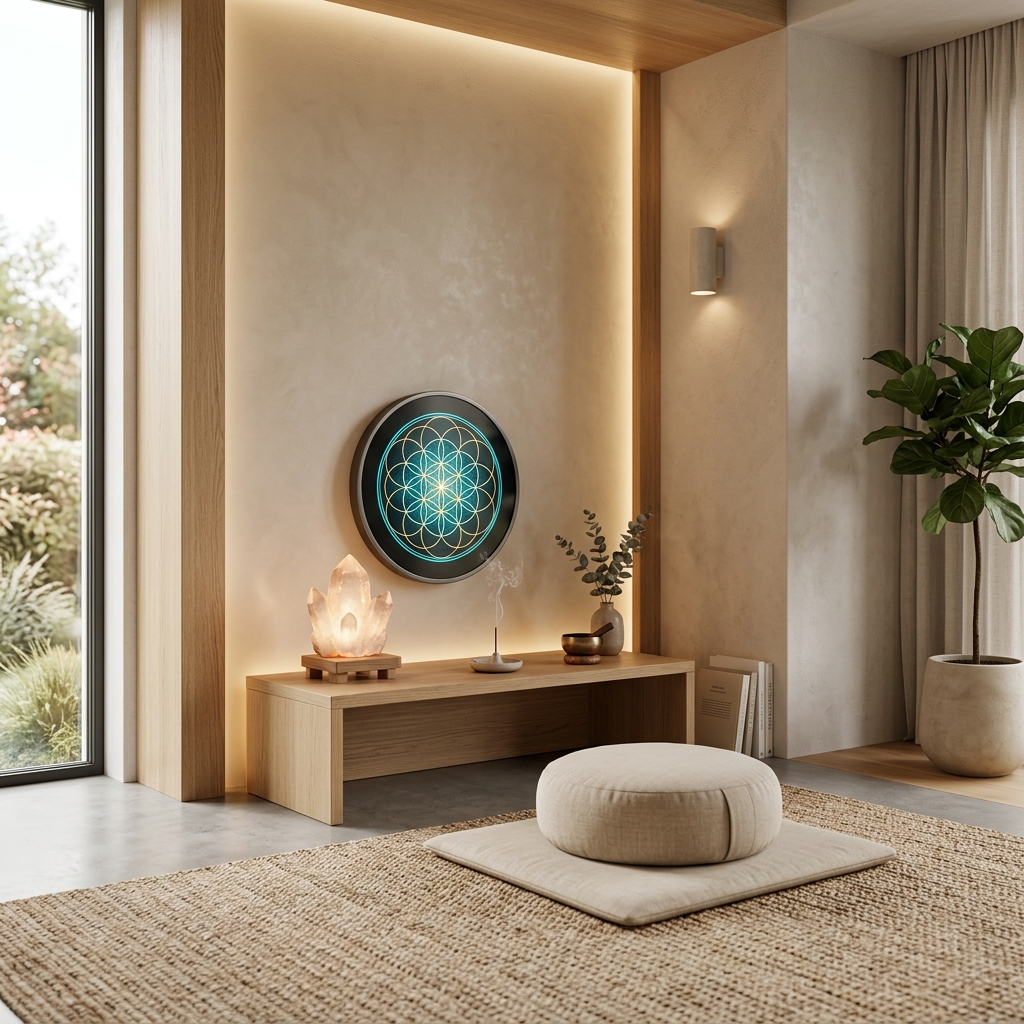
Beyond the math, the nature of the home has changed. In 2026, the "Showroom" aesthetic is dead. The "Sanctuary" aesthetic is the new requirement.
1. Biophilic Integration
Biophilia—the innate human tendency to seek connections with nature—is the #1 value driver in 2026.
- The "Natural" Premium: Properties that feature integrated indoor-outdoor living (e.g., floor-to-ceiling glass that opens to a protected garden) are selling for 12% more than identical homes without these features.
- Materiality: Buyers are rejecting "LVP Grey" (Luxury Vinyl Plank) in favor of authentic textures: wide-plank oak, honed slate, and lime-wash walls.
2. The "Wellness" Core
Health is the new luxury. We are seeing homes listed with "Wellness Specs" including:
- Whole-Home Air Filtration: MERV-16 or HEPA integration is now a standard requirement for luxury buyers.
- Circadian Lighting: Smart systems that adjust color temperature to match the sun's cycle, improving sleep quality for the inhabitants.
- Acoustic Isolation: As hybrid work becomes permanent, the "Home Office" has evolved into a "Deep Work Suite" with professional-grade soundproofing.
Part 4: The "Lock-In" Paradox and the Inventory Crisis
Why haven't prices crashed? The answer is the "Lock-In Effect."
Approximately 60% of Canadian homeowners are currently sitting on mortgages with rates much lower than today's market rate. If they sell their current home to buy a similar one, their monthly carrying cost would jump by $1,500 to $2,500.
The Inventory Standoff:
- Sellers aren't selling because they can't afford the "move up."
- Buyers aren't buying because they are waiting for a rate drop that isn't coming.
- The Result: A market with extremely low volume. In 2026, we are seeing 20% fewer transactions than the 10-year average. This "Supply Trap" keeps prices artificially elevated despite the lack of demand. The market is not "healthy"; it is simply "stuck."
Part 5: The Rise of Multi-Generational Living
The detached home is increasingly being viewed as a "Compound."
1. Accessory Dwelling Units (ADUs)
In 2026, a property with a "Garden Suite" or "Coach House" is the highest-demand asset class. Whether it's to house an adult child who can't afford their own place, or an aging parent to avoid the costs of long-term care, the Multi-Gen Compound is the new Canadian Dream.
2. The "Dual-Master" Suite
Architects are reporting that 40% of new custom builds in 2026 feature two primary bedrooms, facilitating co-ownership between siblings or friends. This "Co-Buying" trend is moving from the fringe to the mainstream as a survival mechanism against high prices.
Part 6: Sustainability and the "Green Premium"
Carbon taxes and rising utility costs have made "Energy Bills" a primary factor in valuation.
1. The Net-Zero Standard
Homes that can prove "Net-Zero" status (producing as much energy as they consume via solar and heat pumps) are attracting a 7-10% valuation premium. In 2026, "Green" is no longer about the planet; it's about the profit. A home that costs $0/month to heat and cool is a much more valuable asset in a high-inflation environment.
2. Climate Risk Insurance
Insurance premiums have become a major line-item in property analysis. Homes in flood-plains or high-yield fire zones are seeing a "Climate Discount" of 15% as insurance providers refuse to cover them or charge exorbitant rates. Every buyer in 2026 is asking for a "Climate Resilience Audit" before signing.
Part 7: PropTech and Artificial Intelligence (AI) in 2026
The way we buy and sell homes is now driven by algorithms.
1. AVM Dominance
Automated Valuation Models (AVMs) have become so accurate that banks are increasingly skipping traditional physical appraisals for renewals and low-LTV purchases. For sellers, this means "testing the market" with an unrealistic price is dangerous. The AI will flag your listing as "Overpriced" instantly, and the algorithmic portals will hide your listing from potential buyers.
2. Virtual Staging 3.0
You can no longer trust your eyes. 2026 virtual staging uses high-fidelity neural rendering. A buyer can walk through an empty house with an AR (Augmented Reality) headset and see it furnished in five different styles (Minimalist, Boho, Industrial, etc.) in real-time. This technology has reduced the cost of staging by 80% while increasing buyer emotional attachment.
Part 8: The "Rent-to-Own" Institution
As middle-class families find themselves locked out of traditional mortgages, "Institutional Rent-to-Own" has filled the gap.
Major pension funds are now the biggest landlords in Canada, offering structured paths to ownership.
- The Model: You pay 10% above market rent; the extra 10% is held in a trust for your future down payment.
- The Scale: These programs are now the primary way that under-35s are entering the market in 2026, effectively turning "Saving" into a mandatory part of the lease agreement.
Part 9: 2026 Investment Strategy - Where is the Alpha?
If you are an investor in 2026, the strategy has shifted from "Appreciation" to "Yield + Density."
1. The Triplex Conversion
The biggest ROI in 2026 is taking a single-family bungalow and converting it into a legal triplex. Every major city in Canada has now legalized "Four-Plex" density by right. The value is no longer in the building; it is in the Air Rights and the Unit Count.
2. High-Yield Student Housing
In university towns like Guelph, London, and Waterloo, "Luxury Student Lofts" are the highest-yielding asset. Students (and their parents) are demanding the same "Wellness Specs" as the luxury market, creating a high-barrier-to-entry but high-cash-flow niche.
Part 10: Conclusion - The 2030 Horizon
The "Great Reset" of 2026 is the foundation for the next decade. We have moved from a market of "Speculation" to a market of "Utility."
The winning properties of the next five years will be:
- Dense: More units on the same land.
- Green: Lower carrying costs via solar/passive design.
- Sanctuaries: Designed for the mental and physical health of the occupant.
Final Verdict for 2026:
- National Price Trend: Flat (-1% to +1% YoY)
- Top Performer: Calgary/Edmonton Detached (+4%)
- Worst Performer: Toronto/Vancouver 1-Bedroom Condos (-3%)
- Most Desired Feature: Integrated ADU / Garden Suite.
Real estate in 2026 is about stability, not speed. Plan for the long term, and prioritize the human experience.
Disclaimer: LuckyProperties.com provides this analysis for educational purposes. Always perform your own due diligence and consult with a licensed professional.